Table of Contents
Introduction
I used to dread making chicken and rice for dinner. Not because I dislike the taste it’s the ultimate comfort food but because I always managed to mess up the rice. It would either be crunchy in the middle or turn into a starchy, gluey mash that stuck to the bottom of the pan. I spent years cooking the rice separately and pan-frying the chicken, resulting in a sink full of dishes. It wasn’t until I really committed to mastering the one pot chicken and rice method that I realized my issue wasn’t the ingredients; it was the heat. Once I learned to trust the simmer and leave the lid alone, dinner became a single-pan dream.
Why This Recipe Works
- Minimal Cleanup: Everything cooks in one vessel, meaning you spend less time scrubbing and more time relaxing.
- Flavor Infusion: The rice cooks directly in the chicken broth and juices, absorbing way more flavor than it would in plain water.
- Forgiving Cooking: If you use bone-in, skin-on thighs, the chicken stays juicy even if the rice cooks a minute or two too long.
- Budget Friendly: Chicken thighs and rice are two of the most affordable protein and carb staples available.
Ingredients (With Real Context)
The Chicken
- Bone-in, Skin-on Chicken Thighs: I prefer thighs over breasts here. Breast meat dries out easily in the steamy environment of a rice pot. Thighs have enough fat to stay succulent. Substitution: You can use boneless thighs, but reduce the cook time by about 10 minutes to prevent them from becoming rubbery.
- Salt and Pepper: Don’t skimp here. Season the chicken aggressively before it hits the pot.
The Aromatics
- Yellow Onion: Finely diced. It melts into the sauce, providing a sweet base.
- Garlic: Minced fresh. If you burn it, the whole pot tastes bitter, so add it only after the onions have softened.
The Rice & Liquid
- Long-Grain White Rice (Basmati or Jasmine): This is crucial. Short-grain rice (like Arborio) releases too much starch and will make your dinner risotto-like. Long-grain stays distinct. Tip: Rinse your rice until the water runs clear to remove excess starch, preventing gumminess.
- Chicken Broth: Low-sodium is best so you can control the salt level.
- Dietary Substitutions:
- Gluten-Free: Ensure your broth is certified GF.
- Dairy-Free: This recipe is naturally dairy-free (unless you add cheese at the end).
Timing
- Prep Time: PT15M
- Cook Time: PT40M
- Total Time: PT55M
- Comparison: About the same amount of time it takes to order delivery, but significantly cheaper and tastier.
Step-by-Step Instructions
- Sear the Chicken. Heat a tablespoon of oil in your heavy pot or Dutch oven over medium-high heat. Pat the chicken thighs dry with paper towels (wet skin doesn’t crisp) and season well. Place them skin-side down. Don’t touch them for 4–5 minutes. You want a deep golden-brown crust.
- Why: This creates a fond (browned bits) on the bottom of the pot that dissolves into the rice later, providing depth of flavor.
- Pro Tip: If the skin is sticking, it likely isn’t ready to flip yet. Give it another minute.
- Sauté Aromatics. Remove the chicken and set it aside. In the same pot (don’t clean it!), toss in your onions. Scrape up the brown bits from the bottom as they cook. Once the onions are soft (about 3 minutes), add the garlic and cook for just 30 seconds until fragrant.
- Look for: The bottom of the pot should look relatively clean, as the onion moisture has deglazed it.
- Toast the Rice. Add your rinsed rice to the pot. Stir it constantly for about 2 minutes. You’ll hear it crackling and popping.
- Why: This toasts the exterior of the grain, helping it hold its shape during the long simmer so it doesn’t turn to mush.
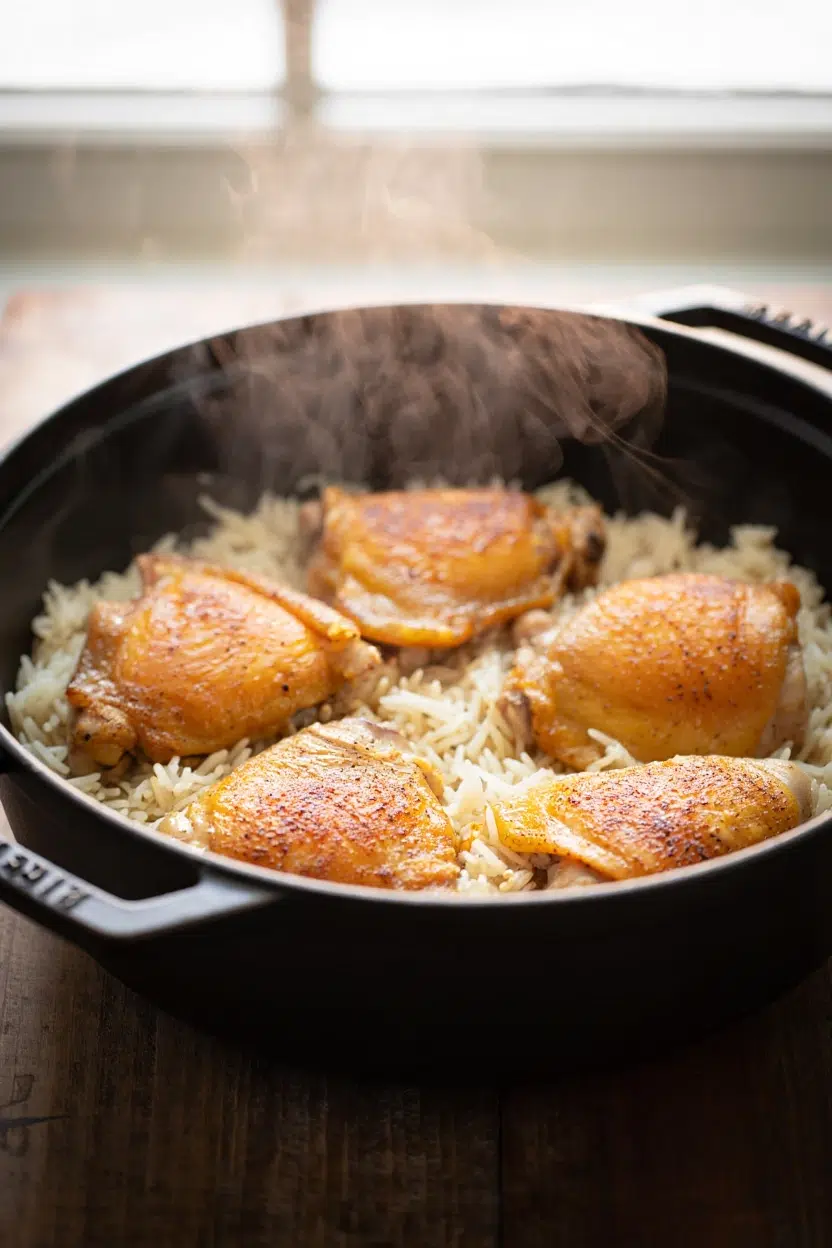
- Deglaze and Simmer. Pour in the chicken broth. Stir well to ensure no rice is stuck to the bottom. Bring the liquid to a rolling boil. Once boiling, immediately turn the heat down to low. Nestle the seared chicken thighs back into the rice, skin-side up.
- The “Don’t Peek” Phase. Cover the pot tightly with a heavy lid. Set a timer for 20 minutes. Walk away. Do not lift the lid.
- Why: Lifting the lid releases the steam that is essential for cooking the rice. If you let the steam out, the rice won’t cook evenly.
- The Rest. After 20 minutes, turn off the heat. Remove the pot from the burner. Let it sit, still covered, for another 10 minutes.
- Look for: The rice should have absorbed all the liquid. If it looks like there’s a little excess water on top, don’t worry the rice will drink it up during the resting phase.
Common Mistakes I Made & How I Fixed Them
- Mistake 1: The “Stirring” Habit. What went wrong: I used to stir the rice occasionally while it simmered, thinking it prevented sticking. The fix: Stirring releases starch and breaks the grains, making the final dish gluey. Once the liquid is added and the lid is on, don’t touch it until the resting period is over.
- Mistake 2: Using High Heat to Speed It Up. What went wrong: I was hungry and cranked the heat to medium. The bottom burned before the top was cooked. The fix: Low and slow is non-negotiable. A gentle simmer is what allows the rice to steam properly.
- Mistake 3: Crowding the Pan During Sear. What went wrong: I tried to fit 8 chicken thighs in a 6-quart pot. They steamed instead of seared. The fix: Work in batches. A grey, boiled chicken thigh is a sad thing. Get the browning right, even if it takes an extra 5 minutes.
Variations I Actually Tried
- Lemon & Herb: I added lemon zest and fresh thyme in the last 5 minutes of cooking. It brightened up the heavy dish significantly.
- Spicy Andouille: I swapped half the chicken thighs for sliced Andouille sausage and added a diced bell pepper. This made it closer to a Jambalaya excellent for colder weather, though the grease from the sausage did make the rice slightly heavier.
- Broccoli Florets: I threw in a cup of broccoli on top of the rice during the last 10 minutes of simmering. The broccoli steamed perfectly, but I made sure not to bury it, or it would have disintegrated.
Nutritional Information
(Sample values verify before publishing)
| Nutrient | Amount per Serving |
|---|---|
| Calories | 480 kcal |
| Carbohydrates | 45g |
| Protein | 32g |
| Fat | 18g |
| Fiber | 2g |
Healthier Alternatives
- Brown Rice: You can swap this in, but be warned it requires more liquid (about 1/4 cup extra) and a longer cook time (often 45–50 minutes total). It adds a nutty flavor but a chewier texture that some people find “too healthy” tasting for this comfort dish.
- Skinless Chicken: Removing the skin cuts the fat content significantly, but you will lose the crispy element and some of the savory richness that keeps the rice moist.
Serving Suggestions
- Greens: Serve with a simple arugula salad with a sharp vinaigrette. The acidity cuts through the richness of the rice.
- Acid: A wedge of lemon or a splash of hot sauce on the table is essential.
- Vegetable: Roasted green beans or ditalini pasta recipes are not a side, but if you want another carb, a slice of crusty garlic bread helps soak up the sauce.
Storage, Reheating & Real-Life Use
- Fridge: Store in an airtight container for up to 4 days. The rice actually tastes better on day 2 as the flavors meld.
- Freezer: Freeze for up to 3 months. Note: The rice texture may change slightly upon thawing, becoming a bit softer.
- Reheating: Sprinkle a tablespoon of water over the leftovers and cover with a damp paper towel before microwaving. This revives the moisture. I don’t recommend reheating in the oven unless you have a lot it tends to dry out the edges.
Expert Tips & Tricks
- The Heavy Pot Rule: Use a pot with a heavy bottom (like cast iron or enameled Dutch oven). Thin pots conduct heat unevenly, leading to hot spots that burn the rice.
- Thermometer Check: If you’re unsure if the chicken is done, use an instant-read thermometer. You’re looking for 165°F (74°C) in the thickest part of the thigh, near the bone.
Who This Recipe Is / Is Not For
- This IS for: Busy parents, college students on a budget, and anyone who hates doing dishes. It’s for the cook who wants hearty comfort food without the fuss.
- This is NOT for: If you are looking for a crisp, separated pilaf where every grain stands alone, this isn’t it. This is a creamy, juicy, comfort-food version.
Case Study / Reader Example
“A friend of mine tried this recipe but called me in a panic because she only had short-grain sushi rice. I told her to give it a shot, but to reduce the broth by about 1/4 cup. She said it ended up tasting like a savory porridge she actually preferred it! It just goes to show that even if you stray from the script, delicious food can still happen.” Test Kitchen Notes
Final Thoughts
This one pot chicken and rice is a staple in my rotation now because it adapts to whatever I have in the pantry. It taught me that you don’t need twenty ingredients to make a meal feel special. Try it this weekend and let me know how it goes I have a feeling your dishwasher will thank you.
When preparing comforting meals like One Pot Chicken and Rice, it’s important to ensure all chicken is cooked safely to prevent foodborne illness; according to the USDA Food Safety and Inspection Service, poultry such as chicken wings must reach a “safe minimum internal temperature” of 165 °F as measured with a food thermometer to be considered safe for consumption.
When deciding whether to rinse rice before cooking, understanding the “science of rice starch” can make a big difference in the texture of your dish: rinsing rice in cool water removes some of the free surface starch that forms on the grains during milling and handling, which can help them cook up fluffier and with more distinct separation. Serious Eats tested rinsed versus unrinsed rice and found that for many varieties like aged basmati or jasmine, washing off that surface starch improves hydration and texture, though for enriched rice it can make the result overly soft and mushy because the grains absorb water sooner.
When choosing between brown rice and white rice in your meals, especially in dishes like “One Pot Chicken and Rice,” it helps to understand the “nutritional differences between rice types”: brown rice retains its bran and germ layers, giving it more fiber, vitamins, and minerals than white rice, which has been milled and polished. These differences can support better digestion and steadier blood sugar levels, making brown rice a more nutrient-dense choice for many people looking to boost overall dietary quality. (Source: Healthline)
FAQs
Do I have to wash the rice first? It’s highly recommended. Rinsing removes the excess starch on the surface. If you skip it, your rice will likely clump together and become very sticky.
Can I use brown rice instead of white? Yes, but it changes the cooking time. Brown rice takes longer to absorb liquid and soften. You’ll need to add about 15 minutes to the simmer time and likely an extra 1/2 cup of broth.
Why did my rice burn on the bottom? This usually means your heat was too high. Once the liquid comes to a boil, make sure you drop the heat to low (or your stove’s lowest setting that still maintains a simmer) immediately.
Can I use chicken breasts instead of thighs? You can, but be careful. Breasts dry out much faster than thighs. I recommend using boneless, skinless breasts and cutting them into chunks, stirring them in halfway through the cooking time.
How do I know when the rice is done? The rice should be tender but still have a slight “bite” (al dente). Most importantly, all the liquid should be absorbed. If there’s still liquid pooling, keep the lid on and let it sit for another 5–10 minutes off the heat.
Recipe Card Summary
- Prep Time: PT15M
- Cook Time: PT40M
- Total Time: PT55M
- Yield: 4 Servings
Ingredients:
- 8 Bone-in, skin-on chicken thighs
- 1.5 Cups Long-grain white rice
- 3 Cups Chicken broth
- 1 Yellow onion, diced
- 3 cloves Garlic, minced
- Salt and Pepper to taste
Instructions:
- Sear seasoned chicken thighs skin-side down in a hot pot until golden (5 mins); remove and set aside.
- Sauté onions in the chicken fat until soft, add garlic and cook for 30 seconds.
- Add rinsed rice to the pot and toast for 2 minutes, stirring constantly.
- Pour in broth, scrape bottom of pot, and bring to a boil.
- Return chicken to pot, skin-side up. Cover, reduce heat to low, and simmer for 20 minutes.
- Remove from heat and let stand covered for 10 minutes before fluffing and serving.