
Table of Contents
I used to think making a decent chai latte at home was one of those things that sounded simple but never quite worked. I’d brew whatever black tea I had lying around, dump in some milk and a cinnamon stick, and wonder why it tasted like vaguely spiced dishwater instead of the warm, assertive drink I wanted. The problem wasn’t my spices or my milk-frothing technique it was the tea itself. Once I started paying attention to which black tea actually held up to milk and spices instead of disappearing under them, everything changed.
Why This Recipe Works
- For people who want a chai latte that tastes like something bold enough to cut through milk, not a watery afterthought
- When you’re tired of spending $6 at a coffee shop for something you can make better at home once you know which tea to use
- Because most chai recipes ignore the foundation the black tea base and assume any tea will do (it won’t)
Ingredients (With Context)
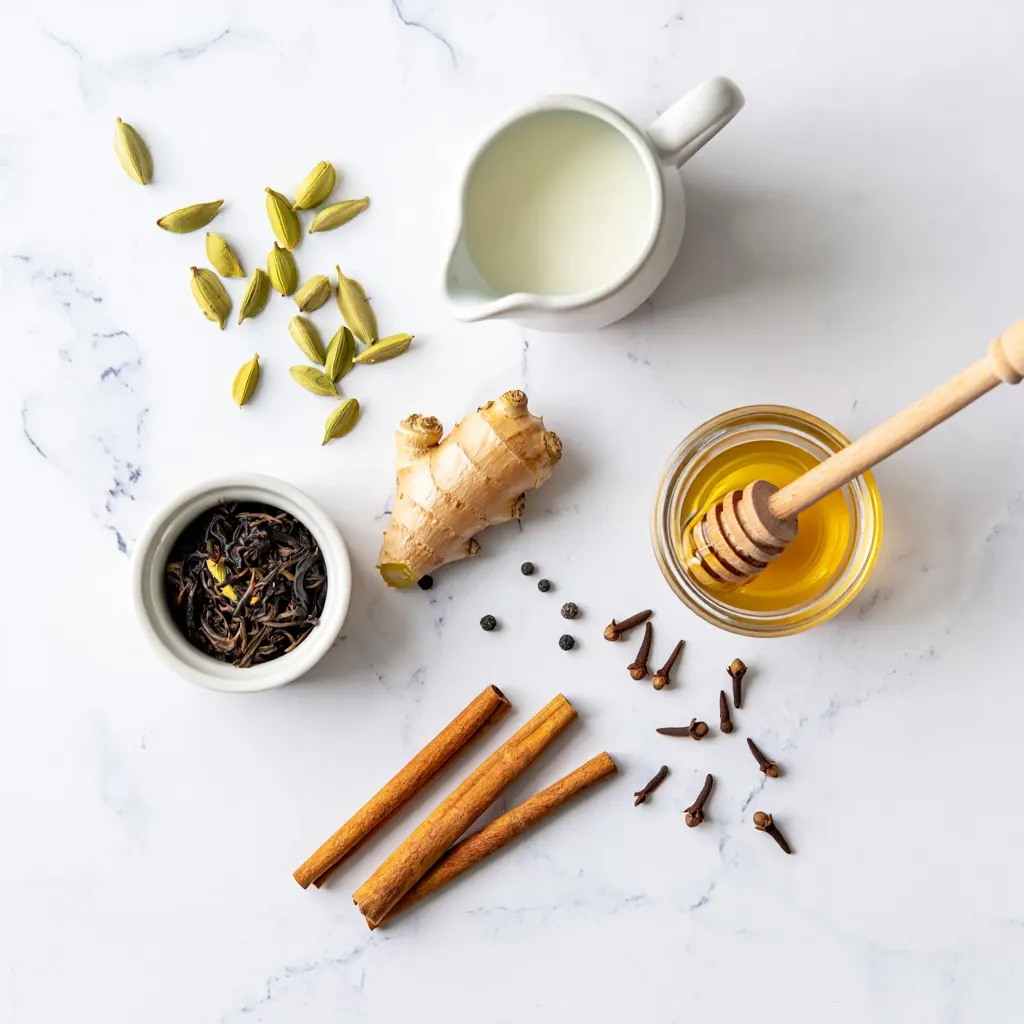
Black Tea (2 tablespoons loose leaf or 2-3 tea bags for 2 servings)
This is the backbone. I’ve tested this with Assam, Ceylon, English Breakfast blends, Earl Grey (a mistake bergamot fights with chai spices), Darjeeling (too delicate), and cheap generic brands.
What works: Assam or a strong English Breakfast blend. Assam is malty and assertive. It doesn’t vanish when you add milk. Ceylon works too but can get slightly astringent if you oversteep it.
What doesn’t work: Darjeeling is too floral and light. It makes a chai latte that tastes like you forgot to add the tea. Earl Grey’s bergamot clashes with the warming spices you end up with a confused flavor profile.
The mistake I made: Using whatever tea was in my pantry. I once used a delicate green tea because I ran out of black tea. It was a disaster bitter, grassy, and completely wrong.
Whole Spices
- 4-5 green cardamom pods, crushed
- 1 cinnamon stick (about 2 inches)
- 3-4 whole cloves
- 1/2 teaspoon black peppercorns
- 2-3 slices fresh ginger (about 1/4 inch thick each)
Why whole spices? They release flavor more slowly and don’t turn muddy or gritty like pre-ground spices do when you simmer them. I crush the cardamom pods with the side of a knife you want them cracked open so the seeds inside can release their oils.
Common mistake: Using all ground spices. They bloom fast, then turn bitter and leave sediment. If you only have ground, add them at the very end after steeping, not during the simmer.
Substitution I’ve tested: If you don’t have whole spices, use 1/2 teaspoon ground cinnamon, 1/4 teaspoon ground cardamom, and a small pinch of ground cloves. Add them after you steep the tea, not before.
Water (1 1/2 cups)
You’ll simmer the spices in water first, then steep the tea. This amount accounts for evaporation.
Milk (1 1/2 cups)
Whole milk gives you the creamiest result. I’ve used 2%, oat milk, and almond milk.
What happened with oat milk: It worked surprisingly well creamy and slightly sweet. It doesn’t curdle.
What happened with almond milk: Thinner body, and it can separate if you overheat it. Still drinkable, just not as rich.
Sweetener (2-3 teaspoons sugar, honey, or maple syrup)
Chai needs some sweetness to balance the spices. I usually use regular white sugar or a light-colored honey. Dark honey can overpower the tea.
Mistake I made: I skipped sweetener entirely the first time because I was trying to be “healthy.” The chai tasted medicinal and harsh.
Step-by-Step Instructions
Step 1: Crush and Toast the Spices
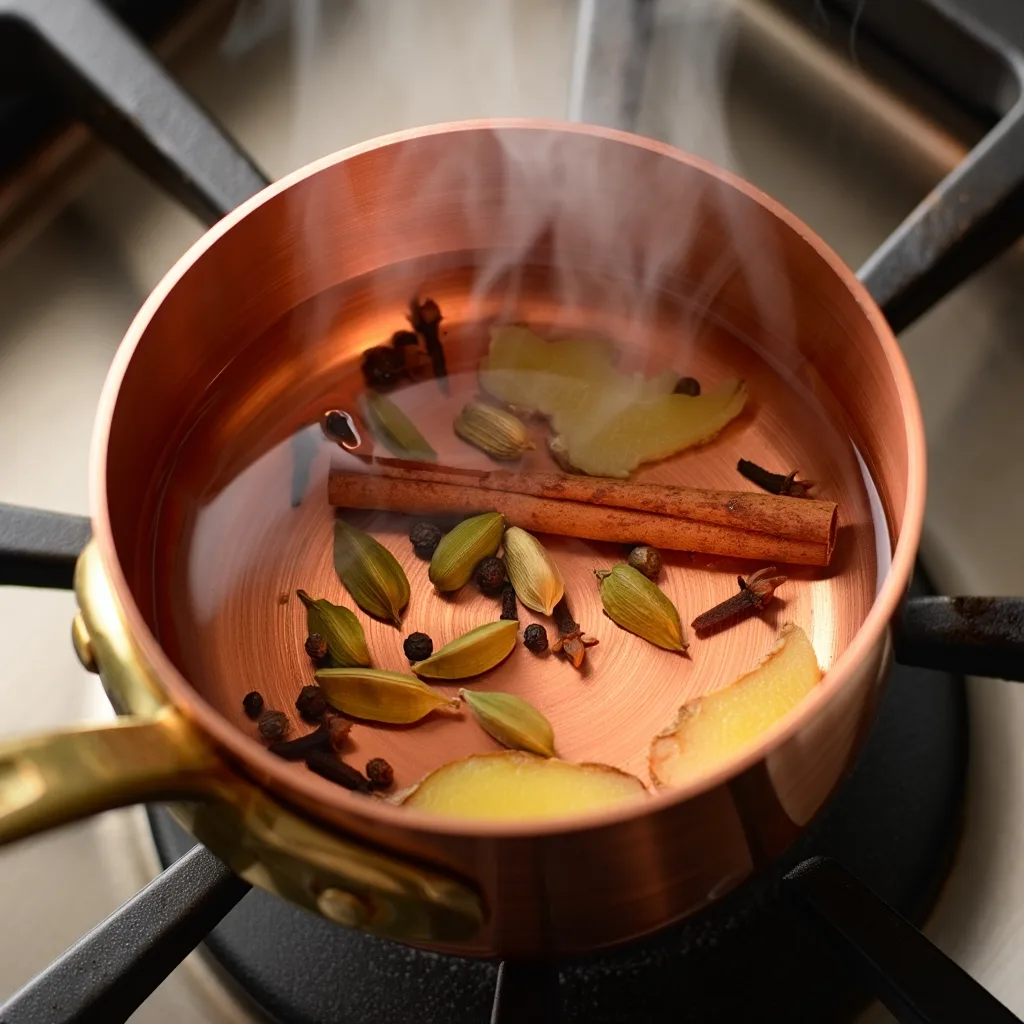
Put your cardamom pods, cinnamon stick, cloves, peppercorns, and ginger slices in a small saucepan over medium heat. Let them toast for about 1 minute just until you start to smell them. Don’t walk away; they can burn fast.
Why this matters: Toasting wakes up the essential oils in the spices. You’ll get a deeper, more aromatic chai.
What to look for: The spices will start to smell warm and fragrant. You might hear a faint crackling. Pull them off the heat before they darken or smoke.
Step 2: Add Water and Simmer
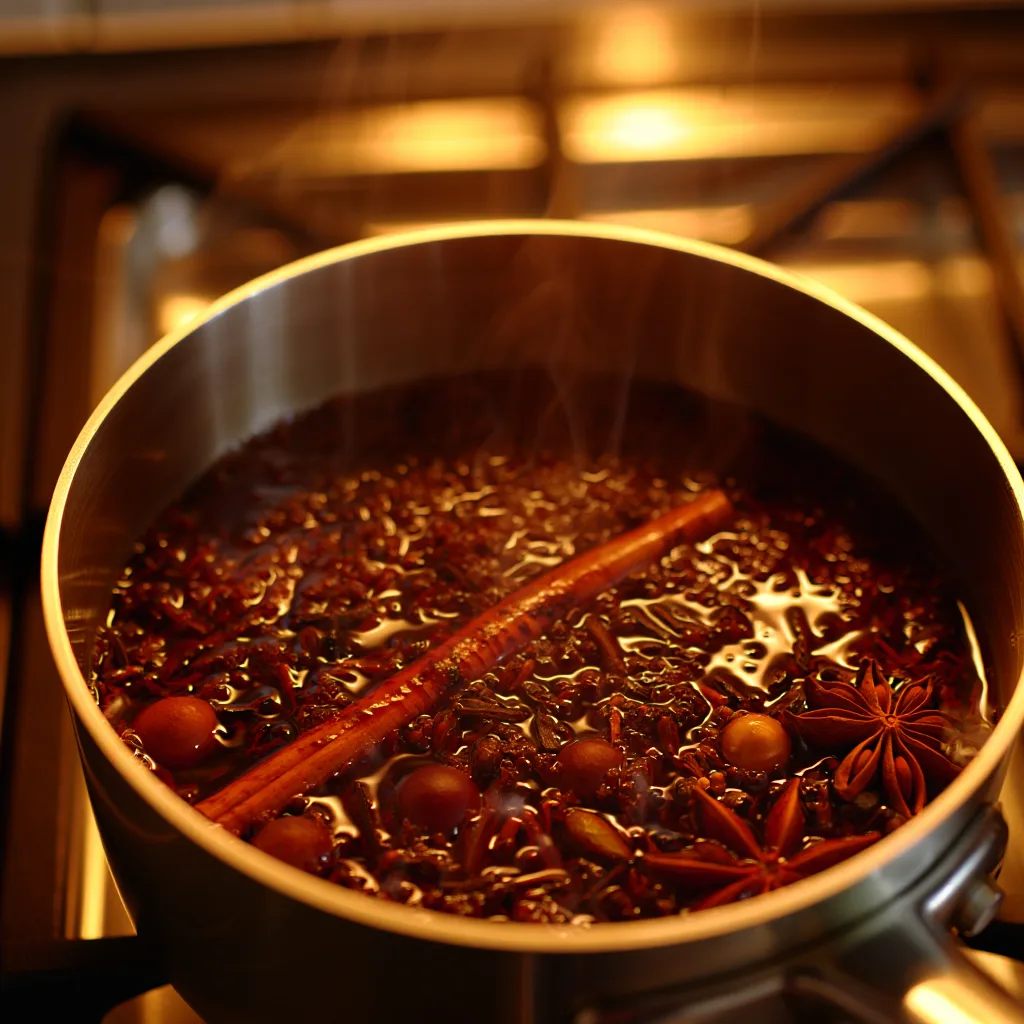
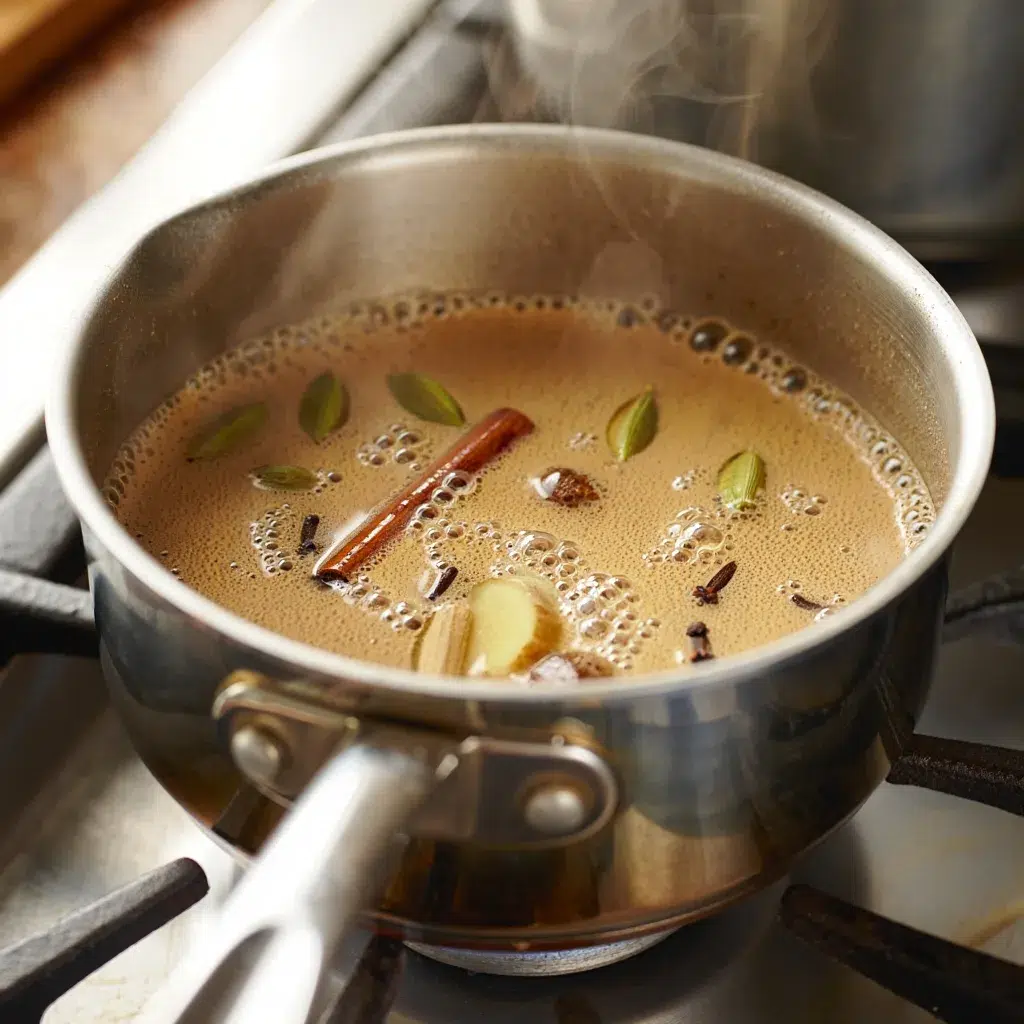
Add 1 1/2 cups of water to the saucepan. Bring it to a boil, then reduce the heat and let it simmer for 5-7 minutes.
Why this matters: This extracts the spice flavors into the water before you add the tea. If you add the tea too early, it can overbrew and turn bitter while the spices are still releasing their flavors.
What to look for: The water will take on a light golden-brown color and smell intensely spiced. It should reduce slightly.
Step 3: Add the Black Tea and Steep
Turn off the heat. Add your loose leaf black tea or tea bags. Let it steep for 4-5 minutes. Don’t go longer than 6 minutes unless you like your chai very strong and tannic.
Why this matters: Black tea releases tannins the longer it steeps. With milk, you can get away with a slightly longer steep than you would for plain tea, but past 6 minutes it starts tasting harsh.
What to look for: The liquid will darken to a deep reddish-brown. If you’re using loose leaf, you’ll see the leaves unfurl.
Mistake I made early on: I left the tea bags in for 10 minutes because I thought “stronger is better.” It was astringent and unpleasant even with milk.
Step 4: Strain and Add Milk
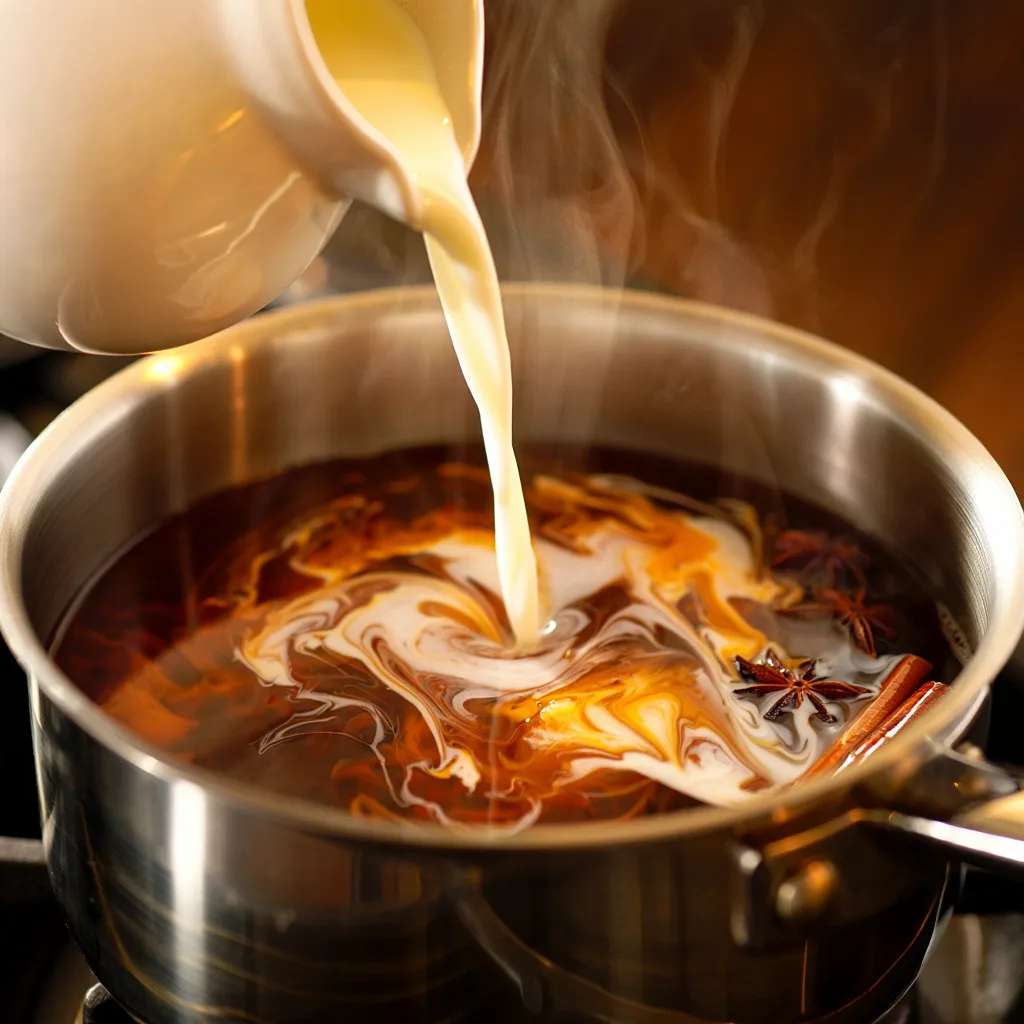
Remove the tea bags or strain out the loose leaves and whole spices. Return the spiced tea concentrate to the saucepan. Add 1 1/2 cups of milk.
Why this matters: You want to heat the milk gently with the tea concentrate, not boil it. Boiling can scorch the milk and create a skin on top.
What to look for: Heat over medium-low until the chai is steaming and just starting to show tiny bubbles around the edges. Don’t let it come to a rolling boil.
Step 5: Sweeten and Serve
Stir in your sweetener. Taste and adjust. Pour into mugs.
Optional: If you want it frothy, you can use a milk frother or whisk vigorously for 20-30 seconds before pouring.
What to look for: The chai should be creamy, aromatic, and balanced not too sweet, not too bitter, with the spices present but not overwhelming the tea.
Common Mistakes I Made & How I Fixed Them
Mistake 1: Using a Weak Black Tea
What went wrong: The first few times, I used a light Darjeeling because it was what I had. The chai tasted like spiced milk with a vague hint of tea somewhere in the background.
Why it happened: Darjeeling is a delicate tea. It can’t compete with the bold spices and the milk. It just gets lost.
What I changed: I switched to Assam loose leaf. The difference was immediate full-bodied, malty, and strong enough to stand up to everything else. If you’re exploring different types of tea for home brewing, understanding the base is essential; I found that experimenting with how different teas behave in milk-based drinks helped me figure out what works.
Mistake 2: Adding Ground Spices During the Simmer
What went wrong: I used pre-ground cinnamon, cardamom, and cloves and added them right at the beginning with the water. The chai turned muddy and gritty, with an unpleasant chalky texture.
Why it happened: Ground spices release their flavors very quickly, and when you simmer them for several minutes, they can turn bitter and leave sediment.
What I changed: I started using whole spices and only adding ground spices (if at all) at the very end, after straining. The texture improved immediately, and the flavor was cleaner.
Mistake 3: Steeping the Tea for Too Long
What went wrong: I thought steeping the tea for 10-12 minutes would make it “extra strong” and more flavorful. Instead, it was bitter and astringent, even with milk and sugar.
Why it happened: Black tea releases tannins the longer it steeps. Those tannins create a dry, puckering sensation in your mouth not pleasant.
What I changed: I stick to 4-5 minutes now, 6 minutes maximum. The chai is still strong but not harsh.
Mistake 4: Boiling the Milk
What went wrong: I brought the chai to a full rolling boil after adding the milk because I wanted it “really hot.” A skin formed on top, and the milk had a slightly scorched taste.
Why it happened: Boiling milk causes the proteins to coagulate and form a skin. It can also scorch on the bottom of the pan if the heat is too high.
What I changed: I heat the milk gently over medium-low heat until it’s steaming but not boiling. If I want it hotter, I warm my mug first with hot water.
Variations I Actually Tried
Variation 1: Masala Chai Concentrate (Make-Ahead)
I made a double batch of the spiced tea concentrate (without milk), strained it, and stored it in the fridge for up to 5 days. When I wanted a chai latte, I heated 1/2 cup of concentrate with 3/4 cup of milk.
What worked: This was incredibly convenient for busy mornings. The flavor held up well in the fridge.
What changed: The spice flavors mellowed slightly after a day or two, but it was still very good. I added a tiny pinch of fresh ground cardamom when reheating to brighten it up.
Variation 2: Iced Chai Latte
I made the chai as usual, let it cool to room temperature, then poured it over ice with cold milk.
What worked: Refreshing and still flavorful. The spices came through clearly even when cold.
What didn’t work as well: The ice diluted it slightly. Next time, I’d make the concentrate a bit stronger (steep the tea for the full 6 minutes) or use frozen chai concentrate ice cubes.
Variation 3: Chai with Vanilla
I added 1/2 teaspoon of vanilla extract after straining the tea and spices.
What worked: It added a subtle warmth and rounded out the flavors. It made the chai taste slightly more dessert-like.
What I’d change: I might try a vanilla bean next time instead of extract for a cleaner vanilla flavor. If you’re looking for more ways to add natural sweetness and depth to drinks, I’ve found that working with complementary flavors in other recipes often translates well.
Storage, Reheating & Real-Life Use
Storing the concentrate: If you make a batch of the spiced tea concentrate (without milk), it keeps in an airtight container in the fridge for up to 5 days. The flavors actually meld and improve slightly after a day.
Storing a finished chai latte: If you’ve already added milk, drink it fresh. Milk-based chai doesn’t store well it can separate or develop an off flavor after 24 hours in the fridge.
Reheating: Reheat gently on the stove over low heat or in the microwave in 30-second bursts, stirring in between. Don’t boil it. The milk can separate if you overheat it.
What changes: Reheated chai loses a bit of its fresh aroma, and the spices can taste slightly muted. It’s still drinkable but not as vibrant as a fresh cup.
Who This Recipe Is / Is Not For
This recipe is for you if:
- You want a chai latte that actually tastes like tea, not just spiced milk
- You’re willing to spend 15 minutes making something from scratch
- You have access to loose leaf black tea or good-quality tea bags (Assam or a strong breakfast blend)
- You want to stop spending money on coffee shop chai
This recipe is not for you if:
- You need a chai latte in under 5 minutes with no prep (buy a concentrate or use a chai tea bag with milk)
- You don’t like strong tea flavor or prefer very mild, sweet drinks
- You only have delicate teas like green tea or white tea (it won’t work with this method)
- You don’t have whole spices and don’t want to buy them (you can adapt with ground spices, but the texture and flavor won’t be as clean)
Final Thoughts
I make this once or twice a week now, usually on weekend mornings when I have a few extra minutes. It’s become one of those small rituals that makes me feel like I’m taking care of myself instead of rushing through the day.
The next thing I want to try is adding a small piece of star anise to the spice mix I’ve read that it adds a subtle licorice note that works well with black tea. I’m also curious about using a stronger Assam with golden tips to see if that adds any extra maltiness.
The main thing I’d tell anyone making this for the first time: don’t skip the step of simmering the spices in water before you add the tea. That’s where the magic happens. And use a black tea that can actually hold its own. Everything else is just adjustments.
Recipe Card Summary
Prep time: 5 minutes
Cook time: 10 minutes
Total time: 15 minutes
Servings: 2 chai lattes
Ingredients:
- 2 tablespoons loose leaf black tea (Assam or strong breakfast blend) or 2-3 tea bags
- 4-5 green cardamom pods, crushed
- 1 cinnamon stick (2 inches)
- 3-4 whole cloves
- 1/2 teaspoon black peppercorns
- 2-3 slices fresh ginger
- 1 1/2 cups water
- 1 1/2 cups whole milk (or milk of choice)
- 2-3 teaspoons sweetener (sugar, honey, or maple syrup)
Instructions:
- Toast spices in a dry saucepan over medium heat for 1 minute
- Add water, bring to a boil, then simmer 5-7 minutes
- Turn off heat, add tea, steep 4-5 minutes
- Strain out tea and spices
- Add milk, heat gently until steaming (don’t boil)
- Stir in sweetener, taste and adjust
- Pour into mugs and serve