

Table of Contents
Introduction
The first time I tried making copycat egg bites at home, I used a blender, a muffin tin, and total confidence and pulled out twelve rubbery hockey pucks that squeaked against my fork. I’d skipped the water bath, figuring it was just an extra step for people with fancy sous vide machines. It wasn’t. Once I started baking the muffin tin inside a larger pan of hot water, the texture flipped completely: soft, custardy, and sliceable instead of springy. This egg bites recipe is the version I actually make on Sunday nights now, no special equipment required.
Why This Egg Bites Recipe Works
- For anyone who wants the bakery-style egg bite texture without buying a sous vide immersion circulator
- Useful for weekday breakfasts you can grab straight from the fridge one batch covers most of the week
- For people managing a higher-protein or lower-carb morning routine, since the base leans on eggs and cottage cheese instead of flour or bread
- Exists because most oven versions online skip the water bath step, which is the actual reason bakery egg bites feel different from a regular egg muffin
These fit right into a rotation of high protein breakfast ideas if you’re trying to front-load protein earlier in the day.
Egg Bites Ingredients (With Context)
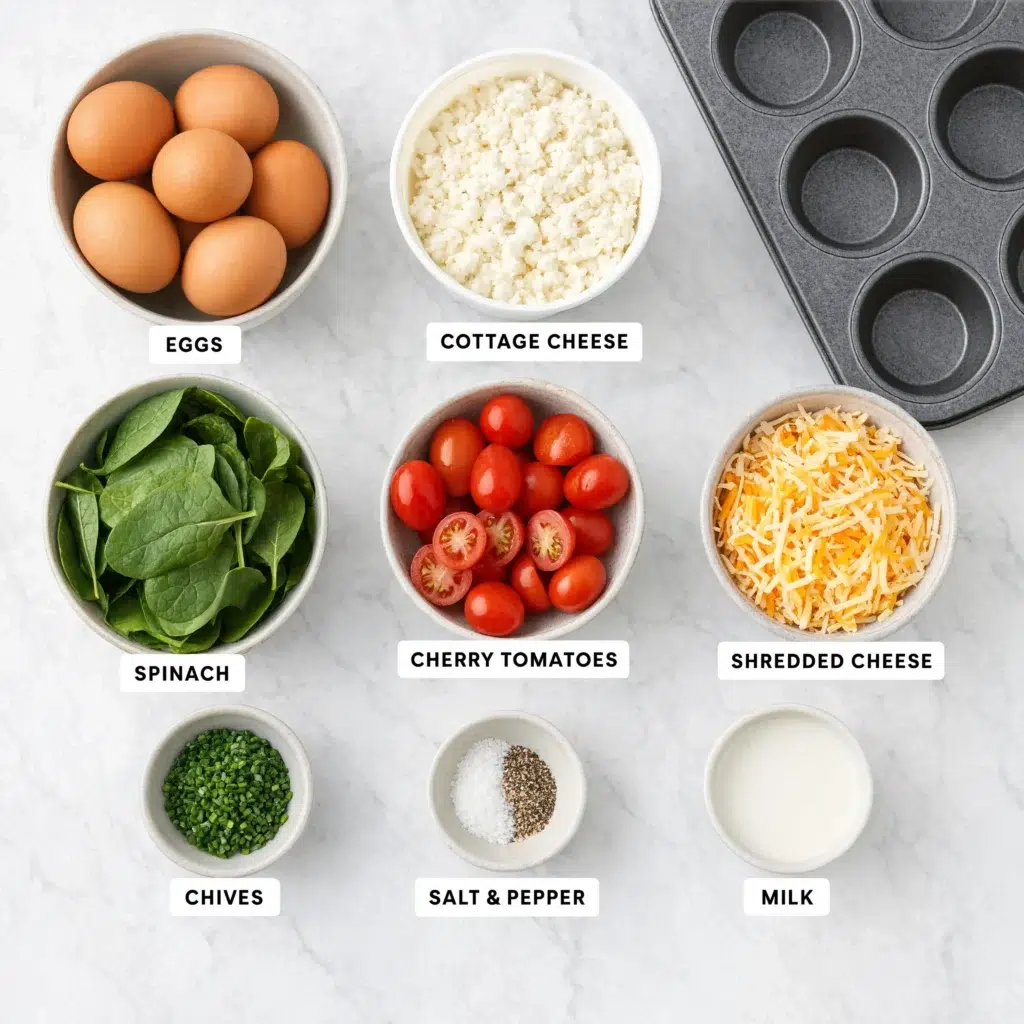
Large eggs (6): The base of the custard. Cold eggs blend less smoothly, so I let mine sit out for about 15 minutes first. Common mistake: cracking eggs directly into the blender without checking for stray shell fragments crack into a separate bowl first.
Cottage cheese, small curd (1 cup): This is what gives the interior that soft, slightly tangy density instead of a dry, spongy texture. Tested substitution: ricotta works, but the bites turn out heavier and less airy. Skipping it and using only milk makes the texture noticeably more rubbery.
Shredded cheese, gruyere or sharp cheddar (¾ cup): Melts into the mixture for flavor and helps bind it. Pre-shredded bagged cheese has an anti-caking coating that can leave the batter slightly grainy, so I shred a block myself now.
Whole milk or heavy cream (2 tbsp): Loosens the batter just enough to blend smoothly. Skipping this makes the mixture too thick to pour evenly into the tin.
Salt and black pepper: Season the eggs themselves, not just the toppings. Under-salting is the most common complaint I’ve gotten from people trying a bite from my kitchen eggs need more salt than most people expect.
Cooked mix-ins bacon, sautéed spinach, roasted red pepper (¾ cup total): Must be cooked and well-drained before they go in. Raw or wet vegetables, especially spinach and mushrooms, release water into the batter and create a soggy bottom layer.
If you’re eating lower-carb across the board, my keto egg roll in a bowl is another egg-forward dinner option worth bookmarking.
Step-by-Step Instructions

Step 1: Prep the water bath setup
What to do: Place a 9×13 baking pan on the middle oven rack, set your greased muffin tin inside it, and preheat the oven to 325°F.
Why it matters: This is the step that actually makes these “egg bites” instead of “egg muffins” the surrounding hot water slows and evens out the heat so the eggs set into a custard rather than puffing up and drying out.
What to look for: The muffin tin should sit level inside the pan with room around the sides for water.
Step 2: Blend the base
What to do: Combine the eggs, cottage cheese, milk, salt, and pepper in a blender and blend on high for about 20 seconds.
Why it matters: Blending breaks down the cottage cheese curds so you don’t end up with visible white lumps this is what gives that smooth, store-bought-style texture.
What to look for: The mixture should look pale yellow and completely uniform, with no white flecks left.
Step 3: Load the tin
What to do: Divide the cooked mix-ins and shredded cheese evenly among the muffin cups first, then pour the egg mixture over the top, filling each cup about ¾ full.
Why it matters: Filling with the solids first keeps them from sinking into one clump at the bottom.
What to look for: Each cup should have a fairly even ratio of filling to egg take a second to redistribute with a spoon if one cup looks overloaded.
Step 4: Add the water and bake
What to do: Carefully pour hot water into the outer 9×13 pan until it reaches about halfway up the sides of the muffin tin, then bake for 30–35 minutes.
Why it matters: The water needs to go in hot, not cold, or it drags down the oven temperature and cooks the eggs unevenly. If you want to check doneness with a thermometer instead of guessing, the USDA’s recommended internal temperature for egg dishes is 160°F that’s a more reliable marker than eyeballing “set.”
The USDA’s recommended internal temperature for egg dishes is 160°F, which is a more reliable doneness check than relying on appearance alone.
What to look for: The centers should look set but still slightly glossy, not browned they firm up more as they cool.
Step 5: Cool before unmolding
What to do: Let the tin rest in the water bath for 5 minutes after the oven is off, then transfer it to a wire rack and cool another 10 minutes before running a knife around each cup.
Why it matters: Egg bites are fragile straight out of the oven and will tear if you try to pop them out too soon.
What to look for: The edges should pull away from the tin cleanly when they’re ready.
Per FDA guidance on reheating egg dishes, previously cooked egg dishes should be brought back to a safe serving temperature rather than just warmed through.
Common Mistakes I Made & How I Fixed Them
1. I didn’t use a water bath the first time
What went wrong: The bites came out rubbery and slightly deflated, with a texture closer to a dried-out omelet than a custard.
Why it happened: Direct, dry oven heat cooks the egg proteins too fast and too unevenly.
What I changed next time: I now always bake the muffin tin inside a larger pan of hot water, no exceptions.
Part of what makes these satisfying is eggs’ high-quality protein content, which the American Egg Board notes is considered a benchmark for protein quality among whole foods.
2. I added raw spinach straight from the bag
What went wrong: The bottoms of several bites turned watery and never fully set, even with extra bake time.
Why it happened: Raw spinach releases a surprising amount of liquid as it cooks, and that liquid pooled at the bottom of the cups.
What I changed next time: I now wilt and squeeze out any leafy greens before they go anywhere near the batter.
3. I used pre-shredded cheese straight from the bag without thinking about it
What went wrong: The batter had a slightly grainy, chalky texture in a few bites.
Why it happened: The anti-caking coating on bagged shredded cheese doesn’t melt the same way freshly grated cheese does.
What I changed next time: I shred a block of cheese myself now it takes two extra minutes and noticeably improves the texture.
Variations I Actually Tried
Egg-white-only version: Swapped whole eggs for an equal volume of egg whites. Worked fine, but the texture was noticeably less rich and slightly more rubbery even with the water bath worth it only if you’re specifically avoiding yolks.
Ricotta instead of cottage cheese: Made the bites heavier and creamier, closer to a mini crustless quiche. A good variation, but it loses some of the light, jiggly texture the cottage cheese gives.
Doubling the cheese: Tried bumping the shredded cheese up to 1½ cups. It tasted great, but a few bites leaked grease into the water bath and the tops browned unevenly I don’t recommend going past ¾ cup in a standard 12-cup tin.
Storage, Reheating & Real-Life Use
Honestly, these hold up better than I expected. Cooled completely and stored in an airtight container, they keep well in the fridge for about 4 days by day 5 the texture starts to lose that fresh, custardy softness. I microwave two at a time for about 30–40 seconds at 50% power; full power tends to make the edges slightly rubbery.
Freezing works too: I lay them out on a tray until solid, then bag them, and they hold for about 2 months. Egg dishes reheated after refrigeration should be brought back up to a safe serving temperature rather than just warmed through, which is worth keeping in mind if you’re reheating a large batch for guests rather than just yourself.
Reheated-from-frozen bites are a touch denser than fresh ones, but still perfectly good for a grab-and-go breakfast.
Who This Recipe Is / Is Not For
This is a good fit if you want a make-ahead, higher-protein breakfast you can eat cold or reheated, and if you don’t mind the extra step of setting up a water bath. It’s not the recipe for you if you want something ready in under 15 minutes on a weekday morning the water bath setup and 30-plus-minute bake time make this more of a weekend batch-cooking project. It’s also probably not worth making if you dislike the flavor of cottage cheese, since it’s blended into the base rather than optional.
Final Thoughts
I make a batch of these most Sundays now, mostly because having something ready in the fridge stops me from grabbing a pastry on the way out the door. Next time I want to try a version with roasted mushrooms instead of spinach, since I think the water content will behave differently once they’re properly caramelized first. No promises it’ll be an improvement that’s just where my curiosity is right now.
For mornings when you want more than a couple of egg bites, this breakfast burrito bowl is my go-to full-plate option.
Recipe Card Summary
Prep time: 10 minutes
Cook time: 35 minutes
Total time: 45 minutes (plus cooling)
Servings: 12 egg bites (serves 4–6)Calories: Approximately 90–110 per egg bite, depending on cheese and mix-ins used