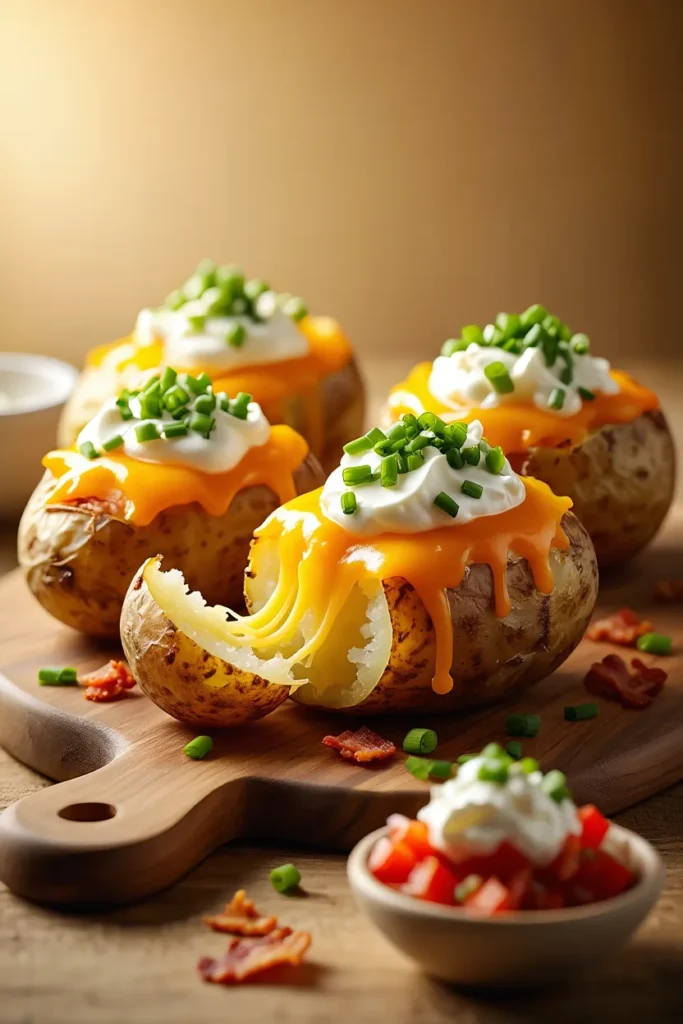
Table of Contents
Introduction
The first time I made cheesy baked potatoes for a dinner party, I pulled them out of the oven to a scene I’d rather forget. The skin was soft and pale almost rubbery and the shredded cheddar had melted into a greasy puddle rather than the golden, bubbling crust I’d imagined. My guests were polite. The potatoes were not. That night taught me more about timing and temperature than a dozen successful recipes ever could.
Since then, I’ve made cheesy baked potatoes probably forty or fifty times. I’ve tried russets, Yukon golds, and red potatoes. I’ve broiled the cheese, baked it from the start, and layered it halfway through. What I’m sharing here is the version I actually make now skin that shatters a little when you fork it, fluffy interior, cheese that’s properly melted and slightly browned at the edges. Not a showstopper recipe. Just one that works, reliably, most nights.
Why This Recipe Works
- For busy weeknights when you need a hearty side without much active cooking time.
- For cooks who’ve ended up with mushy or rubbery baked potatoes and want to understand why.
- When you want a filling, satisfying dish that can go from pantry staples in under 70 minutes.
- Solves the most common problem: cheese that slides off or turns oily instead of melting into the potato.
- Uses no canned soups or processed shortcuts just real ingredients you likely already have.
Ingredients (With Real Context)
The Potatoes
Russet potatoes are my go-to. Their high starch content produces that dry, floury interior that makes the flesh light and easy to eat, and their thick skin holds up to the high oven heat you need for crispiness. Yukon Golds work too slightly creamier inside, thinner skin, a touch more buttery in flavor. What I’d avoid: red potatoes. They’re too waxy and stay dense no matter how long they bake. I learned that the hard way after buying a 5-lb bag on sale.
- Substitution: Yukon Gold slightly creamier, less crispy skin.
- Avoid: waxy varieties (red, fingerling) texture stays dense.
- Common mistake: not drying the potato skin before oiling it. Moisture on the skin means steam, which means soft skin. Pat them dry first.
The Fat
I rub mine with olive oil about a teaspoon per potato. It conducts heat into the skin and helps it crisp up. Some recipes use butter, and while I love butter on potatoes in general, it can burn at the high temperature I prefer (425°F). If you want butter flavor, brush it on in the last 10 minutes.
- Substitution (vegan): olive oil or neutral avocado oil both work equally well.
The Cheese
Sharp cheddar is what I reach for almost every time. The fat-to-moisture ratio in a good sharp cheddar means it melts without separating, and the flavor is strong enough to actually register through the potato. Pre-shredded bags do melt, but they contain anti-caking agents that can make the texture a little grainy. Freshly grated from a block is noticeably better I only skip that step when I’m truly in a hurry.
- Alternatives: Gruyère for a nuttier finish, Monterey Jack for extra meltiness, pepper jack if you want a little heat.
- Avoid: low-moisture mozzarella on its own goes stringy and bland without another cheese to anchor it.
- Vegan option: a plant-based cheddar-style shred (Violife or Follow Your Heart melt reasonably well; others don’t). Taste first some brands have an odd aftertaste when baked.
Seasonings & Toppings
Salt is the most important. I salt the skin before it goes in the oven (not just after) it draws out a tiny bit of surface moisture, which then evaporates and leaves the skin drier and crispier. Beyond that: garlic powder, a pinch of smoked paprika, and coarse black pepper. Sour cream, chives, and extra cheese go on after. Bacon bits if you have them. The basics, done right.
- Gluten-free: this recipe is naturally gluten-free as written.
- Lower fat: reduced-fat cheddar melts less smoothly but works. Skip the sour cream or use Greek yogurt as a 1:1 swap tangier, lighter, still creamy.
Timing
| Phase | Time | ISO 8601 |
| Prep Time | 10 minutes | PT10M |
| Cook Time | 60–70 minutes | PT65M |
| Total Time | ~75 minutes | PT75M |
| Serves | 4 people |
Honest comparison: this takes about as long as roasting a chicken thigh, but most of that time is hands-off. You’re not standing at the stove.
Step-by-Step Instructions
- Step 1 Preheat: Preheat your oven to 425°F (220°C).
Why it matters: Lower temperatures (350°F) produce soft, pale skin. You need high heat to drive off the surface moisture and trigger the Maillard reaction on the skin. What to look for: your oven should be fully preheated before the potatoes go in don’t rush this step.
- Step 2 Prep: Scrub and dry your potatoes.
Pat them completely dry with a paper towel this is the step most people skip and then wonder why the skin isn’t crispy. Pierce each potato 8–10 times with a fork. Without piercing, steam builds up inside and can cause the potato to burst (I’ve had this happen; it’s messy).
| ⚠️ Pro Tip Pierce deeply at least half an inch. Shallow pokes don’t release enough steam. |
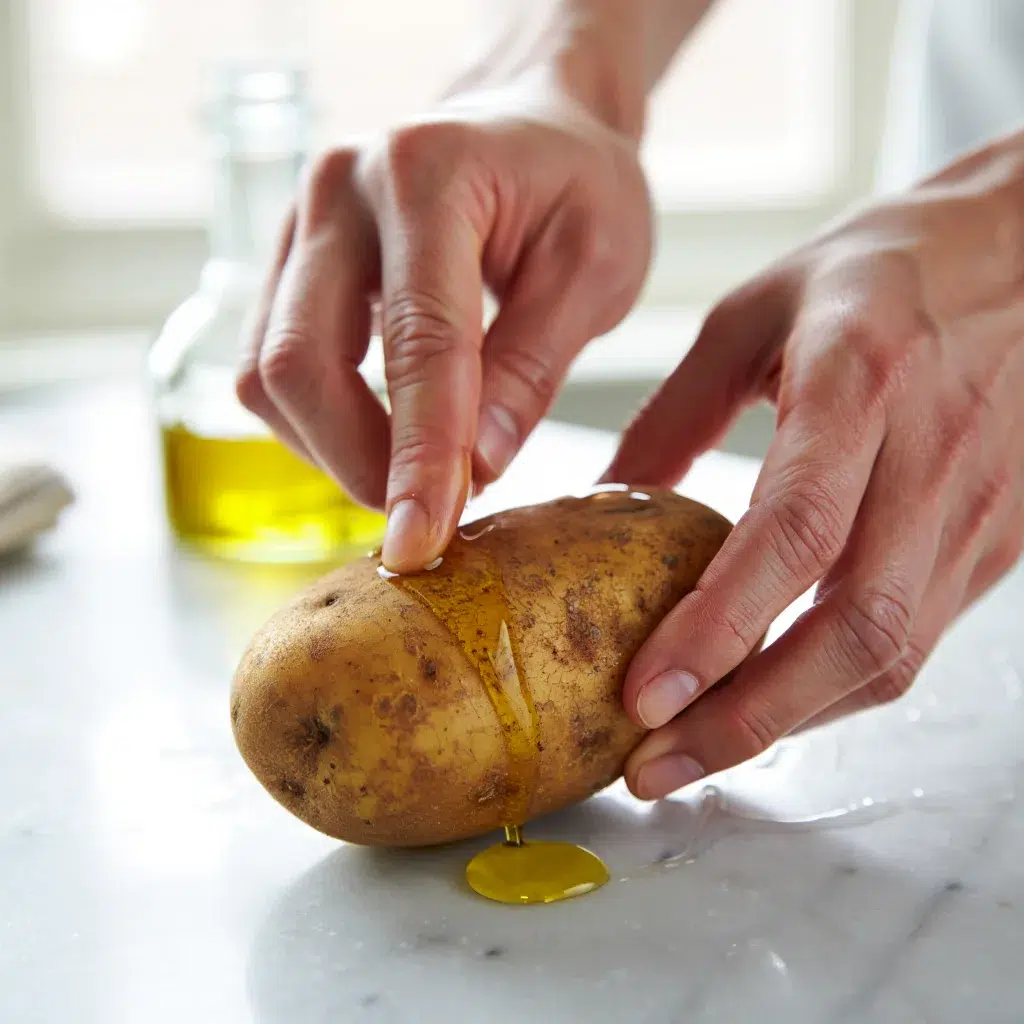
- Step 3 Season: Rub with olive oil and salt.
Use about 1 teaspoon of oil per potato. Rub it all over, including the ends. Then sprinkle generously with kosher salt and a pinch of garlic powder. The salt should look like a light frost on the skin. What to look for: an even, thin coat not dripping.
- Step 4 Bake: Bake directly on the oven rack.
Not on a baking sheet (unless you’re making multiple). Placing them directly on the rack allows hot air to circulate all the way around, crisping the bottom too. Bake for 55–65 minutes. A medium russet (8–9 oz) takes about 60 minutes. What to look for: the skin should feel firm and slightly papery when you squeeze it gently with an oven mitt; a fork should slide in with very little resistance.
| ⏱️ Texture Trick At 50 minutes, give one potato a gentle squeeze with your mitt. If it gives a little in the center but feels firm at the edges, it needs 10 more minutes. If it gives all the way through, check it immediately it may be done. |
- Step 5 Cheese: Add the cheese.
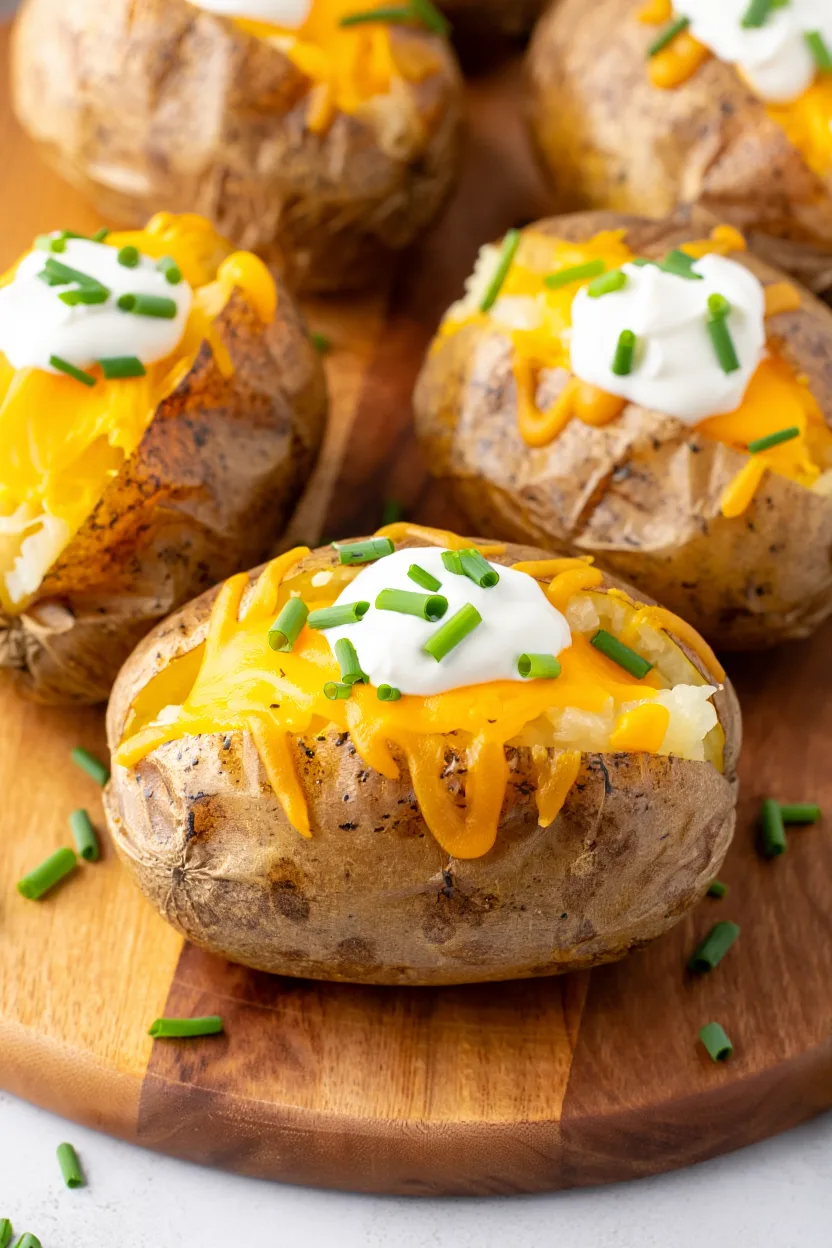
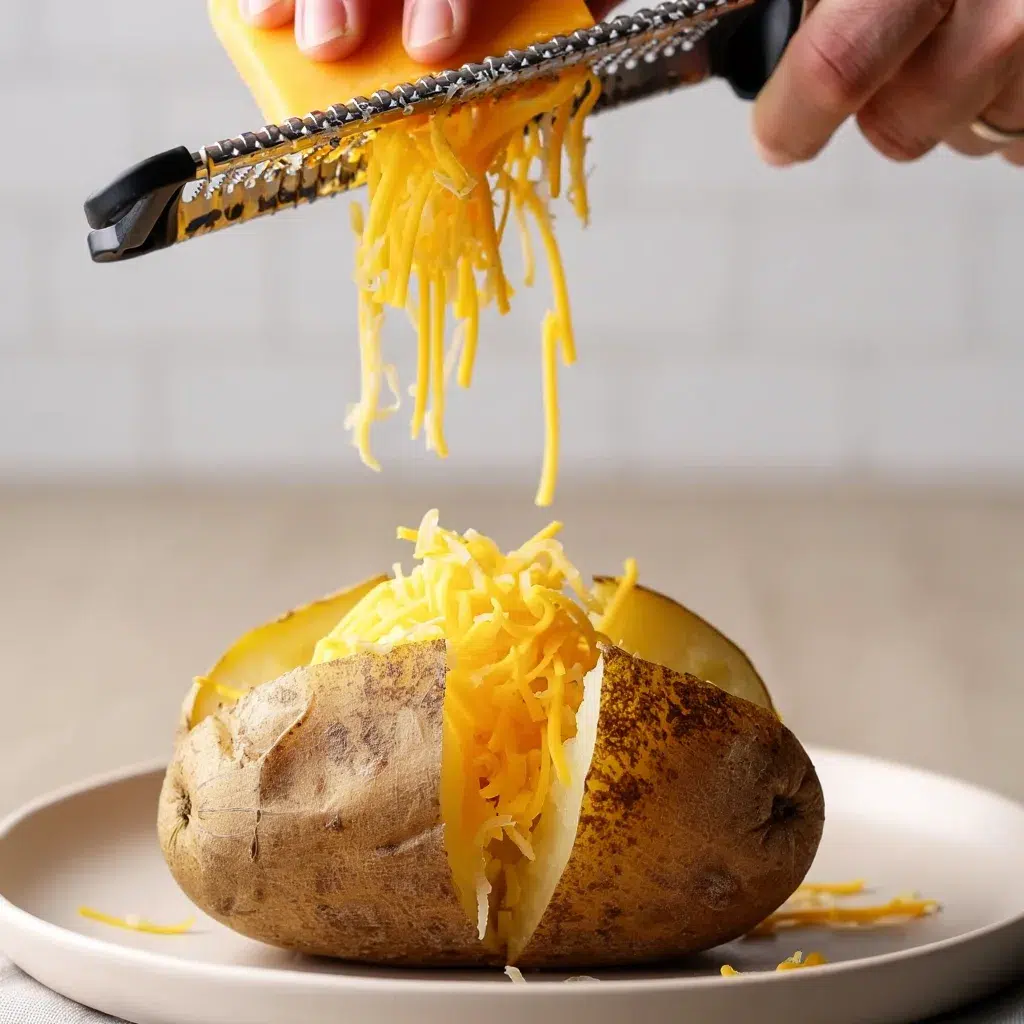
Remove the potatoes. Cut a slit lengthwise, then a shorter one across (an X pattern). Push the ends gently toward the center to open them up. Fluff the interior with a fork. Now add a small pat of butter, let it melt, then pile on your grated cheddar. Return to the oven for 3–5 minutes until the cheese is fully melted and just starting to bubble at the edges.
| 🔥 Flavor Booster For extra-golden cheese, switch to the broiler for the final 90 seconds. Watch it closely it goes from golden to burnt in about 30 seconds if you’re not paying attention. I’ve lost good cheese this way. |
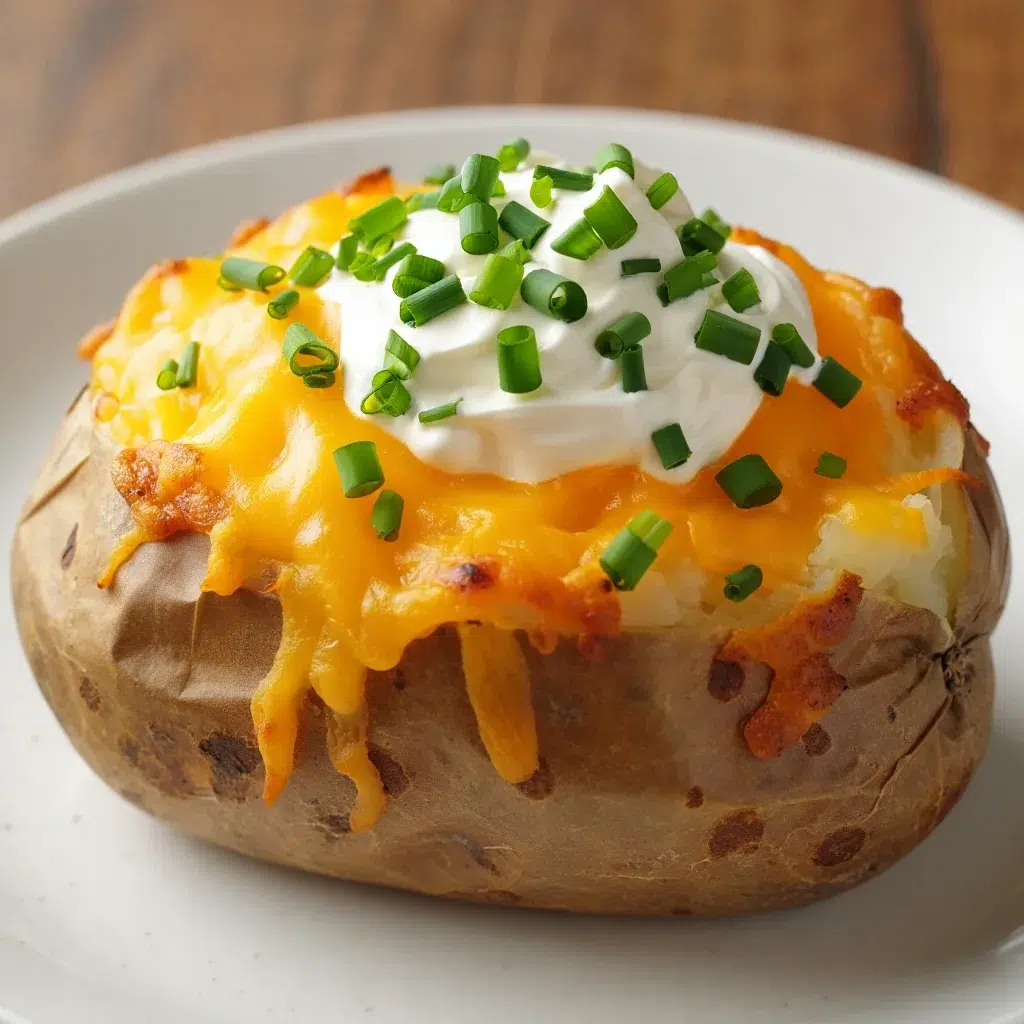
- Step 6 Serve: Finish and serve immediately.
Top with sour cream, fresh chives, extra cheese, and bacon if using. These don’t hold well once topped serve them as soon as possible.
Common Mistakes I Made & How I Fixed Them
Mistake #1: Baking at Too Low a Temperature
What went wrong: I spent years baking potatoes at 350°F because that’s what several older recipes suggested. The result was always pale, soft skin with a dense, slightly gluey interior.
Why it happened: Lower temperatures cook the inside through conduction (heat moving slowly inward) but don’t drive off enough surface moisture to crisp the skin. You end up steaming the potato from within.
The fix: 425°F minimum. The higher heat creates a sharper temperature gradient the outside gets hot and crispy while steam properly vents through the piercings. Cooking time barely changes (maybe 5 extra minutes), but texture improves dramatically.
Mistake #2: Adding Cheese Too Early
What went wrong: On my first attempt, I added the cheddar about 20 minutes before the potato was done, thinking it would melt beautifully and get golden. Instead, the fat separated out, the protein dried up, and I was left with greasy, slightly grainy cheese glued to a still-undercooked potato.
Why it happened: Cheddar can’t handle prolonged heat. At temperatures above 160°F for extended periods, the emulsion breaks fats separate from proteins, and the texture turns oily and grainy.
The fix: Add cheese only in the last 3–5 minutes. The potato is fully cooked and hot, so the cheese melts quickly from residual heat without breaking down. If you want browning, 90 seconds under the broiler at the very end is all you need.
Mistake #3: Wrapping in Foil
What went wrong: Almost every recipe I’d seen at family dinners had foil-wrapped potatoes. I followed along. The result: soft, steam-cooked skin that had zero crispiness. It peeled off like tissue paper.
Why it happened: Foil traps steam. The potato cooks faster (which is why restaurants sometimes do it for throughput), but the skin never dries out enough to crisp. You’re essentially steaming it wrapped in aluminum.
The fix: No foil. Ever. If you want to keep them warm after baking, wrap them after but cook them unwrapped on the rack every single time.
Mistake #4: Using Pre-Shredded Bagged Cheese
What went wrong: Pre-shredded cheese melts patchily, leaves a slightly gritty texture, and doesn’t brown as evenly. I noticed this especially when I tried to broil the cheese some spots went brown while others stayed pale.
Why it happened: Commercial pre-shredded cheese contains cellulose (wood pulp fiber) or potato starch to prevent clumping. These coatings interfere with even melting and browning.
The fix: Grate from a block. Takes an extra two minutes. The difference in melt quality is noticeable. Worth it.
Variations I Actually Tried
Bacon & Jalapeño Version
What I did: Added crumbled crispy bacon and thinly sliced pickled jalapeños on top of the cheddar before the final oven phase.
What worked: Excellent. The acid from the jalapeños cuts through the richness of the cheese. The bacon stays slightly crispy if added in the last 3 minutes (any earlier and it goes chewy).
What didn’t: Fresh jalapeños added before the oven release too much moisture and make the cheese greasy. Use pickled or add fresh after.
Broccoli & Cheddar Version
What I did: Pressed small broccoli florets into the potato after fluffing, then topped with cheddar and baked until melted.
What worked: The broccoli gets slightly charred at the tips in the oven which I actually loved. Looks impressive, tastes good.
What didn’t: If the florets are too large, they stay raw in the center by the time the cheese is done. Cut them small (under 1 inch).
Vegan Version
What I did: Olive oil rub, no butter, Violife plant-based cheddar shreds, topped with vegan sour cream and chives.
What worked: Surprisingly close to the original. The Violife melted smoothly and had decent flavor.
What didn’t: The skin wasn’t quite as crispy I think the oil distribution was slightly different. May need an extra 5 minutes in the oven. I’m still tweaking this one.
Nutritional Information
Per serving (1 medium russet, 1 oz cheddar, 1 tbsp sour cream). Sample values verify before publishing:
| Nutrient | Amount | Notes |
| Calories | ~340 kcal | Varies with potato size |
| Carbohydrates | ~42 g | Per USDA FoodData Central |
| Fat | ~14 g | Primarily from cheese |
| Protein | ~12 g | Cheese contributes most |
| Fiber | ~4 g | Skin intact |
| Sodium | ~380 mg | Varies with salt + cheese type |
| Vitamin C | ~28% DV | Potatoes are a notable source |
| Potassium | ~620 mg | Good source per USDA |
Source: USDA FoodData Central (fdc.nal.usda.gov) nutritional profile of russet potatoes. Always calculate based on your specific ingredients.
Healthier Alternatives
- Reduced-fat cheddar: Melts less smoothly and the texture is slightly more rubbery. Flavor is milder. Acceptable swap if you’re watching saturated fat just know the texture difference is real.
- Greek yogurt instead of sour cream: Works well. Tangier, higher protein, lower fat. 1:1 substitution. Don’t heat it in the oven though it can separate.
- Sweet potato instead of russet: A different recipe entirely, but if you want something with more fiber and beta-carotene, it’s a valid path. Cook time stays similar; flavor profile changes significantly (sweeter, earthier).
- Smaller potato portions: One medium potato (7 oz) is filling on its own. Two smaller (5 oz each) gives more skin-to-flesh ratio, which some people prefer.
Honest note: there’s no cheese swap that tastes exactly like cheese. Nutritional yeast adds a faint cheesiness but it’s not the same. Know what you’re trading before you commit to it.
Serving Suggestions
These cheesy baked potatoes pair beautifully with a classic weeknight meatloaf the richness of both dishes is balanced by a simple green salad alongside.
For a lighter pairing, serve with garlic butter shrimp for a surf-and-comfort combination that works surprisingly well.
If you love effortless oven dinners, our sheet pan fajitas are worth bookmarking for the same relaxed weeknight energy.
- Plating: open the potato fully and let the cheese spill slightly over the sides before adding toppings.
- Seasonal: in fall and winter, add a drizzle of truffle oil and grated Gruyère for a more elegant version.
- Drinks: a cold lager or light red wine (Grenache) works well. Sparkling water with lemon for a non-alcoholic match.
- As a meal: add a cup of chili on top fully satisfying, no side needed.
Storage, Reheating & Real-Life Use
- Fridge: Store cooled, topped potatoes in an airtight container for up to 4 days. The skin will soften that’s unavoidable.
- Freezer: Baked potatoes freeze reasonably well without toppings. Wrap individually in foil, then a zip-lock bag. Up to 3 months. Thaw overnight in the fridge before reheating.
- Best reheating: Oven at 400°F for 15–20 minutes. The skin gets close to its original crispiness. Microwave is faster (5–6 minutes on medium) but the skin goes completely soft totally fine if you don’t care about skin texture.
Be honest with yourself: reheated cheesy baked potatoes are good, but they’re not the same as fresh out of the oven. The cheese loses some of its initial stretch and the skin is never quite as crispy. I usually make exactly what I need for the night and enjoy the leftovers more casually the next day.
Expert Tips & Tricks
- The salt-drying trick: Salt the skin 20 minutes before baking, let it sit, then pat dry. The salt draws out superficial moisture. Drier skin = crispier result.
- Check internal temp: A fully baked russet potato reads 210°F internally. An instant-read thermometer removes all guesswork. Insert into the thickest part.
- The rack matters: Center rack is standard. Top rack gets more intense heat from above useful if you want a more heavily browned skin but watch for hot spots.
- Don’t crowd the oven: Space potatoes at least 2 inches apart. Crowding creates steam pockets between them, softening the skin.
For a deeper understanding of how oven temperature affects texture, King Arthur Baking’s guide on heat and crust formation is a surprisingly useful read even for savory cooking.
Who This Recipe Is and Isn’t For
This recipe is for you if…
- You have about 70–75 minutes and want most of it to be hands-off.
- You’ve tried baked potatoes before and been disappointed by soft skin or greasy cheese.
- You want a reliable side dish that pairs with almost anything.
- You’re feeding 2–6 people with varying topping preferences (everyone can customize their own).
This recipe is NOT a good fit if…
- You need dinner in under 30 minutes this takes time, full stop.
- You’re looking for a creamy potato casserole-style dish. That’s a different recipe with a different technique.
- You don’t have a working oven (air fryer version linked separately different timing and technique apply).
- You’re cooking for someone with a dairy allergy using standard cheese the vegan variation is functional but imperfect, and I wouldn’t serve it to someone with a serious dairy intolerance without disclosing it’s a substitute.
Case Study: The Reader Who Finally Got Crispy Skin
A reader named Marcus left a comment on an earlier version of this recipe that stuck with me. He’d been making baked potatoes his whole adult life and they always came out ‘starchy and limp.’ He tried this version, specifically the 425°F temperature and the no-foil rack method, and wrote back saying it was the first time he’d ever had truly crispy potato skin at home.
His one adjustment: he added an extra 10 minutes of baking time because his oven runs slightly cool. That’s exactly the kind of real-world calibration that no recipe can fully account for and it’s a reminder that knowing your own oven is half the battle. If yours runs cold, give it extra time. If it runs hot, check at 50 minutes.
Final Thoughts
I make these probably twice a month in fall and winter. They’ve become one of those recipes I can run on autopilot which is the real marker of a recipe worth keeping. Next time I make them, I’m planning to try a Gruyère and caramelized onion version that’s been sitting in my head for a while. If it works, I’ll share it.
Give this a try this week and let me know how the skin turns out. If you’ve had the same rubbery-skin problem I had for years, the temperature change alone should make a noticeable difference. Leave a comment below I read all of them.
Frequently Asked Questions
Q: What temperature is best for cheesy baked potatoes?
A: 425°F (220°C). It’s higher than many older recipes suggest, but it’s the temperature that produces properly crispy skin while cooking the interior through. Lower temperatures (350°F) tend to produce soft, pale skin. The cheese goes on in the last 3–5 minutes, so the high oven temperature doesn’t damage it.
Q: Why is my cheese getting greasy or oily instead of melted?
A: This usually happens when cheese is added too early and exposed to high heat for too long. The fat in the cheese separates from the proteins when overheated. Fix: add the cheese only in the last 3–5 minutes of baking. Also, freshly grated cheese (not pre-shredded) melts far more smoothly because it doesn’t contain anti-caking agents.
Q: Can I make cheesy baked potatoes ahead of time?
A: You can bake the potatoes fully in advance and refrigerate them (unfilled, without toppings) for up to 24 hours. When ready to serve, reheat at 400°F for 15 minutes, then add your cheese topping and return to the oven for another 5 minutes. The skin won’t be quite as crispy as fresh-baked, but it’s a solid make-ahead option.
Q: What kind of potato works best?
A: Russet potatoes are the standard choice for good reason high starch, thick skin, fluffy interior when baked. Yukon Golds work if you prefer a creamier, slightly denser texture. Avoid waxy varieties like red or fingerling potatoes; they don’t develop the same interior texture regardless of baking time.
Q: Why does my potato skin stay soft even when I bake it long enough?
A: Three common culprits: (1) the potato wasn’t fully dry before oiling always pat it dry first; (2) it was wrapped in foil, which traps steam; (3) the oven temperature was too low. Combine a dry potato, no foil, and 425°F, and you’ll get crispy skin reliably. Also make sure you’re placing the potato directly on the oven rack, not on a baking sheet.
Q: Can I freeze cheesy baked potatoes?
A: Yes, but without the toppings. Bake the potatoes fully, let them cool completely, then wrap each one individually in foil and place in a zip-lock freezer bag. They’ll keep for up to 3 months. Thaw overnight in the refrigerator, then reheat at 400°F for 15–20 minutes. Add fresh cheese and toppings after reheating.
Q: Is this recipe gluten-free?
A: Yes, as written. Potatoes, olive oil, cheddar cheese, sour cream, and basic seasonings are all naturally gluten-free. If you’re adding toppings like gravy or pre-made seasoning blends, check labels to confirm no wheat-based ingredients are present.
Recipe Card Summary
| 📋 Recipe Card (Add HTML anchor id=”recipe-card” here in WordPress) This is your printable/jumpable recipe card section. |
| Field | Value |
| Recipe Name | Cheesy Baked Potatoes |
| Prep Time | 10 minutes (PT10M) |
| Cook Time | 60–70 minutes (PT65M) |
| Total Time | ~75 minutes (PT75M) |
| Servings / Yield | 4 potatoes |
| Calories | ~340 kcal per serving (sample verify) |
Ingredients
- 4 medium russet potatoes (approx. 8–9 oz each)
- 4 teaspoons olive oil
- 1 teaspoon kosher salt (for skin)
- 1/2 teaspoon garlic powder
- 1/4 teaspoon smoked paprika
- 4 oz (1 cup) sharp cheddar, freshly grated
- 4 tablespoons sour cream (for serving)
- 2 tablespoons fresh chives, chopped
- 2 tablespoons unsalted butter
- Optional: crumbled bacon, extra cheese, pickled jalapeños
Instructions (Condensed)
- Preheat oven to 425°F (220°C).
- Scrub and completely dry each potato. Pierce 8–10 times with a fork.
- Rub with olive oil. Season skin with salt, garlic powder, and smoked paprika.
- Place directly on center oven rack. Bake 55–65 minutes until fork-tender (internal temp 210°F).
- Score an X on top, push open, fluff interior with fork. Add butter.
- Pile on freshly grated cheddar. Return to oven 3–5 minutes until melted. Optional: broil 90 seconds for browning.
- Top with sour cream, chives, and any additional toppings. Serve immediately.