Table of Contents
Sheet Pan Fajitas (And the Three Mistakes That Taught Me Everything)
The first time I made sheet pan fajitas, I was so proud of myself for getting dinner together with minimal effort. I tossed everything onto one pan, cranked up the oven, and walked away feeling like a meal prep genius. Twenty-five minutes later, I opened the oven to find a pan full of limp, steaming vegetables swimming in liquid, with chicken that was somehow both dry on the edges and undercooked in the middle. My family politely ate around the soggy peppers, and I spent the rest of the evening wondering what went wrong.
That disaster taught me more about sheet pan cooking than a dozen perfect recipes ever could. Since then, I’ve made these fajitas at least thirty times tweaking temperatures, adjusting spacing, and figuring out which peppers actually hold up to high heat. What I’ve learned is that sheet pan fajitas can absolutely deliver that sizzling, slightly charred flavor you crave from traditional skillet fajitas, but only if you understand a few critical techniques that most recipes skip over.
Why This Recipe Works
This isn’t a “throw everything together and hope for the best” situation. Here’s what makes these fajitas actually work:
- For busy weeknights when you want real food without standing over a hot skillet for 20 minutes
- When you’re feeding a crowd and need to make enough fajitas for 4-6 people without constant stirring and flipping
- If you hate cleanup (one pan, one cutting board, done)
- Solves the problem of traditional stovetop fajitas that require perfect timing, high heat management, and smoky kitchens
This isn’t restaurant-style fajitas. It’s better for home cooking because you get similar results with 75% less active work.
Ingredients (With Real Context)
Don’t just buy ingredients understand what they’re doing in this recipe and what happens if you swap them.
The Protein
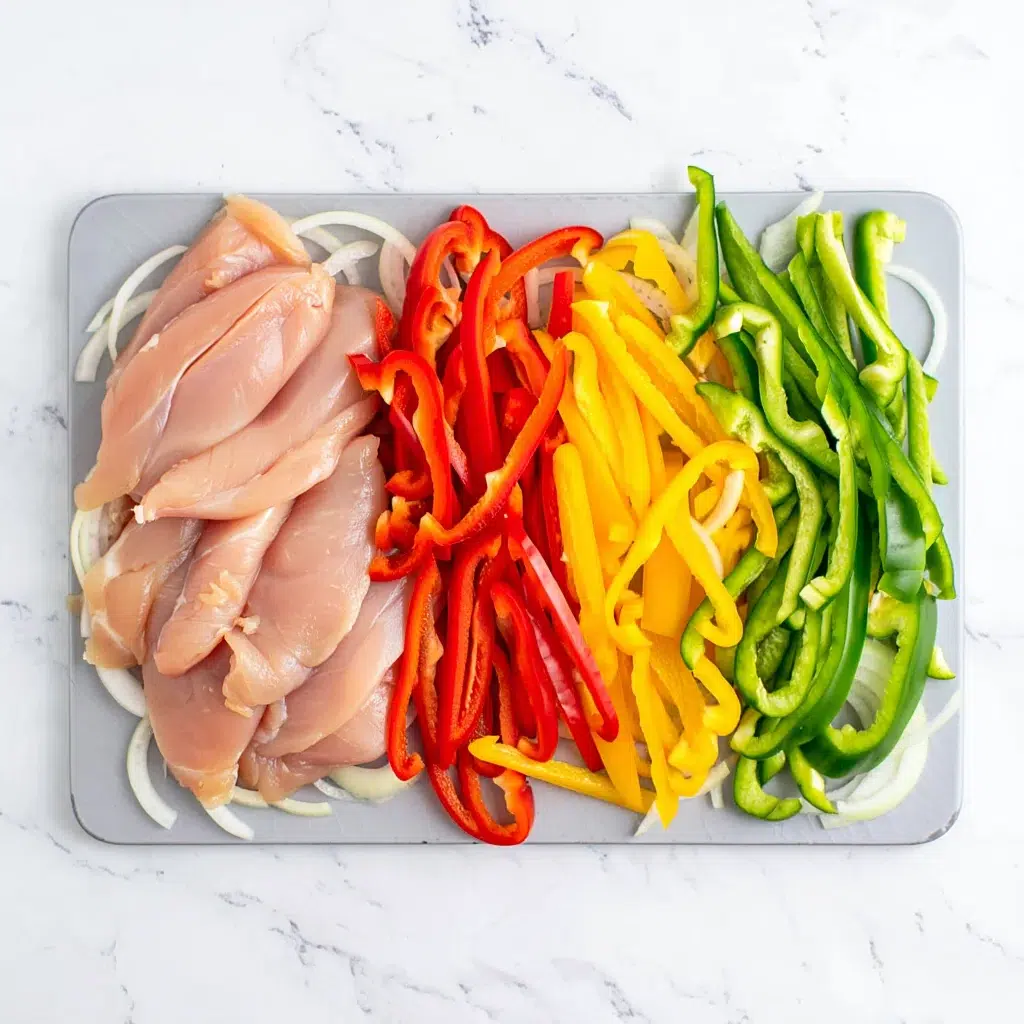
1½ pounds boneless, skinless chicken breasts (or thighs)
Chicken breast is the classic choice here, but here’s what I’ve learned: breasts can dry out if you’re not careful with timing. I slice them into ½-inch strips against the grain this matters because cutting with the grain gives you chewy, stringy chicken.
Tested substitution: Chicken thighs stay juicier and are more forgiving if you overcook by a few minutes. They also have better flavor, in my opinion. The trade-off? Slightly higher fat content and they take 3-5 minutes longer to cook.
Common mistake: Cutting pieces too thick. Anything over ¾-inch won’t cook through in the same time as your vegetables, leaving you with that raw-in-the-middle situation I had.
The Vegetables
3 bell peppers (mix of colors), sliced into ½-inch strips
1 large yellow or white onion, sliced into ½-inch strips
Optional: 1 poblano pepper for mild heat
Bell peppers become sweet and slightly charred when roasted properly. I use a mix of red, yellow, and green for visual appeal, but honestly, red and yellow have more natural sweetness. Green peppers have a sharper, more bitter flavor that some people love (I’m not one of them).
The onion adds moisture and sweetness. White onions have a sharper bite; yellow onions caramelize better. I’ve tried red onions they work but can turn slightly limp.
Tested substitution: Zucchini works but releases a lot of water. If you use it, cut thicker slices (¾-inch) and add it halfway through cooking.
What to avoid: Pre-sliced peppers from the grocery store. They’re usually cut too thin and turn to mush.
The Seasoning
2 tablespoons olive oil (or avocado oil)
2 teaspoons chili powder
1½ teaspoons ground cumin
1 teaspoon smoked paprika
1 teaspoon garlic powder
½ teaspoon onion powder
½ teaspoon salt
¼ teaspoon black pepper
Optional: ¼ teaspoon cayenne pepper for heat
The oil isn’t optional it helps everything brown instead of steam. I’ve tried using just 1 tablespoon to “save calories” and ended up with pale, sad vegetables.
Smoked paprika is the secret weapon here. It adds that subtle smokiness that makes people think you actually grilled these.
Tested substitution: You can absolutely use a store-bought fajita seasoning packet (about 2-3 tablespoons), but check the sodium content many are very salty.
The Finish
2 tablespoons fresh lime juice
¼ cup fresh cilantro, chopped (optional)
8-10 flour or corn tortillas
Lime juice goes on AFTER cooking, not before. I learned this the hard way acid cooks the chicken and makes it tough if added too early.
Dietary Substitutions
- Gluten-free: Use corn tortillas instead of flour
- Low-carb: Skip tortillas and serve over cauliflower rice or lettuce wraps
- Vegan: Replace chicken with 2 cans drained black beans + 8 oz sliced mushrooms (add mushrooms halfway through)
- Dairy-free: This recipe is already dairy-free unless you add cheese or sour cream as toppings
Timing
Prep Time: PT15M (15 minutes)
Cook Time: PT20M (20 minutes)
Total Time: PT35M (35 minutes)
Realistically, if you’re efficient with chopping, you can have this from raw ingredients to table in about 40 minutes including warm-up time for tortillas.
Step-by-Step Instructions
Step 1: Preheat and Prep Your Pan
Preheat your oven to 425°F (220°C). Line a large rimmed baking sheet (at least 13×18 inches) with parchment paper or lightly oil it.
Why it matters: The high temperature is critical for getting caramelization instead of steaming. Anything below 400°F will give you limp vegetables.
What to look for: Your oven should be fully preheated don’t rush this. Put an oven thermometer in if you’re not sure your oven is accurate (mine runs 15 degrees cool, which I discovered after multiple failures).
Pro Tip: If you only have a smaller sheet pan, use two pans. Overcrowding is the #1 mistake that ruins this recipe.
Step 2: Slice Everything Uniformly
Cut your chicken breasts into ½-inch thick strips against the grain. Slice peppers and onions into similar ½-inch strips.
Why it matters: Uniform size = uniform cooking. Mix thick and thin pieces and you’ll have some burnt, some raw.
What to look for: All pieces should be roughly the same thickness. Hold your knife at a slight angle when slicing chicken for even cuts.
Common Visual Cue: If you can see a significant size difference just by looking, they won’t cook evenly.
Step 3: Toss with Oil and Seasonings
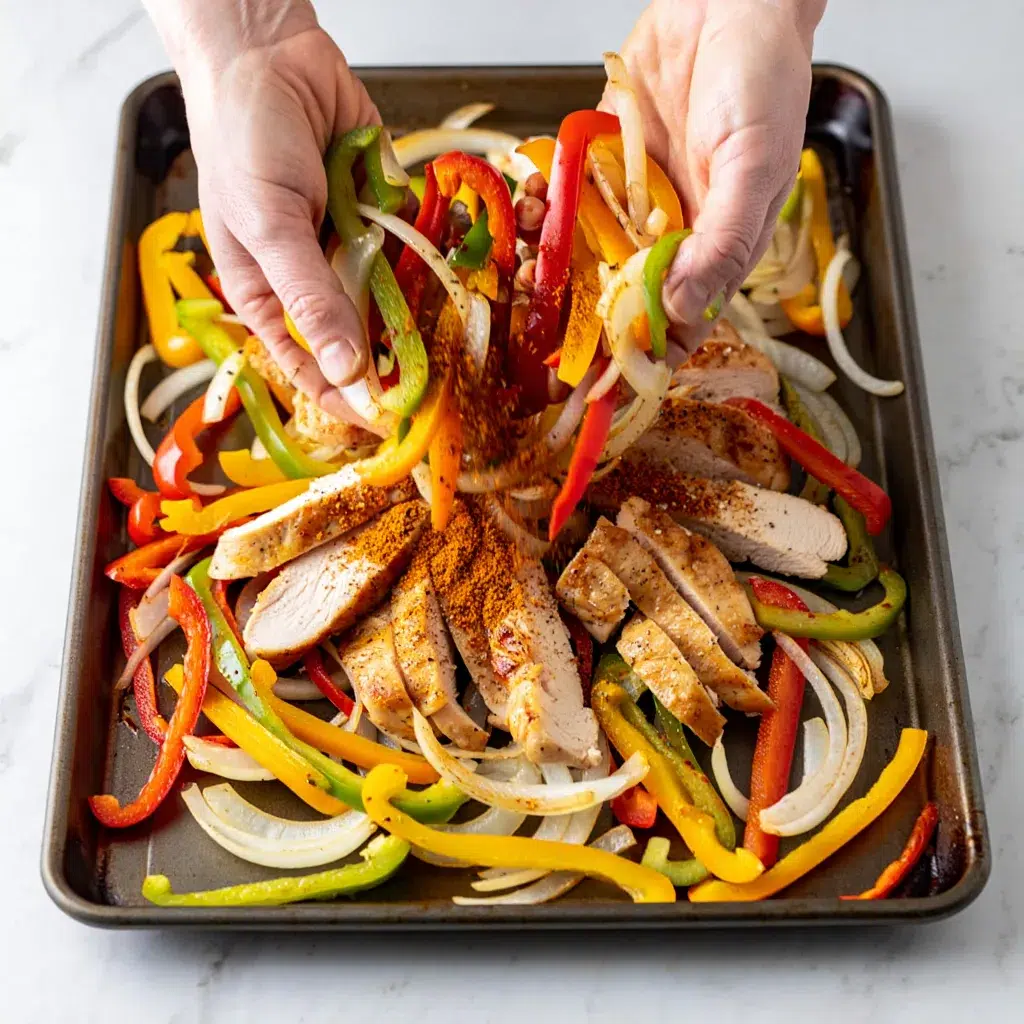
Place chicken strips, peppers, and onions on your prepared baking sheet. Drizzle with olive oil. Sprinkle all the spices over everything.
Use your hands (clean!) to toss everything together directly on the pan until evenly coated.
Why it matters: Direct pan tossing saves you from dirtying a bowl, and you can visually see if everything is coated.
Pro Tip: I wash my hands, then use them to massage the seasonings into the chicken specifically it adheres better than just tossing.
Flavor Booster: Add 3 minced garlic cloves to the mix for extra depth.
Step 4: Spread Everything into a Single Layer
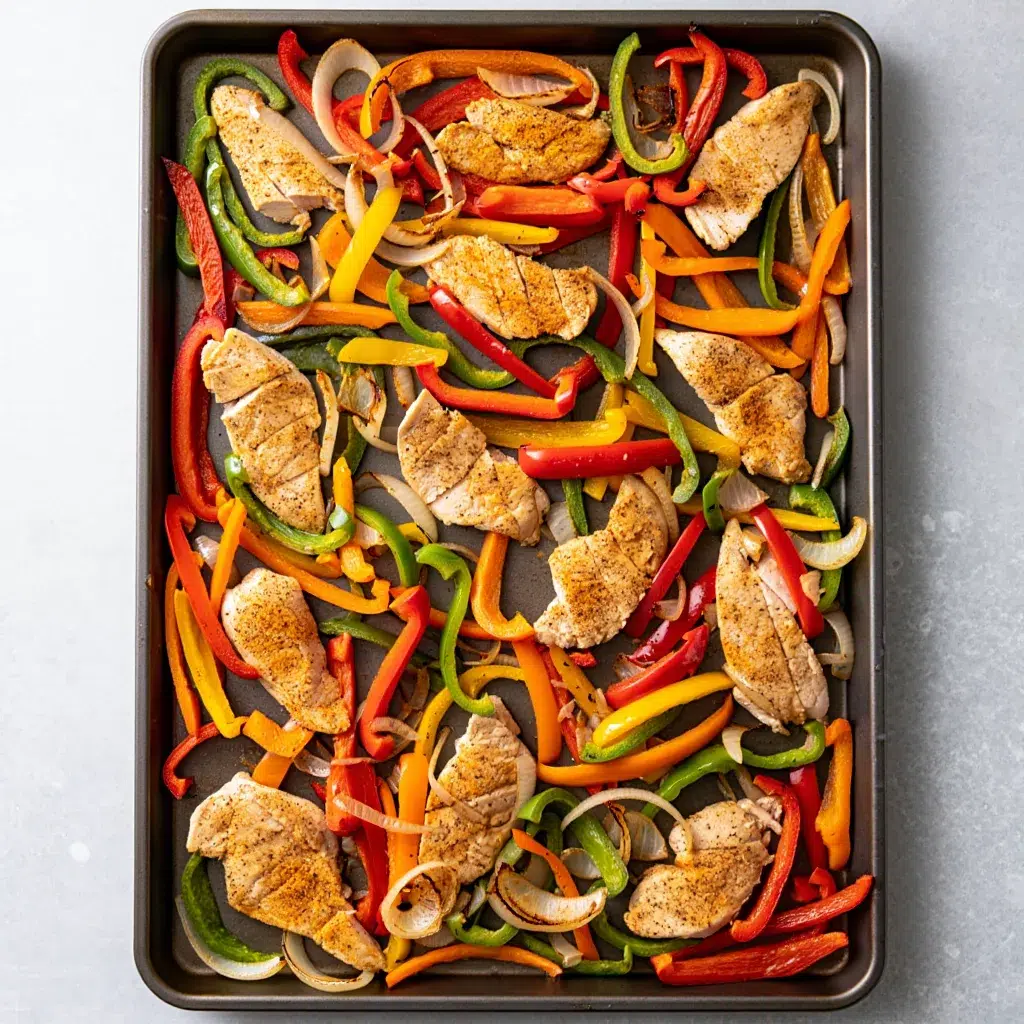
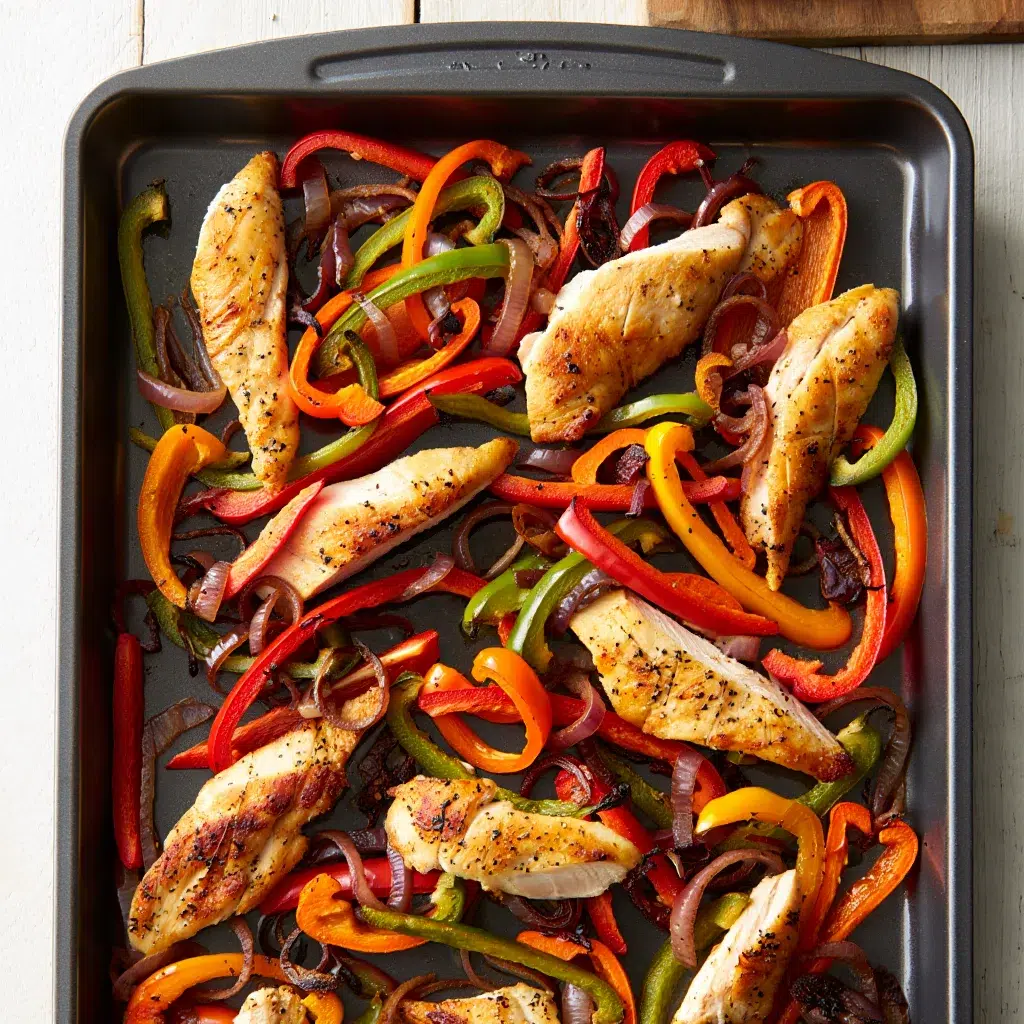
This is the most important step. Spread everything out so pieces aren’t touching or overlapping.
Why it matters: Overlapping pieces trap steam, which prevents browning. You want air circulation around each piece.
What to look for: You should see bare pan between most pieces. If you can’t, you’re overcrowded grab a second pan.
Texture Trick: Place chicken pieces slightly apart from vegetables the chicken releases moisture as it cooks, and you don’t want that pooling around your veggies.
Step 5: Roast for 20-25 Minutes
Place the pan in your preheated oven. Roast for 20-25 minutes, tossing everything halfway through at the 10-12 minute mark.
Why it matters: The toss redistributes heat and prevents burning on one side while leaving the other pale.
What to look for: At the halfway point, edges should just be starting to brown. If nothing’s browning yet, your oven might not be hot enough.
Pro Tip: Use a wide spatula for the toss tongs drop too many pieces and take longer.
Step 6: Check for Doneness
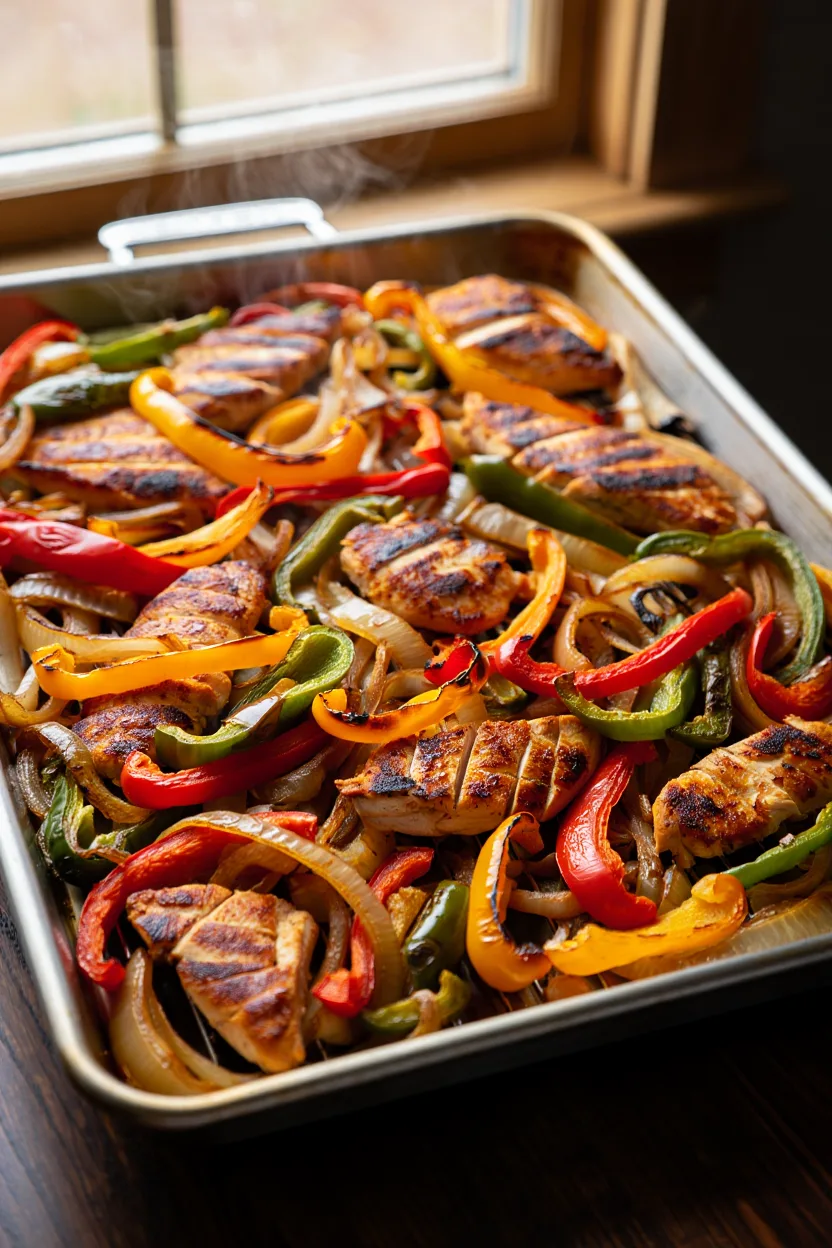
Chicken should reach an internal temperature of 165°F (74°C) and have golden-brown edges. Peppers should be tender with some charred spots. Onions should be softened and caramelized at the edges.
Why it matters: Undercooked chicken is unsafe; overcooked chicken is dry and stringy.
What to look for: Cut into the thickest piece of chicken it should be completely white inside with no pink. Juices should run clear.
Common Visual Cue: You should see dark brown (almost black) spots on some pepper edges that’s the char you want.
Step 7: Finish and Serve
Remove from oven. Immediately drizzle with fresh lime juice and toss. Sprinkle with fresh cilantro if using.
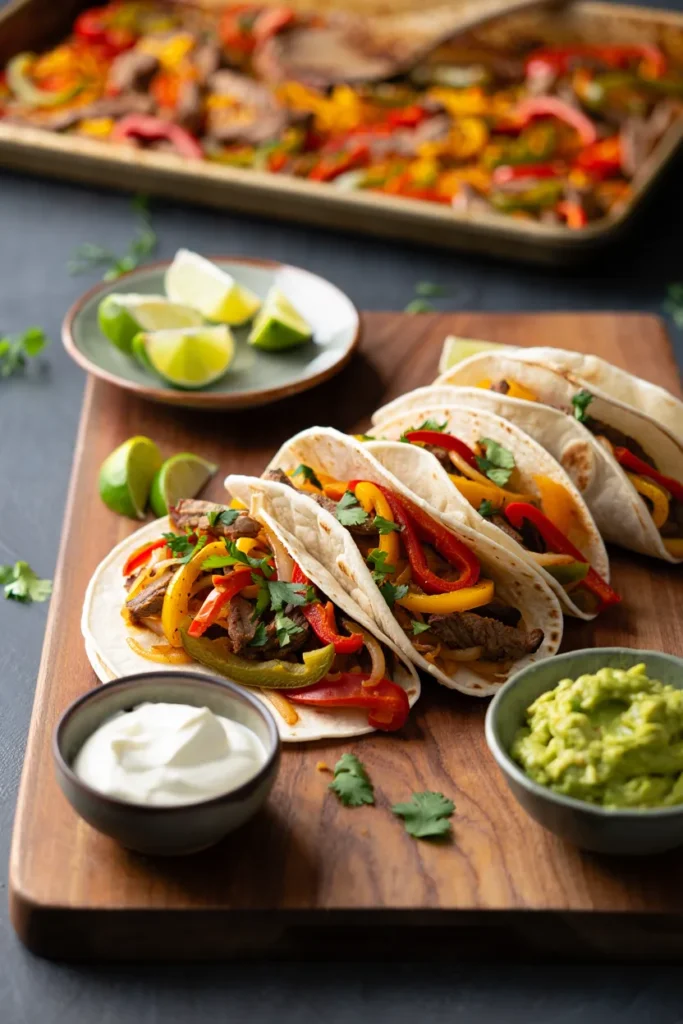
Serve with warm tortillas and your favorite toppings.
Why it matters: Lime juice added while hot brightens all the flavors and cuts through the richness of the oil and chicken.
Pro Tip: Warm your tortillas by wrapping them in foil and placing them in the oven for the last 5 minutes of cooking time.
Common Mistakes I Made & How I Fixed Them
Mistake #1: The Swimming Pool of Sadness
What went wrong: My first batch came out sitting in a pool of liquid, with soggy vegetables and steamed chicken.
Why it happened: I packed everything too tightly on the pan. When vegetables and chicken are crowded, they release moisture that has nowhere to evaporate, essentially steaming everything instead of roasting.
What I changed: I started using a larger pan (upgraded from 13×9 to 13×18) and spreading everything into an actual single layer with space between pieces. If I can’t fit it all, I use two pans now. The difference was night and day crispy edges and caramelization instead of mush.
Mistake #2: The Great Dryness Disaster
What went wrong: The chicken had dry, tough edges while the centers were barely done.
Why it happened: I cut the chicken into uneven pieces some were ¼-inch thick, others were over an inch. The thin ones overcooked before the thick ones were safe to eat.
What I changed: I bought a ruler (seriously) and practiced cutting uniform ½-inch strips. I also started using a sharp knife my dull one was crushing the chicken instead of cleanly slicing it, which damaged the meat fibers. Now I use a meat mallet to gently pound any particularly thick breasts to an even thickness before slicing.
Mistake #3: The Underseasoned Blandness
What went wrong: Everything looked beautiful but tasted like… nothing. Just plain chicken and peppers.
Why it happened: I was timid with seasonings, using maybe half of what the recipe called for because I was afraid of “overpowering” the natural flavors.
What I changed: I started measuring my spices (before I was just eyeballing) and realized I was using about 60% of what I should have been. I also learned that seasoning the chicken separately from the vegetables helps I toss the chicken with most of the spices, then lightly season the veggies. The chicken needs more because it’s denser.
Mistake #4: The Timing Mess
What went wrong: My peppers were perfect but my chicken was still raw inside.
Why it happened: I added everything at once, but chicken takes longer to cook through than vegetables.
What I changed: Now I cut my chicken slightly thinner than my vegetables (½-inch vs ¾-inch), which helps them finish at the same time. Alternatively, I’ve started the chicken alone for 5 minutes, then added vegetables this works better when I’m using thicker chicken pieces or chicken thighs.
Variations I Actually Tried
Steak Fajitas Version
What I did: Replaced chicken with 1½ pounds flank steak, sliced thin against the grain.
What worked: The beef flavor was incredible richer and more “fajita-like” than chicken.
What didn’t work: Steak cooks faster than chicken. I had to reduce cooking time to 12-15 minutes total, or it got tough and gray. Also more expensive.
When I use it: Special occasions or when flank steak is on sale.
Shrimp Fajitas
What I did: Used 1½ pounds large shrimp (peeled, deveined) instead of chicken.
What worked: Super fast only 8-10 minutes total cook time. Shrimp stayed juicy and sweet.
What didn’t work: Shrimp shrinks a lot, so I felt like I got less “meat” for the money. Also had to add the shrimp halfway through after vegetables started cooking, or they’d be rubber.
When I use it: When I’m in a serious time crunch or craving seafood.
Extra-Veggie Version (Vegetarian-Friendly)
What I did: Skipped chicken entirely, doubled the peppers, and added 2 cups mushrooms + 1 can black beans (drained).
What worked: Mushrooms added great umami depth. Black beans made it hearty and filling.
What didn’t work: Mushrooms release a ton of water. I had to slice them thicker and add them 5 minutes into cooking to prevent sogginess.
When I use it: Meatless Monday or when I have vegetarian guests.
Nutritional Information
| Per Serving (1/4 recipe, about 2 fajitas) | |
|---|---|
| Calories | 285 |
| Total Fat | 9g |
| Saturated Fat | 1.5g |
| Cholesterol | 73mg |
| Sodium | 420mg |
| Total Carbohydrates | 24g |
| Dietary Fiber | 4g |
| Sugars | 6g |
| Protein | 28g |
| Vitamin C | 180% DV |
| Vitamin A | 25% DV |
Note: Nutrition calculated without tortillas or toppings. Values are estimates based on USDA FoodData Central.
Healthier Alternatives
Lower-Fat Option
Swap: Reduce olive oil to 1 tablespoon, use cooking spray for pan
Honest trade-off: Less browning and caramelization; vegetables won’t have that rich, roasted flavor. Saved about 60 calories per serving.
Lower-Sodium Version
Swap: Reduce salt to ¼ teaspoon, use low-sodium chicken broth for moisture
Honest trade-off: You’ll taste the difference season more heavily at the table with lime and hot sauce. Cuts sodium by about 200mg per serving.
Whole Grain Boost
Swap: Use 100% whole wheat tortillas instead of flour
Honest trade-off: Denser texture, nuttier flavor. Some people love it; my kids won’t touch them.
Serving Suggestions
Classic Fajita Build
Warm flour tortillas, pile with chicken and vegetables, top with:
- Shredded cheese (cheddar or Mexican blend)
- Sour cream or Greek yogurt
- Fresh pico de gallo or salsa
- Sliced avocado or guacamole
- Pickled jalapeños
Fajita Bowl Style
Skip tortillas entirely. Serve over:
- Cilantro-lime rice
- Cauliflower rice (for low-carb)
- Mixed greens for a fajita salad
Side Pairings
These fajitas are complete on their own, but they pair well with:
- Mexican rice: Adds bulk and soaks up juices
- Refried beans or black beans: Classic Tex-Mex combo
- Chips and guacamole: For appetizer grazing while cooking
- Street corn (elote): Sweet and creamy contrast
Beverage Matches
- Casual weeknight: Ice-cold Mexican beer (Corona, Modelo)
- Weekend dinner: Margaritas (frozen or on the rocks)
- Family-friendly: Agua fresca (watermelon or cucumber-lime)
- Non-alcoholic: Fresh limeade or sparkling water with lime
Storage, Reheating & Real-Life Use
How It Holds Up Over Time
First 24 hours: Excellent. Flavors actually deepen overnight. Chicken stays moist, vegetables stay relatively crisp.
Days 2-3: Vegetables start to soften and release moisture. Chicken can dry out slightly. Still perfectly edible, just not quite as good.
After day 4: I don’t recommend it. The vegetables get mushy and the chicken takes on a slightly off flavor.
Best Storage Method
Let everything cool completely (don’t seal hot food creates condensation and sogginess). Store in an airtight container in the refrigerator. Separate tortillas and store in their original bag.
Pro tip: Store chicken and vegetables separately if you plan to keep leftovers more than 2 days prevents excess moisture transfer.
Best Reheating Method
Don’t use the microwave unless you’re desperate it makes the chicken rubbery and the vegetables limp.
Best method: Spread leftovers on a baking sheet and reheat at 350°F for 8-10 minutes until warmed through. This recrisps the edges.
Quick method: Heat in a large skillet over medium-high heat, tossing frequently, for 3-4 minutes.
What Changes After Reheating
Be honest: The vegetables will be softer and won’t have that fresh-roasted crunch. The chicken can dry out slightly (add a tablespoon of chicken broth or water to the pan when reheating to prevent this). The flavors intensify which is actually nice.
Realistic Shelf Life
- Refrigerator: 3-4 days max
- Freezer: I don’t recommend freezing these. Bell peppers get watery and mushy when thawed. If you must freeze, undercook slightly and freeze before adding lime juice. Use within 2 months. Thaw in fridge overnight.
Expert Tips & Tricks
The Pan Size Secret
A rimmed 13×18-inch baking sheet (also called a “half sheet pan”) is ideal. Anything smaller and you’ll overcrowd. The rimmed edges prevent juices from spilling in your oven.
The Two-Pan Technique
If you’re doubling the recipe, use two pans instead of cramming everything onto one. Each pan should have visible space between ingredients.
The Broiler Finish (Advanced)
After the 20-minute roast, switch your oven to broil for 2-3 minutes to add extra char. Watch carefully the line between perfectly charred and burnt is about 30 seconds. I learned this by setting off my smoke alarm twice.
The Science Behind High Heat
High heat (425°F) triggers the Maillard reaction a chemical process that creates browning and complex, savory flavors. Food science research shows this reaction needs temperatures above 300°F to occur. Lower temperatures just steam your food.
Tools That Actually Help
- Sharp chef’s knife: Cuts clean slices without crushing chicken
- Rimmed sheet pan: Prevents spills and allows for proper roasting
- Meat thermometer: Takes the guesswork out of doneness
- Kitchen timer: Prevents the “forgot about it in the oven” disaster
Who This Recipe Is / Is Not For
This Recipe is Perfect For:
- Busy families who need a hands-off dinner that feeds 4-6 people
- Beginner cooks comfortable with basic knife skills and oven use
- Meal preppers who want to make multiple servings at once
- Anyone who hates dishes one pan, minimal cleanup
- People who want fajitas without a smoky kitchen or standing over a hot skillet
This Recipe Is NOT For:
- If you’re expecting authentic street-style fajitas with that intense char you only get from a screaming-hot griddle this is close, but it’s not the same
- If you only have a small (9×13) pan and are cooking for more than 2 people you’ll be overcrowded
- True low-carb dieters unless you skip tortillas entirely (but then are they still fajitas?)
- People without an oven (obviously, but I’ve been asked)
- If you need dinner in 15 minutes this takes 35-40 minutes start to finish
Case Study: How This Recipe Saved Taco Tuesday
Last month, my friend Sarah texted me in a panic at 4:30 PM. She’d invited her sister’s family over for “Taco Tuesday” eight people total and realized she didn’t want to stand at the stove for an hour making batches of traditional fajitas.
I sent her this recipe. She doubled it, used two sheet pans, and had everything ready in 45 minutes. She set up a toppings bar with all the fixings and let everyone build their own fajitas.
Her text afterward: “I can’t believe how easy that was. The chicken was juicy, the peppers had actual flavor, and I wasn’t sweating over the stove. My brother-in-law asked for the recipe he NEVER asks for recipes. Making this again next week.”
This is the beauty of sheet pan fajitas they scale beautifully for crowds without scaling up your effort.
Final Thoughts
I’ll be honest: I still make traditional stovetop fajitas occasionally when I’m craving that intense, smoky char and have the time to babysit the skillet. But 90% of the time? I make these.
They’re easier, they scale better, and the cleanup is so much simpler that I actually make fajitas more often now. I’m still tweaking the recipe I want to try adding a teaspoon of honey to the spice mix for subtle caramelization, and I’m experimenting with cutting the vegetables into larger chunks for more texture contrast.
Try this method this week and let me know how it goes. If your peppers come out soggy, you probably overcrowded the pan. If your chicken is dry, your pieces were likely uneven or you overcooked by a few minutes. The beauty of this recipe is that once you nail the spacing and timing, it becomes completely reliable.
If you love sheet pan dinners, you’ll also want to try our crispy baked chicken thighs they use the same high-heat method for incredible texture.”
This recipe is perfect for those nights when you want real food without the fuss check out our other lazy dinner ideas for more inspiration.
FAQs
Can I use chicken thighs instead of breasts?
Absolutely. Chicken thighs are more forgiving and stay juicier. They have more fat, so expect about 50 extra calories per serving, and they’ll take about 3-5 minutes longer to cook through. I actually prefer thighs the extra flavor is worth it.
Why are my fajitas soggy instead of crispy?
This almost always comes down to overcrowding the pan. When ingredients are piled on top of each other, they steam instead of roast. Spread everything into a true single layer with visible space between pieces. If needed, use two pans. Also make sure your oven is actually at 425°F lower temps produce steam.
Can I prep this ahead of time?
Yes, with caveats. You can slice the vegetables and chicken up to 24 hours ahead and store them separately in the fridge. Mix the spices ahead too. But don’t combine everything until you’re ready to roast the salt will draw moisture out of the vegetables and chicken, leading to that soggy result.
For longer storage, freeze the raw, seasoned chicken and vegetables in a freezer bag for up to 3 months. Thaw in the fridge overnight, then spread on a pan and roast as directed.
How do I get more char/grill marks?
Use your broiler for the last 2-3 minutes of cooking. Switch from bake to broil, move the rack to the top position, and watch carefully things go from perfect to burned very quickly under the broiler. You can also try increasing your oven temp to 450°F, but watch for smoking.
My chicken is done but my vegetables are still hard. What happened?
Your vegetable pieces were likely too thick. Peppers and onions should be sliced into ½-inch strips anything thicker takes significantly longer to soften. Alternatively, your chicken pieces might have been too thin and cooked faster than expected.
Can I make this without oil to save calories?
Technically yes, but you’ll sacrifice almost all the browning and caramelization. The oil is what enables the Maillard reaction that creates those crispy, flavorful edges. You could use cooking spray (saves about 100 calories), but I don’t recommend going below 1 tablespoon of actual oil.
What’s the best way to reheat leftovers?
Reheat in a 350°F oven spread on a baking sheet for 8-10 minutes. This recrisps the edges. Avoid the microwave it makes chicken rubbery and vegetables limp. If you’re in a rush, a hot skillet works better than the microwave.
Are fajitas supposed to be spicy?
Traditional fajitas have mild-to-moderate spice from cumin and chili powder, but they’re not “hot” spicy. This recipe is family-friendly mild. Add cayenne pepper (start with ¼ teaspoon) or diced jalapeños to the pan if you want heat. You can also serve with hot sauce on the side.
For another foolproof sheet pan protein option, try our simple weeknight meatloaf with just five ingredients.
Recipe Card Summary
SHEET PAN FAJITAS
Prep Time: PT15M (15 minutes)
Cook Time: PT20M (20 minutes)
Total Time: PT35M (35 minutes)
Servings: 4-6 servings
Calories: 285 per serving (without tortillas/toppings)
Ingredients:
- 1½ pounds boneless, skinless chicken breasts, sliced into ½-inch strips
- 3 bell peppers (mixed colors), sliced into ½-inch strips
- 1 large onion, sliced into ½-inch strips
- 2 tablespoons olive oil
- 2 teaspoons chili powder
- 1½ teaspoons ground cumin
- 1 teaspoon smoked paprika
- 1 teaspoon garlic powder
- ½ teaspoon onion powder
- ½ teaspoon salt
- ¼ teaspoon black pepper
- 2 tablespoons fresh lime juice
- 8-10 flour or corn tortillas
- Optional toppings: sour cream, cheese, salsa, avocado, cilantro
Instructions:
- Preheat oven to 425°F. Line a large rimmed baking sheet with parchment paper.
- Place sliced chicken, peppers, and onions on the baking sheet. Drizzle with olive oil.
- Sprinkle all spices over the ingredients and toss everything together directly on the pan until evenly coated.
- Spread into a single layer with space between pieces this is critical for browning.
- Roast for 20-25 minutes, tossing halfway through at the 10-12 minute mark.
- Check doneness: chicken should reach 165°F internal temperature with golden-brown edges. Peppers should be tender with charred spots.
- Remove from oven, drizzle with lime juice, and toss.
- Serve immediately with warm tortillas and your favorite toppings.
These fajitas pair beautifully with a bowl of creamy potato soup for a complete comfort meal.