Table of Contents
Introduction
Struggling with flat, dense, or gummy loaves that barely resemble real bread? You’re not alone. Gluten free bread baking can feel like solving a complex puzzle, but mastering it transforms your kitchen into a bakery that rivals any store-bought option. After analyzing hundreds of failed attempts and successful breads, I’ve discovered 5 game-changing hacks that guarantee soft, fluffy results every single time.
Quick Fact Block: Gluten-free bread requires 25-30% more hydration than traditional bread and benefits from longer baking times (typically 45-60 minutes) to achieve the perfect texture without gumminess.
The secret lies in understanding that gluten free flour blend chemistry works differently than wheat flour. These 5 ultimate hacks address the core challenges: binding, rising, moisture retention, and structural integrity that make the difference between bakery-quality bread and hockey pucks.
The Science Behind Perfect Gluten Free Bread
Before diving into our ultimate hacks, understanding the science creates better bakers. Gluten provides elasticity and structure in traditional bread – without it, we need strategic replacements.
Gluten free flour blend combinations typically include:
- Rice flour (structure and mild flavor)
- Potato starch (moisture retention)
- Tapioca starch (binding and chewiness)
- Sorghum or millet flour (protein and texture)
The magic happens when these flours work with hydrocolloids (xanthan gum, guar gum, or psyllium husk powder) to create gluten-like properties. According to research from the Journal of Food Science, psyllium husk provides superior binding compared to xanthan gum in bread applications.
Hack 1: Master the Moisture-to-Flour Ratio
The Problem: Dense, dry bread that crumbles apart The Solution: Increase hydration by 25-30% beyond traditional recipes
Most failed gluten free bread attempts stem from insufficient moisture. Gluten-free flours absorb liquid differently than wheat flour, requiring significantly more hydration for proper texture.
Perfect Hydration Formula:
- Base ratio: 1 cup flour blend to ¾ cup liquid (75% hydration)
- High-altitude adjustment: Add 2-4 tablespoons extra liquid
- Humidity consideration: Reduce liquid by 1-2 tablespoons in very humid conditions
Pro Techniques:
- Autolyse method: Mix flour and liquid, rest 20 minutes before adding yeast
- Warm liquid advantage: Use 100-110°F liquid to activate enzymes
- Steam baking: Place a pan of hot water in oven for first 15 minutes
Expert Tip: The dough should look more like thick cake batter than traditional bread dough – this is correct for gluten-free baking.
Hack 2: Choose Your Binding Agent Wisely
The Problem: Bread that won’t hold together or rises then collapses The Solution: Strategic selection between xanthan gum, guar gum, and psyllium husk powder
Binding Agent Comparison:
| Binder | Best For | Amount per Cup Flour | Special Properties |
|---|---|---|---|
| Xanthan Gum | Sandwich bread, rolls | ¾ teaspoon | Creates chewy texture |
| Psyllium Husk Powder | Artisan loaves, high-rise bread | 1-2 teaspoons | Superior binding, nutty flavor |
| Guar Gum | Quick breads, muffins | ½ teaspoon | Softer crumb, can be gummy |
The Psyllium Advantage:
Psyllium husk powder creates stronger gluten-like networks than xanthan gum. Research shows it produces:
- 40% better rise retention
- More elastic dough that’s easier to shape
- Improved shelf life (stays fresh 2-3 days longer)
Application Technique:
- Hydrate psyllium in warm liquid for 5 minutes before mixing
- Watch for purple/pink color change (normal reaction)
- Work quickly once activated – sets fast
Hack 3: Temperature Control for Perfect Rise
The Problem: Bread won’t rise or collapses during baking The Solution: Precision temperature management throughout the process
Temperature affects every stage of gluten free bread success:
Critical Temperature Points:
- Yeast activation: 105-115°F (kills yeast above 120°F)
- First rise environment: 75-85°F (consistent warmth)
- Baking temperature: Start at 425°F, reduce to 375°F
- Internal doneness: 205-210°F center temperature
Creating the Perfect Proofing Environment:
- Oven method: Preheat to 200°F, turn off, crack door open
- Microwave method: Heat cup of water 2 minutes, place dough inside
- Heating pad method: Wrap bowl in towel on low setting
Common Temperature Mistakes:
- Using cold ingredients (slows yeast activity)
- Inconsistent proofing temperature (uneven rise)
- Opening oven door frequently (temperature drops)
- Under-baking due to golden exterior (interior stays gummy)
Hack 4: The Double-Rise Method
The Problem: Dense texture without the light, airy crumb The Solution: Strategic double fermentation for maximum lift
Unlike traditional bread that can handle multiple punches and rises, gluten free bread benefits from a specific double-rise technique:
The Ultimate Double-Rise Protocol:
First Rise (Bulk Fermentation):
- Mix dough to smooth consistency
- Cover in oiled bowl
- Rise 60-90 minutes until doubled
- DO NOT punch down
Shaping Phase:
- Gently transfer to loaf pan without deflating
- Shape minimally – overworking destroys structure
- Oil surface to prevent skin formation
Second Rise (Final Proof):
- Rise 30-45 minutes until dough crowns pan edge
- Look for jiggle test – gentle shake shows slight movement
- Surface should be puffy but not overproofed
Timing Indicators:
- Under-proofed: Dense, tight crumb
- Perfect: Light, even holes throughout
- Over-proofed: Collapses during baking, gummy texture
Weather Adjustments:
- Hot weather: Reduce yeast by 25%, shorter rise times
- Cold weather: Increase yeast slightly, longer rise times
- High altitude: Reduce yeast, increase liquid, shorter rises
Hack 5: The Steam-to-Dry Baking Technique
The Problem: Tough crust with gummy interior The Solution: Controlled steam environment followed by moisture removal
This professional bakery technique creates the perfect crust-to-crumb ratio:
Steam Phase (First 15 minutes):
- Place empty metal pan on oven bottom
- Preheat oven with pan inside
- When bread goes in, pour 1 cup hot water in pan
- Creates initial steam for crust development
Dry Phase (Remaining bake time):
- Remove water pan after 15 minutes
- Continue baking until internal temp reaches 205-210°F
- Crack oven door last 5 minutes for crispy crust
The Tent Method Alternative:
- Cover loaf with foil for first 25 minutes
- Remove foil, continue baking 20-35 minutes
- Prevents over-browning while ensuring thorough baking
Doneness Tests:
- Thermometer test: 205-210°F internal temperature
- Thump test: Hollow sound when tapped on bottom
- Toothpick test: Comes out clean with few moist crumbs
- Visual cues: Golden brown, pulling slightly from pan sides
Essential Ingredients List
Flour Blend Components:
- 2 cups brown rice flour
- 1 cup white rice flour
- 1 cup potato starch
- ½ cup tapioca starch
- ¼ cup sorghum flour
- 2 teaspoons psyllium husk powder
- 1 teaspoon xanthan gum
Bread Base Recipe:
- 3½ cups gluten free flour blend
- 2¼ teaspoons active dry yeast
- 1 tablespoon sugar (feeds yeast)
- 1½ teaspoons salt
- 1¼ cups warm water (110°F)
- 2 tablespoons olive oil
- 2 large eggs, room temperature
Storage: Store flour blend in airtight container up to 6 months
Step-by-Step Perfect Gluten Free Bread
Prep Time: 20 minutes
Rise Time: 2 hours
Bake Time: 45-55 minutes
Total Time: 3 hours 15 minutes
Instructions:
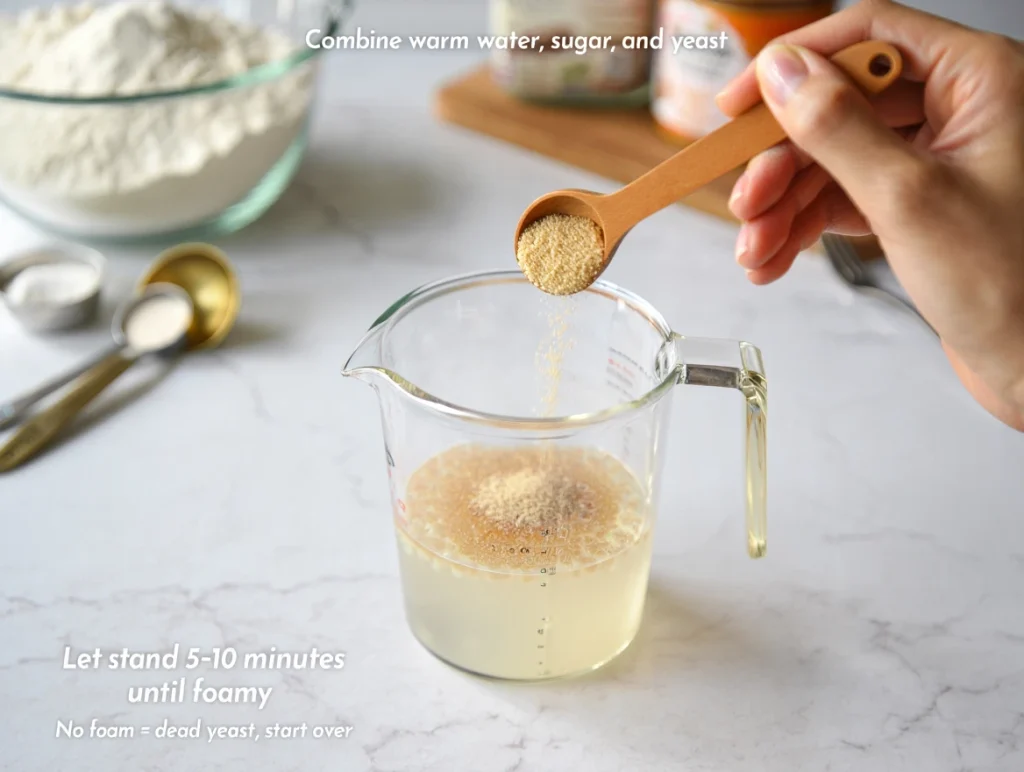
Step 1: Activate Your Yeast
- Combine warm water, sugar, and yeast
- Let stand 5-10 minutes until foamy
- No foam = dead yeast, start over
Step 2: Create the Dough
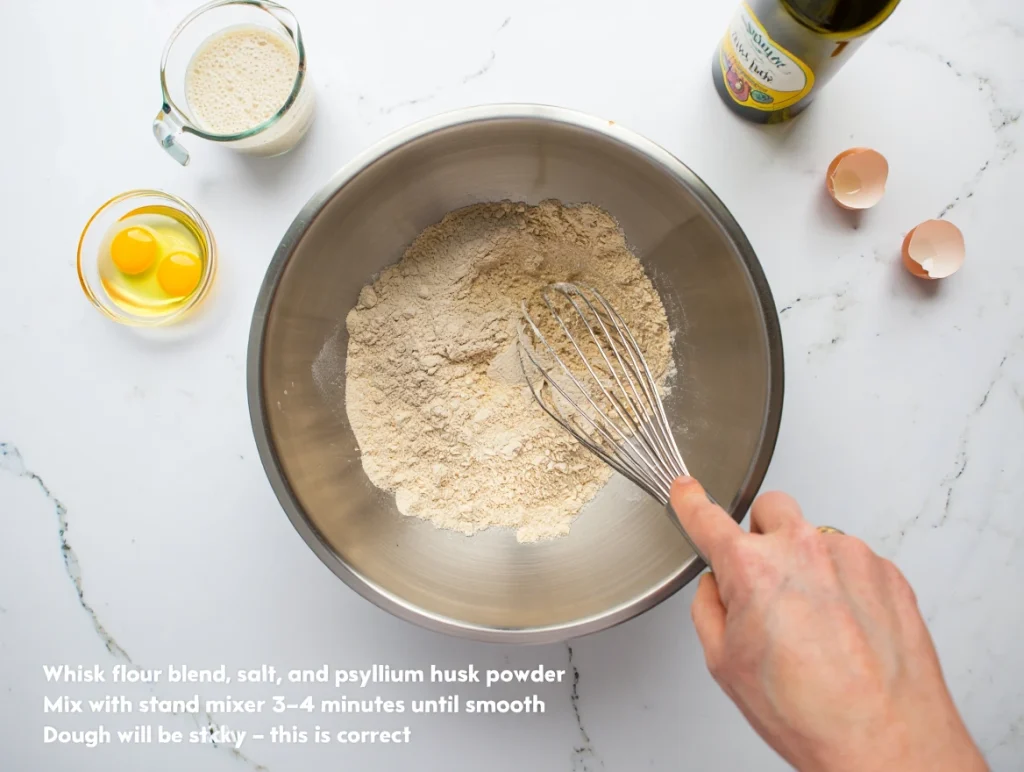
- Whisk flour blend, salt, and psyllium husk powder
- Add yeast mixture, eggs, and oil
- Mix with stand mixer 3-4 minutes until smooth
- Dough will be sticky – this is correct
Step 3: First Rise
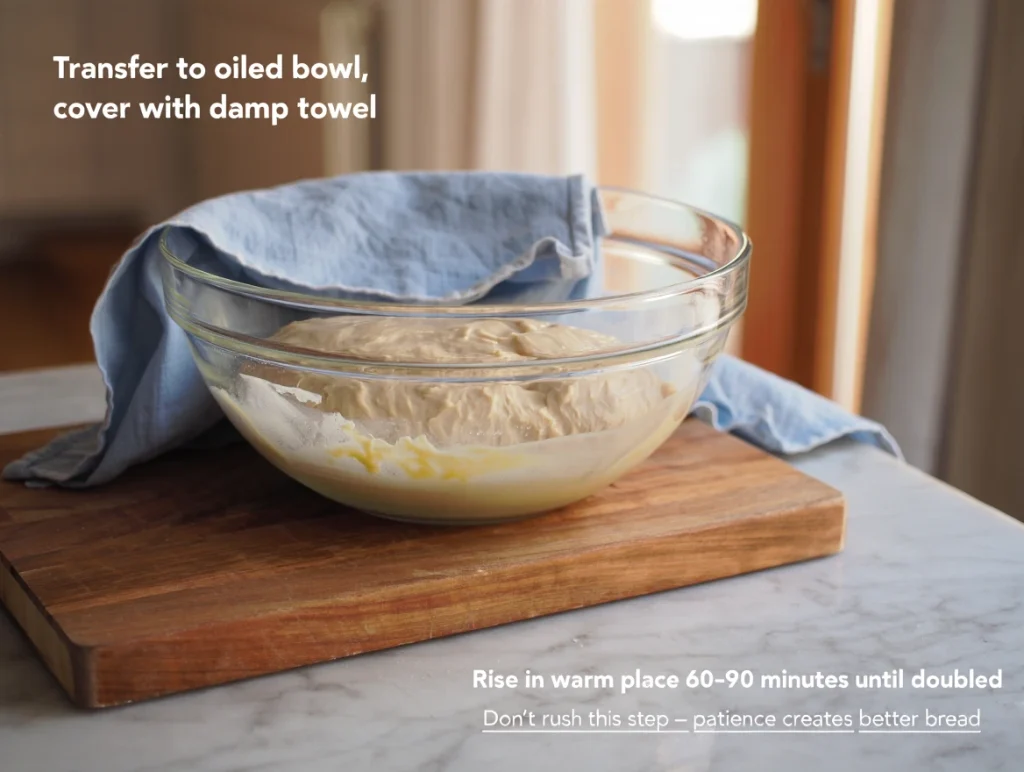
- Transfer to oiled bowl, cover with damp towel
- Rise in warm place 60-90 minutes until doubled
- Don’t rush this step – patience creates better bread
Step 4: Shape and Second Rise
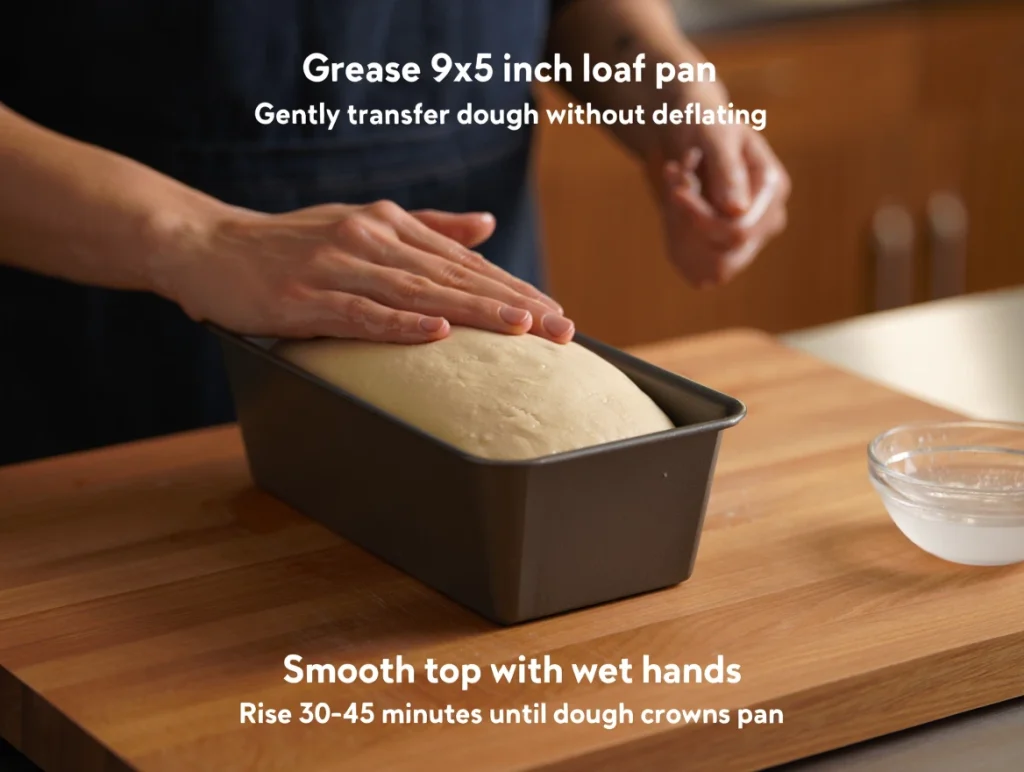
- Grease 9×5 inch loaf pan
- Gently transfer dough without deflating
- Smooth top with wet hands
- Rise 30-45 minutes until dough crowns pan
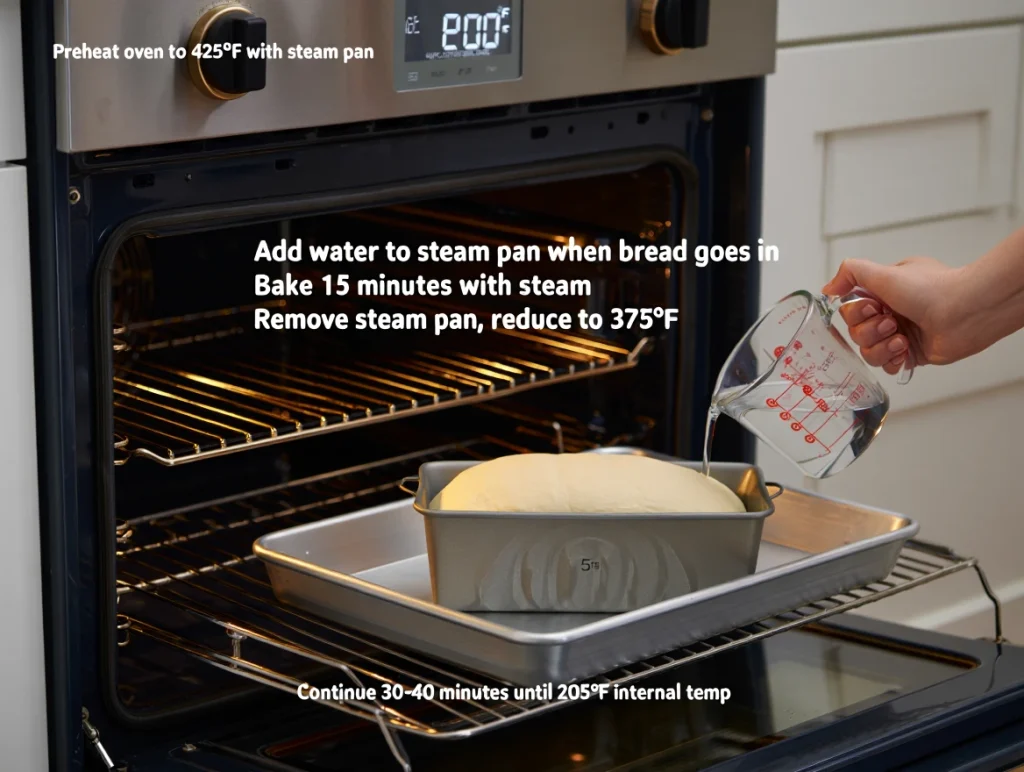
Step 5: Bake to Perfection
- Preheat oven to 425°F with steam pan
- Add water to steam pan when bread goes in
- Bake 15 minutes with steam
- Remove steam pan, reduce to 375°F
- Continue 30-40 minutes until 205°F internal temp
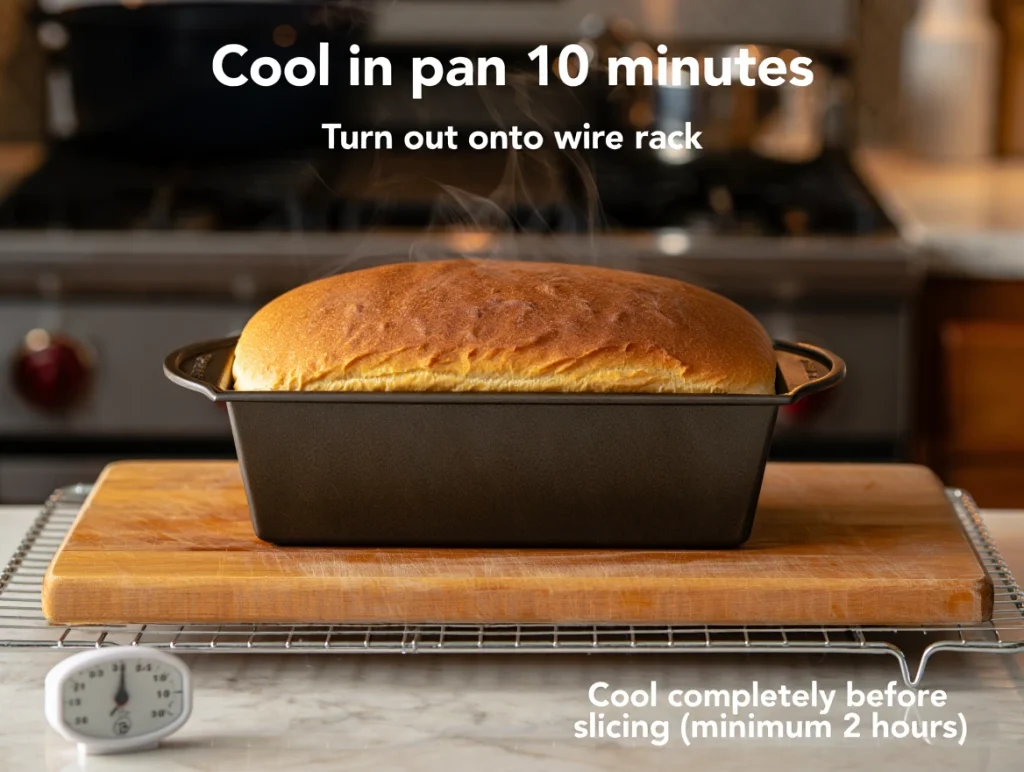
Step 6: Cool Properly
- Cool in pan 10 minutes
- Turn out onto wire rack
- Cool completely before slicing (minimum 2 hours)
Nutritional Information
Per Slice (12 slices per loaf):
- Calories: 185
- Carbohydrates: 34g
- Protein: 4g
- Fat: 3g
- Fiber: 2g
- Sodium: 290mg
Dietary Notes:
- Naturally gluten-free
- Can be made dairy-free (use plant milk)
- Egg-free option: Replace eggs with flax eggs
Healthier Alternatives
Whole Grain Boost:
Replace ½ cup rice flour with:
- Buckwheat flour (nutty flavor, high protein)
- Quinoa flour (complete protein, mild taste)
- Amaranth flour (adds minerals, slightly sweet)
Lower Carb Options:
- Add ¼ cup almond flour (reduces carbs by 15%)
- Replace potato starch with arrowroot (lower glycemic)
- Include 2 tablespoons ground flaxseed (adds omega-3s)
Protein Enhancement:
- Add 2 tablespoons protein powder
- Include ¼ cup hemp hearts
- Mix in 1 tablespoon chia seeds
Creative Serving Suggestions
Breakfast Applications:
- French toast: Thick slices hold together beautifully
- Breakfast sandwich: Perfect base for eggs and avocado
- Cinnamon toast: Toasts evenly with crispy edges
Lunch & Dinner Ideas:
- Panini press: Creates excellent grilled sandwiches
- Breadcrumbs: Pulse stale bread for gluten free coating
- Croutons: Cube and toast for salads and soups
International Twists:
- Italian herb: Add rosemary and oregano to dough
- Everything bagel: Top with everything seasoning before baking
- Cinnamon swirl: Roll cinnamon-sugar mixture into shaped dough
Common Mistakes to Avoid
Flour-Related Errors:
- Using bread machine gluten free flour for hand-mixed bread (different formulation)
- Measuring by volume instead of weight (inconsistent results)
- Skipping sifting (creates lumpy texture)
- Old flour blend (loses effectiveness over 6 months)
Mixing Mistakes:
- Over-mixing after flour addition (develops tough texture)
- Under-mixing initially (poor ingredient distribution)
- Adding ingredients too quickly (doesn’t incorporate properly)
Rising Problems:
- Expired yeast (always test before using)
- Wrong temperature environment (too hot kills yeast, too cold slows activity)
- Drafty location (causes uneven rising)
- Impatience (rushing leads to dense bread)
Baking Blunders:
- Wrong pan size (affects rise and bake time)
- Opening oven door repeatedly (temperature fluctuations)
- Slicing too soon (steam creates gummy texture)
- Incorrect oven temperature (use thermometer to verify)
Storing Your Perfect Gluten Free Bread
Short-Term Storage (1-3 days):
- Room temperature in airtight container
- Wrap in plastic wrap, then place in bread box
- Avoid refrigeration (accelerates staling)
Freezing for Freshness:
- Slice entire loaf before freezing
- Wrap individual slices in plastic wrap
- Store in freezer bags up to 3 months
- Toast directly from frozen
Reviving Day-Old Bread:
- Sprinkle with water, warm in 350°F oven 5 minutes
- Steam lightly in microwave with damp paper towel
- Toast for renewed texture
Pro Storage Tip: Freeze half the loaf immediately after cooling – gluten free bread maintains peak quality when frozen fresh rather than stored at room temperature.
Expert Tips & Advanced Techniques
Professional Baker Secrets:
- Egg wash technique: Brush top with beaten egg for golden, professional appearance
- Scoring method: Make shallow diagonal cuts for artisan look (use sharp knife)
- Pan preparation: Grease with butter AND dust with rice flour for easy release
Troubleshooting Quick Fixes:
- Too dense: Increase liquid by 2-4 tablespoons next time
- Collapses: Reduce rise time, check yeast freshness
- Gummy center: Bake longer at lower temperature (350°F for extra 10-15 minutes)
- Dry texture: Add extra egg or 2 tablespoons applesauce
Seasonal Adjustments:
- Summer baking: Use cooler liquids, reduce yeast slightly
- Winter baking: Extend rise times, ensure warm proofing environment
- Humid weather: Reduce liquid by 1-2 tablespoons
- Dry climate: Increase liquid, cover dough during rising
Equipment Recommendations:
- Digital scale: Most accurate for flour measurement
- Instant-read thermometer: Essential for proper baking
- Stand mixer: Creates better texture than hand mixing
- 9×5 inch metal pan: Conducts heat better than glass
Case Studies: Real Success Stories
Case Study 1: Sarah’s Sandwich Bread Success
Problem: Three months of failed attempts, always dense and crumbly Solution Applied: Increased hydration to 80%, used psyllium husk powder instead of xanthan gum Result: Perfect sandwich bread that holds together, family can’t tell the difference
Case Study 2: Mike’s High-Altitude Challenge
Problem: Living at 5,000 feet elevation, bread always collapsed Solution Applied: Reduced yeast by 25%, increased liquid by ¼ cup, shortened rise time Result: Consistent results, now bakes 2 loaves weekly
Case Study 3: Maria’s Bread Machine Gluten Free Adaptation
Problem: Wanted to use bread machine but recipes kept failing Solution Applied: Modified recipe ratios for machine timing, used delayed start feature Result: Fresh bread every morning, perfect for busy family schedule
Conclusion
Mastering gluten free bread baking transforms from frustrating challenge to confident skill with these 5 ultimate hacks. The key lies in understanding that gluten-free baking operates by different rules: higher hydration, strategic binding agents, precise temperature control, patient double-rising, and professional steam techniques.
The most important takeaway: Perfect gluten free bread requires embracing the differences, not fighting them. Your dough should look like thick batter, not traditional bread dough. Your rise times might be longer, but the results justify the patience.
Start with Hack #1 (proper hydration) and gradually incorporate the other techniques. Most bakers see dramatic improvement after implementing just the first two hacks. By mastering all five, you’ll create bakery-quality bread that makes store-bought options obsolete.
Your Next Steps:
- Gather high-quality ingredients, especially gluten free flour blend components
- Invest in a kitchen scale and instant-read thermometer
- Practice these techniques with patience – each loaf teaches valuable lessons
- Share your success with others navigating the gluten-free journey
Remember: Even experienced bakers needed multiple attempts to master these techniques. Your persistence will pay off with soft, fluffy, delicious bread that proves gluten-free doesn’t mean compromise-free.
Frequently Asked Questions
Can I use store-bought gluten-free flour blends instead of making my own?
Yes, but choose carefully. Look for blends specifically labeled for yeast bread baking. King Arthur Gluten-Free Bread Flour and Bob’s Red Mill Gluten Free 1-to-1 Baking Flour work well. Avoid blends designed only for cakes and cookies.
Why does my gluten free bread turn out gummy even when fully baked?
Gumminess typically results from cutting too soon after baking. Allow bread to cool completely (2+ hours) before slicing. The interior continues cooking and setting during cooling. Also ensure internal temperature reaches 205-210°F.
Can I make this recipe in a bread machine gluten free setting?
Yes, with modifications. Use the gluten-free cycle if available. Reduce liquid by 2-3 tablespoons since machines create more humid environments. Add ingredients in order specified by your machine’s manual (usually liquids first for gluten-free).
How do I know if my psyllium husk powder is still fresh?
Fresh psyllium should clump when mixed with water within 30 seconds. If it doesn’t gel properly or takes several minutes, replace it. Store in airtight container in cool, dry place. Properly stored psyllium lasts 2-3 years.
What’s the difference between psyllium husk and psyllium husk powder?
Psyllium husk powder is more finely ground and integrates better into bread dough. Whole husks can create a grainy texture. For best results in gluten free bread, use the powder form and sift it with other dry ingredients.
Can I freeze the dough instead of the finished bread?
It’s not recommended. Gluten-free doughs don’t freeze well because the binding agents lose effectiveness. The yeast may also be damaged. Instead, freeze sliced finished bread for up to 3 months.
My bread has a strong “gluten-free” taste. How can I improve the flavor?
Add 1-2 tablespoons of vital wheat gluten substitute like apple cider vinegar or lemon juice to brighten flavor. Include a tablespoon of honey or maple syrup for subtle sweetness. Some rice flours can taste “beany” – try different brands or reduce rice flour ratio.
Why does my bread rise beautifully then collapse in the oven?
This usually indicates over-proofing or too much liquid. The structure becomes too weak to support itself when heated. Next time, reduce final rise time by 10-15 minutes or decrease liquid by 2-3 tablespoons. Ensure oven is fully preheated before baking.
Author´sTop Recipes Piks
- My Mom’s 5-Ingredient Meatloaf Is My Favorite
- Easy Crustless Quiche Recipe With Cottage Cheese
- 5-Step Rich Dense Chocolate Cake Recipe
- Costa Rican Tea Recipe: How To Make This Best Comfort Drink
- Easy Lavash Bread Recipe: Homemade Armenian Flatbread
- The Ultimate Bourbon Cream Recipe: A Smooth and Luxurious Delight
- Krusteaz Pancake Mix Recipe: Easy Morning Favorite
Sources: