Table of Contents
A Taste of Tunisia: More Than Just a Dish
Did you know that the national dish of Tunisia, a food celebrated for centuries, can be mastered in your own kitchen in under 90 minutes? Many believe authentic international dishes are too complex for a weeknight. But today, we’re going to challenge that. This recipe for Tunisian couscous is your gateway to the heart of North African cuisine. It’s a vibrant, comforting stew served over a bed of fluffy, steamed semolina grains. Forget what you think you know about bland, instant couscous; we’re diving deep into a world of rich broth, tender meat, hearty vegetables, and a symphony of spices that tells a story with every bite.
The Heart of the Flavor: Ingredients
The magic of this dish lies in its fresh, aromatic ingredients. Here’s what you’ll need to create this culinary masterpiece.
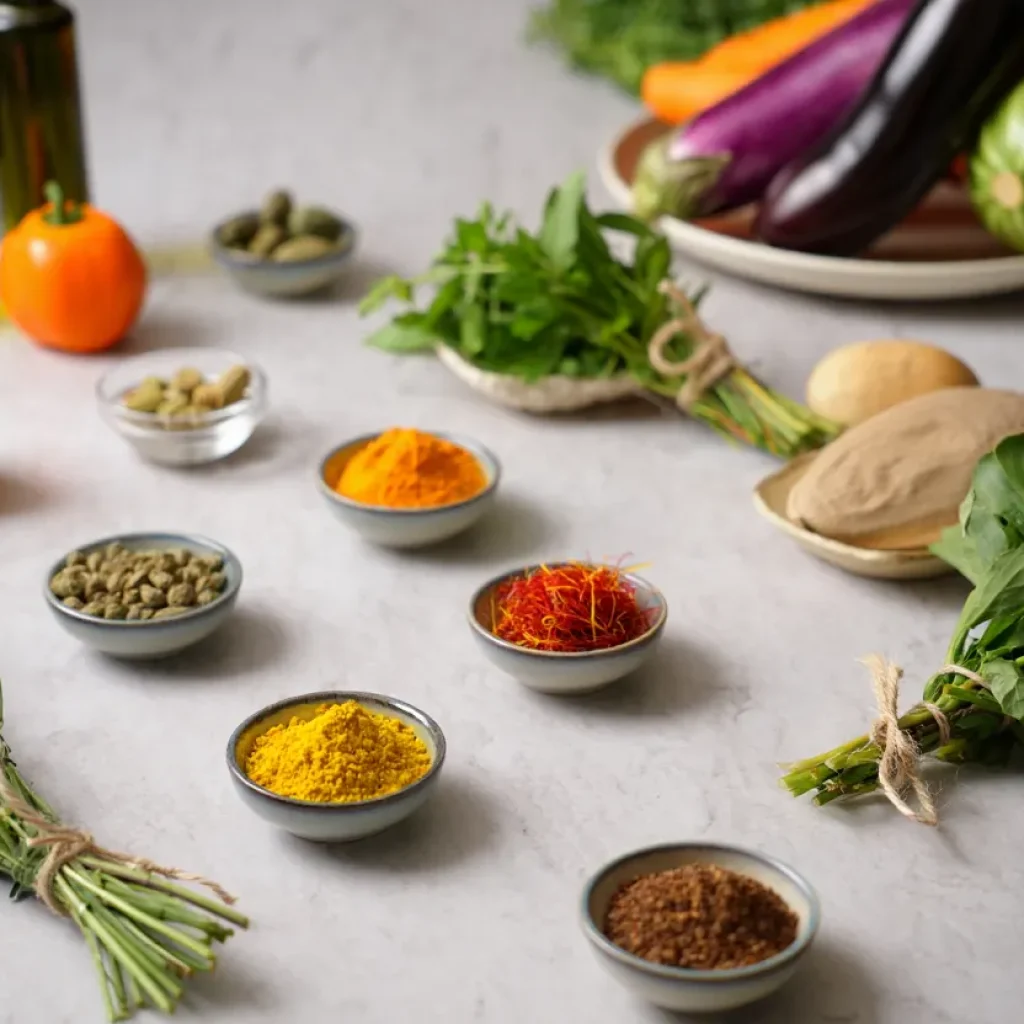
For the Hearty Stew:
- Protein: 2 lbs lamb shoulder or chicken thighs, cut into large chunks. (Substitution: Use firm fish like cod for the last 15 minutes of cooking, or double the chickpeas for a vegetarian option.)
- Aromatics: 1 large onion (chopped), 4 cloves garlic (minced).
- Vegetables: 2 large carrots (peeled and chunked), 2 zucchinis (chunked), 2 potatoes (peeled and quartered), 1 can (15 oz) chickpeas (rinsed).
- Flavor Base: 3 tbsp olive oil, 4 tbsp tomato paste, 1-2 tbsp harissa paste (adjust to your spice preference). If you’re feeling adventurous, try making our favorite homemade harissa paste.
- Spices: 1 tbsp ground cumin, 1 tbsp ground coriander, 1 tsp paprika, 1/2 tsp cinnamon.
- Liquid: 6 cups of water or low-sodium chicken/vegetable broth.
For the Fluffy Couscous:
- Grains: 2 cups medium-grain couscous.
- Flavor Enhancers: 2 tbsp olive oil or butter, 1 tsp salt.
Time is Flavor: How Long Will It Take?
Great food doesn’t have to take all day. This recipe is designed for maximum flavor in minimum time.
- Prep Time: 20 minutes
- Cook Time: 60-70 minutes
- Total Time: Approx. 90 minutes. That’s about 20% faster than many traditional recipes, without sacrificing any of the authentic taste!
Crafting Your Couscous: Step-by-Step
Follow these simple steps to create a dish that tastes like it came straight from a Tunisian kitchen.
Step 1: Build the Flavor Base
In a large pot or Dutch oven, heat the olive oil over medium heat. Add the chopped onion and sauté until soft and translucent, about 5-7 minutes. Stir in the minced garlic, tomato paste, and harissa. Cook for another 2 minutes, stirring constantly, until the paste darkens slightly. This step is crucial for developing a deep, umami-rich foundation. Finally, add your spices (cumin, coriander, paprika, cinnamon) and cook for one more minute until fragrant.
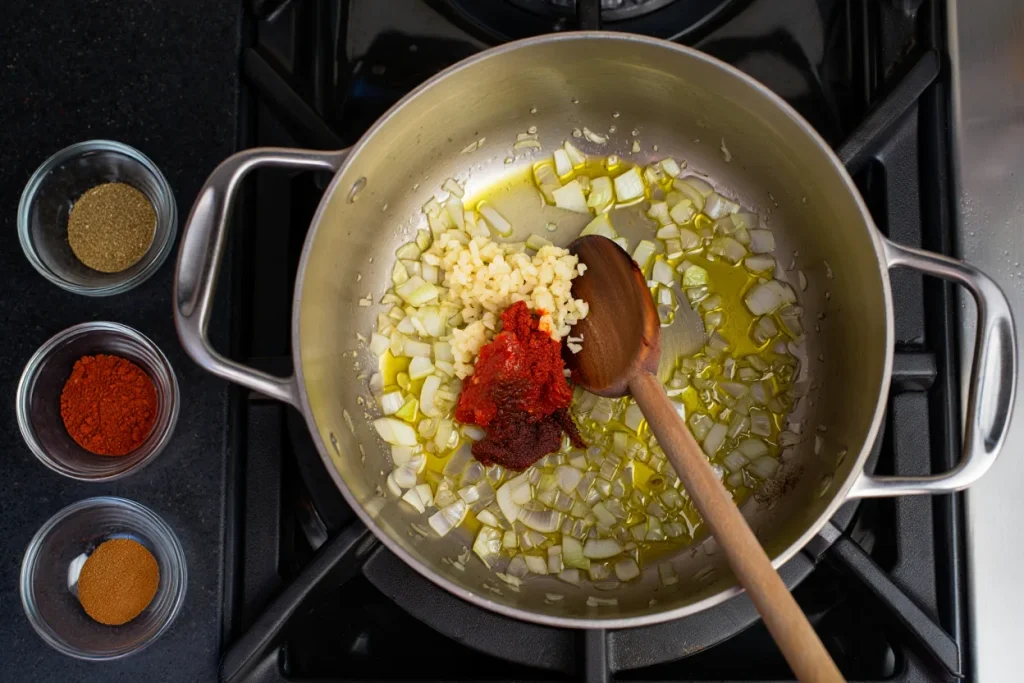
Pro Tip: Toasting the spices awakens their essential oils. Don’t skip this step! It’s the secret to a truly aromatic stew.
Step 2: Simmer the Stew
Add your lamb or chicken to the pot, tossing to coat each piece in the spice paste. Sear for a few minutes on all sides. Pour in the water or broth, scraping up any browned bits from the bottom of the pot. Bring to a boil, then reduce the heat to a simmer. Add the carrots and potatoes, cover, and let it cook for 40 minutes. Then, add the zucchini and chickpeas and simmer for another 20-30 minutes, or until the meat is tender and the vegetables are cooked through.
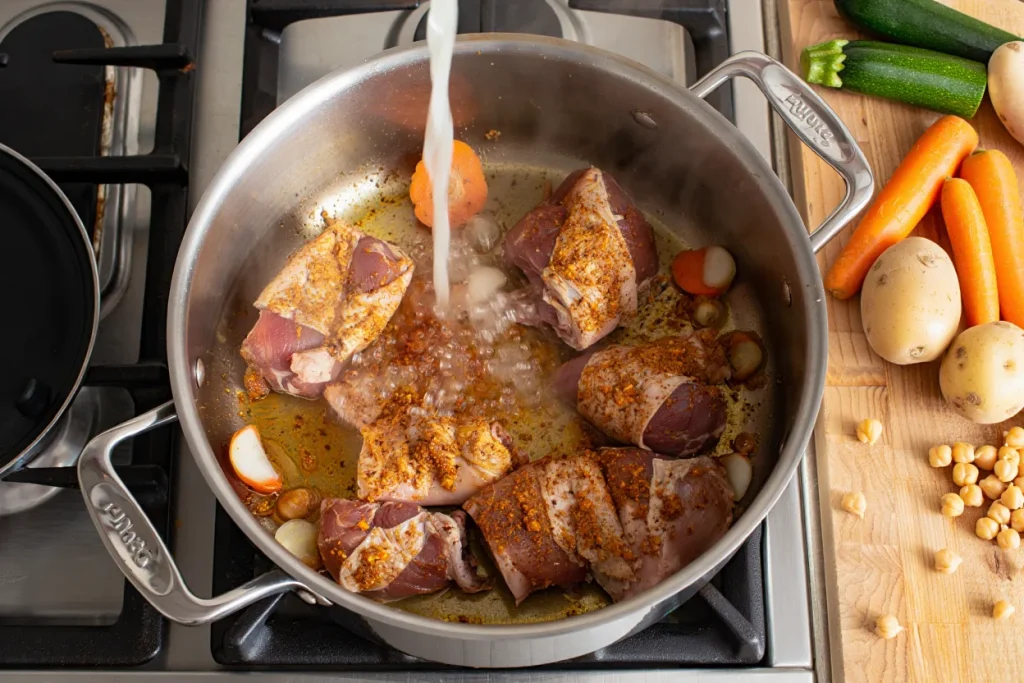
(This is a great point for a photo: a bubbling, rich red stew in a pot, showing the tender meat and vegetables.)
Step 3: Steam the Couscous to Perfection
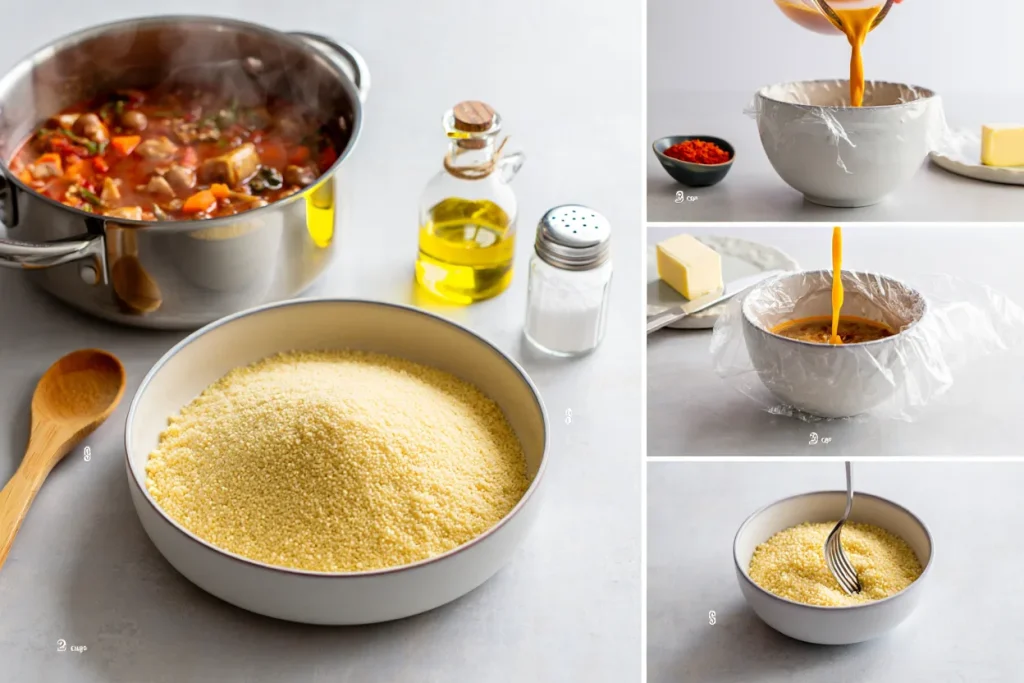
While the stew simmers, prepare the couscous. Place the dry couscous in a large, shallow bowl. In a separate pot, bring 2 cups of broth from your simmering stew to a rolling boil. (If the stew liquid is too low, use water or extra broth). Pour the boiling liquid over the couscous, add the olive oil/butter and salt, and stir once. Immediately cover the bowl tightly with a lid or plastic wrap and let it stand for 10-12 minutes. Do not peek! After it has rested, fluff the grains gently with a fork to separate them.
Step 4: Assemble Your Masterpiece
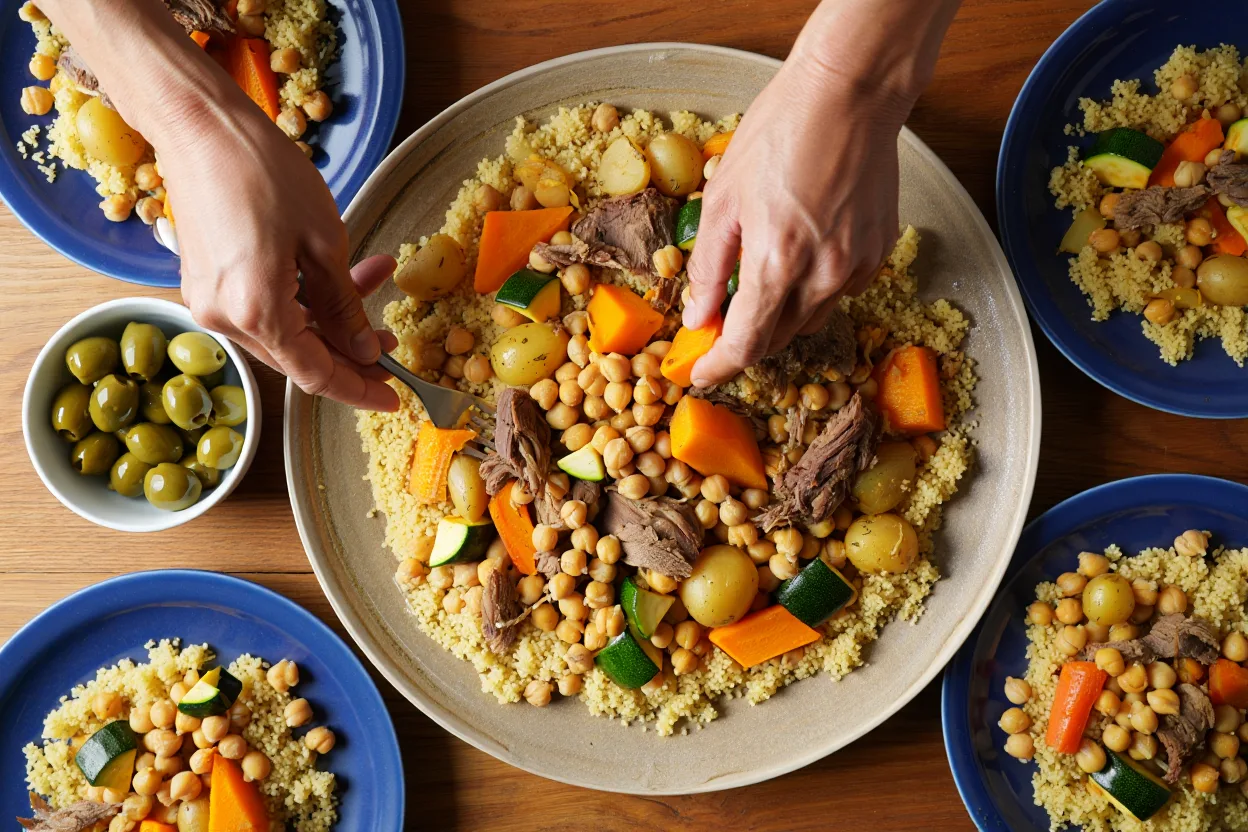
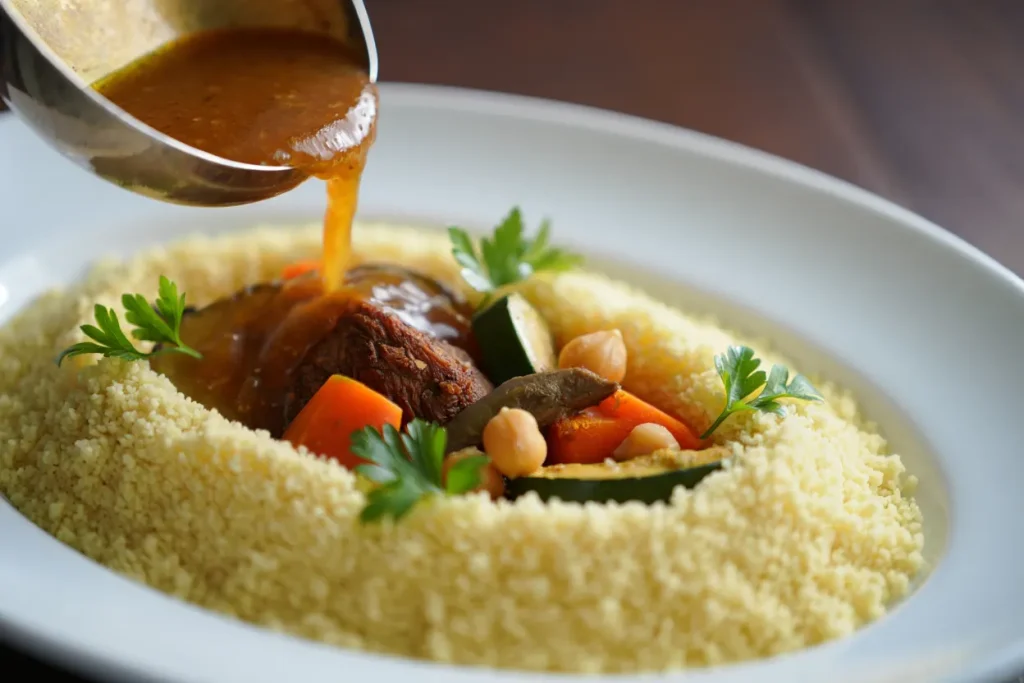
To serve, create a mound of the fluffy couscous on a large, communal platter. Use a ladle to create a well in the center. Carefully spoon the meat and vegetables into the well and around the base. Finally, ladle a generous amount of the rich, flavorful broth over everything. Garnish with fresh parsley or cilantro if desired.
Nutritional Snapshot
Here is an approximate nutritional breakdown per serving (assuming 6 servings). Please note this is an estimate.
- Calories: ~650 kcal
- Protein: ~40g
- Carbohydrates: ~70g
- Fat: ~25g
- Fiber: ~12g
Healthier, Happier Couscous
Love the flavor but want a lighter option? Easy!
- Go Lean: Swap lamb for chicken breast or fish. For a plant-based powerhouse, use extra chickpeas and add some lentils.
- Whole Grains: Use whole wheat couscous for an extra boost of fiber and nutrients.
- Veggie Overload: Reduce the amount of potatoes and load up on non-starchy vegetables like bell peppers, turnips, or squash. Check out our guide to roasting vegetables for more ideas.
- Control the Sodium: Use low-sodium broth and be mindful of how much salt you add. The spices provide plenty of flavor!
How to Serve Like a Pro
Presentation is half the fun! Serve your Tunisian couscous on a large, decorative platter for a family-style feast. Place a small bowl of extra harissa on the side for those who like it extra spicy. A simple side salad with a lemon vinaigrette can provide a refreshing contrast. This dish is a complete meal, embodying the communal spirit of North African dining culture.
Common Mistakes to Avoid
- Soggy Couscous: This happens from using too much liquid or stirring it while it steams. Stick to a 1:1 ratio of couscous to boiling liquid and let it rest, covered and undisturbed.
- Bland Stew: Don’t be shy with the spices, and make sure to toast them and the tomato paste properly at the beginning. This step builds the foundation of your flavor.
- Overcooked Vegetables: Add vegetables in stages. Hearty root vegetables like carrots and potatoes go in first, while softer ones like zucchini go in later to prevent them from turning to mush.
- Using Plain Water for Couscous: The number one secret to incredible couscous is using the flavorful broth from the stew to cook the grains. It infuses every single grain with the soul of the dish.
Keep the Flavor Fresh: Storing Tips
Leftovers are fantastic, but only if stored correctly. Store the stew and the couscous in separate airtight containers in the refrigerator for up to 4 days. When reheating, you can add a splash of water or broth to the stew. To revive the couscous, sprinkle it with a little water and microwave it or gently steam it.
Expert Tips & Tricks
- Make a Spice Blend: Mix a larger batch of the cumin, coriander, paprika, and cinnamon. Store it in an airtight jar for a ready-to-go Tunisian spice mix.
- The Double Steam: For exceptionally fluffy couscous, try the traditional method. After the initial steaming, fluff the couscous, add a little cold water, and steam it again for 10 minutes over the simmering stew in a proper couscoussier or a fine-mesh sieve.
- A Squeeze of Lemon: Just before serving, a squeeze of fresh lemon juice over the top of the stew can brighten all the flavors and cut through the richness.
My Couscous Conversion Story
I’ll be honest, my first encounter with couscous was a sad, watery instant packet. I wasn’t impressed. It wasn’t until a friend, whose family is from Tunisia, invited me over for dinner that I understood. The dish she served was nothing like what I’d had. It was a mountain of fragrant, fluffy grains topped with the most incredible lamb and vegetable stew. I was hooked. I asked for the recipe, and after a few tries, I developed this version.
The first time I made it for my own dinner party, the room went silent, followed by a chorus of “wows.” It’s more than a recipe; it’s a showstopper that brings people together, just as it’s meant to. It’s a journey to a different culture, right from your own kitchen, much like our Easy Moroccan Tagine for Beginners.
Your Culinary Adventure Awaits
This Tunisian couscous recipe is your ticket to a world of flavor. With tender meat, hearty vegetables, and perfectly fluffy grains soaked in a spicy, aromatic broth, it’s a comforting and impressive meal. It proves that authentic, show-stopping dishes can be both accessible and deeply satisfying to make.
Tried this recipe?
We’d love to hear from you! Leave a comment below, rate the recipe, or share your creation on social media!Leave a Comment Print Recipe Subscribe for More!
Frequently Asked Questions
1. Can I make Tunisian Couscous vegetarian or vegan?Absolutely! For a vegetarian version, simply omit the meat and double the amount of chickpeas. You can also add other vegetables like bell peppers or eggplant. Use vegetable broth instead of chicken broth. For a vegan version, ensure you use olive oil instead of butter for the couscous.
2. What is harissa and is there a substitute?Harissa is a spicy chili paste from North Africa, fundamental to Tunisian cuisine. Its flavor is complex, with notes of garlic, caraway, and coriander. If you can’t find it, you can substitute with another chili paste like sambal oelek, or make a mix of paprika, cayenne, cumin, and a little olive oil. However, for the most authentic flavor, harissa is highly recommended. You can find excellent recipes online, like this one from Allrecipes, which often incorporate similar flavor profiles.
3. What is the main difference between Tunisian and Moroccan couscous?While both are delicious, there are key differences. As noted by food historians, Tunisian couscous is often spicier due to the generous use of harissa and features a red, tomato-based broth. Moroccan couscous is typically milder, often seasoned with saffron and ginger, and may include sweet elements like raisins or a sweet onion topping called tfaya.
🍲 Supporting Recipe: Tunisian Couscous: 7 Epic Flavors to Fall in Love With
“If Tunisian couscous has captured your taste buds, you’ll love diving deeper into the country’s rich culinary heritage. Don’t miss our full guide: Tunisian Food Journey: 7 Best Authentic Treasures, where you’ll discover even more mouthwatering dishes that define true Tunisian flavor.”
Author´sTop Recipes Piks
- My Mom’s 5-Ingredient Meatloaf Is My Favorite
- Easy Crustless Quiche Recipe With Cottage Cheese
- 5-Step Rich Dense Chocolate Cake Recipe
- Costa Rican Tea Recipe: How To Make This Best Comfort Drink
- Easy Lavash Bread Recipe: Homemade Armenian Flatbread
- The Ultimate Bourbon Cream Recipe: A Smooth and Luxurious Delight
- Krusteaz Pancake Mix Recipe: Easy Morning Favorite
Reference
[1]
How to make Delicious Tunisian Couscous/ Easy recipe – YouTube
[2]
Easy Tunisian Couscous Recipe
https://ranasrecipe.com/recipe/easy-tunisian-couscous-recipe
[3]
Tunisian Couscous – IslamiCity
[4]
Tunisian Couscous Recipe – Food.com
https://www.food.com/recipe/tunisian-couscous-132187
[5]
Tunisian Tagine | Good Food
https://www.bbcgoodfood.com/user/301892/recipe/tunisian-tagine
[6]
Tunisian Couscous with Meat and Vegetables – Science & Crumbs
[7]
Tunisian Couscous Salad – Jennifer Lowery
[8]
Tunisian Couscous with Over-Easy Eggs & Asparagus
[9]
This One-Pot North African Chicken Couscous Recipe Is Bursting …
[10]
A Foodie’s Guide to Tunisian Cuisine
[11]
Easy Recipe: Tunisian Vegetable Couscous – The Well by Northwell
https://thewell.northwell.edu/healthy-living-fitness/tunisian-vegetable-couscous
[12]
Authentic Moroccan Couscous (Ahmed’s Version)
https://salimaskitchen.com/moroccan-couscous
[13]
Couscous – Wikipedia
https://en.wikipedia.org/wiki/Couscous
[14]
Tunisian Couscous: Fascinating Facts Unveiled – Remitly Blog
https://blog.remitly.com/lifestyle-culture/nationaldishes-couscous-fascinating-facts-tunisia
[15]
Tunisian Soup Recipe