Table of Contents
Introduction
I ruined lasagna soup twice before I figured out the timing. The first time, I added the noodles too early and they turned into bloated, mushy ribbons that fell apart when I stirred. The second attempt, I used no-boil noodles thinking they’d hold up better they dissolved into a starchy, gummy mess that looked more like wallpaper paste than dinner. But the third time? I finally cracked the code, and now this one-pot lasagna soup is the thing my family asks for on repeat, especially when it’s cold enough to see your breath in the morning.
This isn’t one of those “throw everything in and hope for the best” recipes. The noodles need to go in at exactly the right moment, the meat matters more than you’d think, and there’s a specific reason why you should use broken lasagna noodles instead of some cute pasta shape. I’ve tested all the shortcuts, made all the mistakes, and I’m walking you through what actually works.
Why This Recipe Lasagna Soup Works
- Who needs it: Anyone who wants lasagna flavor without layering, baking, or washing seventeen dishes
- When it’s useful: Weeknight dinners when you’re tired but still want something that feels special
- Why it exists: Because traditional lasagna takes 90 minutes and makes a mess; this takes 35 and uses one pot
- Problem it solves: Satisfies lasagna cravings in a fraction of the time, with texture that actually stays intact as leftovers
Ingredients (With Real Context)
The Meat Base
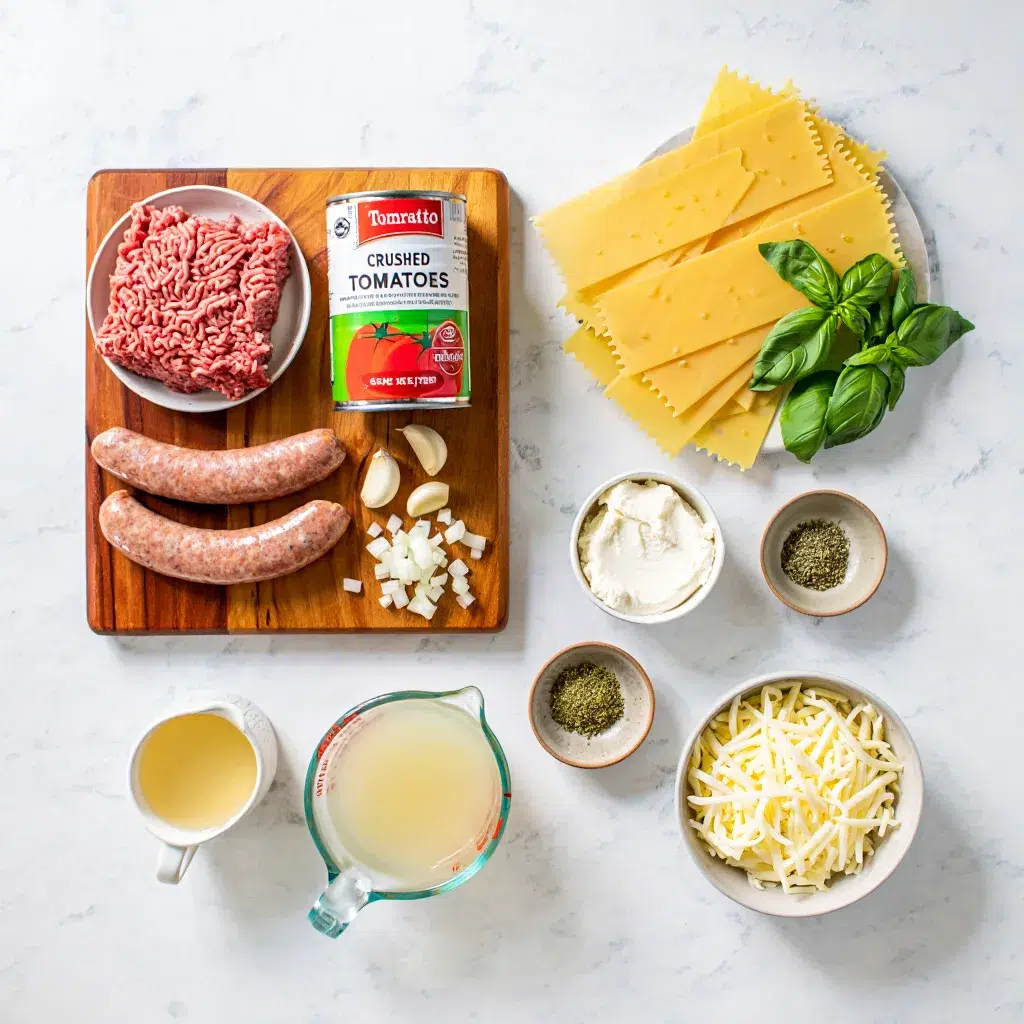
1 pound ground beef (80/20 blend)
The fat ratio matters here. I tried this with 93/7 lean beef once and the soup tasted flat and dry you need that 20% fat for richness. The fat renders into the tomato broth and carries all those savory, meaty flavors. Don’t drain it completely; leave about a tablespoon in the pot.
½ pound Italian sausage (mild or hot)
This is where the fennel and garlic notes come from the spices that make it taste specifically like lasagna instead of just “beef and tomato soup.” I use mild because my kids exist, but hot sausage absolutely works if you like heat.
Substitutions that worked: Half turkey, half beef (lighter but still flavorful). Ground turkey alone was too lean and bland.
What didn’t work: All sausage. Too greasy and overpowering.
The Aromatics
1 medium yellow onion, diced
4 cloves garlic, minced
Sauté these until the onion goes translucent and your kitchen smells like an Italian grandmother’s house. If you add the garlic at the same time as the onion, it’ll burn learned that the hard way. Add it in the last 60 seconds.
The Tomato Foundation
1 can (28 oz) crushed tomatoes
1 can (15 oz) tomato sauce
2 tablespoons tomato paste
The paste deepens the color and adds concentrated umami. I used to skip it thinking “eh, close enough,” but the soup tasted thin and watery. Those two tablespoons make a real difference.
1 tablespoon balsamic vinegar
This is the secret ingredient most recipes don’t include. It balances the acidity of the tomatoes and adds a subtle sweetness that rounds out the whole pot.
The Liquid
4 cups chicken broth (or beef broth)
I prefer chicken because it’s lighter and doesn’t compete with the sausage, but beef broth works if you want something even heartier. Low-sodium is key you can always add salt, but you can’t take it out.
The Seasonings
2 teaspoons dried basil
1 teaspoon dried oregano
½ teaspoon red pepper flakes (optional, but recommended)
1 bay leaf
Salt and black pepper to taste
The Noodles (TIMING CRITICAL)
8-10 lasagna noodles, broken into 2-inch pieces
Do NOT use no-boil noodles. Do NOT use gluten-free pasta unless you’re okay with a completely different texture. Regular lasagna noodles, broken by hand, added in the last 15 minutes. That’s the rule.
The Cheese Topping
1 cup whole milk ricotta
1½ cups shredded mozzarella
½ cup grated Parmesan
Fresh basil for garnish
Ricotta on top is non-negotiable that creamy, slightly sweet dollop is what makes this taste like actual lasagna instead of vegetable soup with noodles.
Dietary Substitutions
- Gluten-free: Use Jovial or Tinkyada brown rice lasagna noodles (add 5 minutes to cook time, watch closely)
- Dairy-free: Cashew ricotta works (soak 1 cup cashews, blend with lemon juice and nutritional yeast), skip mozzarella or use Violife
- Lower-fat: Use 93/7 beef and turkey sausage, reduce cheese by half (flavor will be lighter)
Timing
- Prep Time: PT15M (15 minutes)
- Cook Time: PT35M (35 minutes)
- Total Time: PT50M (50 minutes)
This is faster than waiting for lasagna to bake, and about the same as making spaghetti if you count the time it takes to boil water and brown meat.
Step-by-Step Instructions
1. Brown the Meat (8 minutes)

Heat a large Dutch oven or heavy-bottomed pot over medium-high heat. Add the ground beef and Italian sausage. Break it up with a wooden spoon and let it sit undisturbed for 2-3 minutes so it gets some brown crust on the bottom.
Why this matters: That crust is called the Maillard reaction it’s where the savory, roasted flavor comes from. If you keep stirring constantly, you’ll just steam the meat and it’ll taste boiled.
What to look for: The meat should have some golden-brown bits stuck to the bottom of the pot, and there should be no pink left. Internal temp should hit 160°F if you’re checking with a thermometer (I do, especially after one bout of food poisoning from undercooked ground beef).
Pro tip: Leave about 1 tablespoon of fat in the pot after browning. It carries flavor. If there’s way more than that, drain most of it, but don’t wipe the pot clean.
2. Sauté the Aromatics (3 minutes)
Add the diced onion to the pot with the meat. Cook, stirring occasionally, until the onion softens and turns translucent about 2-3 minutes.
Add the minced garlic and cook for 60 seconds, stirring constantly.
Why this matters: Garlic burns fast. If you add it too early, it turns bitter and acrid. You want it fragrant and golden, not brown.
What to look for: Your kitchen should smell amazing. If the garlic starts smoking or turning dark brown, you’ve gone too far.
3. Build the Soup Base (5 minutes)
Stir in the crushed tomatoes, tomato sauce, tomato paste, chicken broth, balsamic vinegar, basil, oregano, red pepper flakes, and bay leaf.
Why this matters: The tomato paste needs to cook out for a minute to lose its raw, tinny flavor. Stir it in thoroughly so it doesn’t clump.
What to look for: The soup should be a deep, russet-red color. Taste it now (carefully, it’s hot) and add salt. Start with 1 teaspoon, stir, taste again. The salt brings out the tomato sweetness.
Flavor booster: Add a Parmesan rind if you have one sitting in your fridge. It infuses the broth with nutty, salty depth.
4. Simmer to Develop Flavor (15 minutes)
Bring the soup to a boil, then reduce heat to low and let it simmer, partially covered, for 15 minutes.
Why this matters: This is when all the flavors meld. The tomatoes mellow out, the spices bloom, and the broth thickens slightly as moisture evaporates.
Texture trick: If your soup looks too thick at this point, add ½ cup more broth. If it’s too thin, let it simmer uncovered for an extra 5 minutes.
5. Add the Noodles (12-15 minutes) MOST IMPORTANT STEP
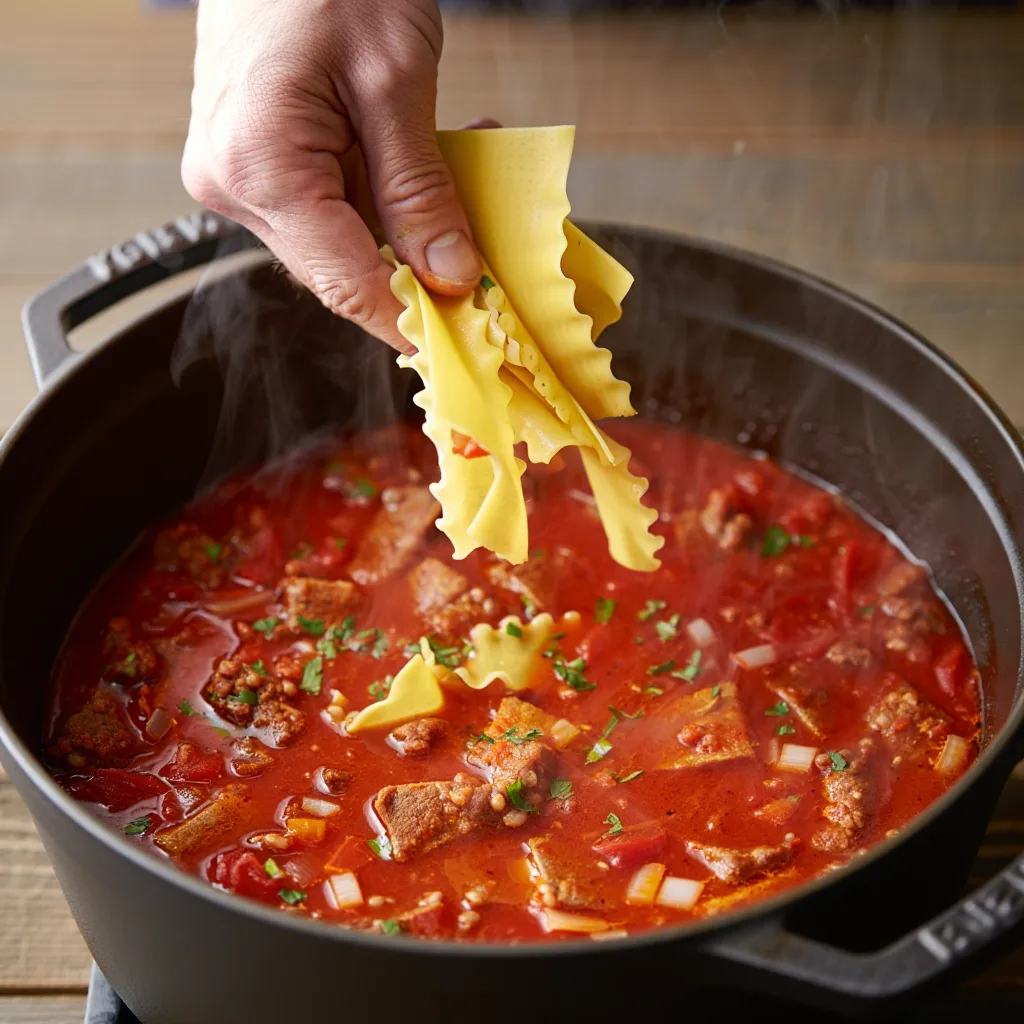
Break the lasagna noodles into roughly 2-inch pieces by hand. Add them to the simmering soup. Increase the heat to medium so the soup comes back to a gentle boil.
Cook, stirring every 3-4 minutes to prevent sticking, for 12-15 minutes, or until the noodles are al dente.
Why this matters: This is where I screwed up twice. If you add the noodles at the beginning, they overcook and turn to mush. If you add them at the very end and try to rush it, they’re crunchy in the middle. 12-15 minutes in simmering liquid is the sweet spot.
What to look for: The noodles should be tender but still have a slight bite when you taste one. They’ll continue to soften off the heat, so pull them just before they’re fully soft.
Common visual cue: When the noodles start curling at the edges and you can see the ruffled layers separating slightly, they’re close.
6. Finish and Serve
Remove the bay leaf (fish it out, don’t leave it in there for someone to bite). Taste and adjust salt and pepper.

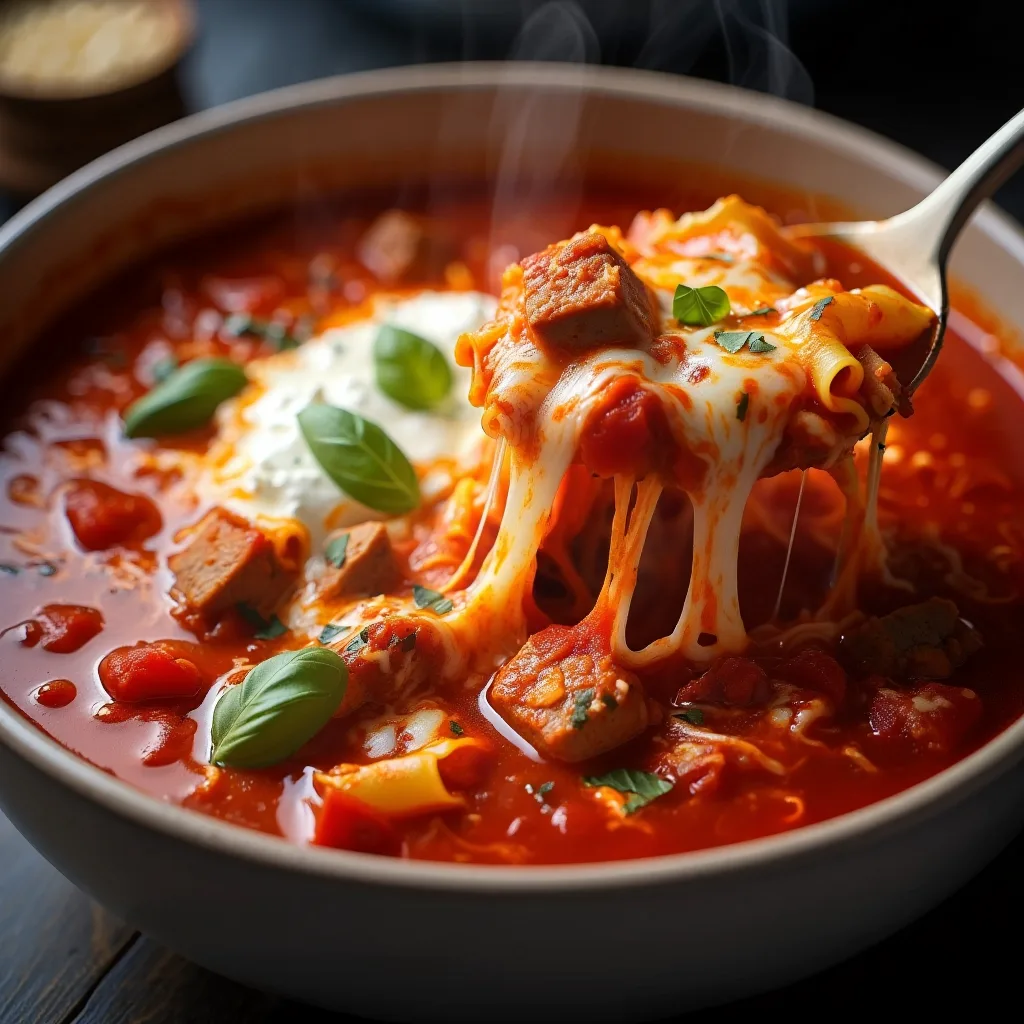
Ladle the soup into bowls. Top each bowl with a generous spoonful of ricotta, a handful of shredded mozzarella, a sprinkle of Parmesan, and fresh torn basil if you have it.
Pro tip: The ricotta doesn’t melt in it sits on top like a creamy cloud. Stir it into each bite as you eat.
Common Mistakes I Made & How I Fixed Them
Mistake #1: Adding the Noodles Too Early
What went wrong: I dumped the broken noodles in with the tomatoes, thinking “more time = better flavor.” After 30 minutes of simmering, I had soup with bloated, falling-apart noodle shreds that looked like they’d been through a blender.
Why it happened: Lasagna noodles are thick and starchy. They absorb liquid like crazy. The longer they sit in hot broth, the more they swell and break down.
The fix: Add noodles only in the last 12-15 minutes. Set a timer. Stir occasionally so they don’t stick to the bottom, but otherwise leave them alone.
Mistake #2: Using No-Boil Lasagna Noodles
What went wrong: I thought no-boil noodles would be easier and hold up better in soup. Instead, they dissolved into a gummy, starchy mess that thickened the soup into something closer to porridge.
Why it happened: No-boil noodles are pre-cooked and designed to rehydrate in the oven with a specific amount of moisture. In soup, they absorb way too much liquid and fall apart.
The fix: Use regular lasagna noodles. Yes, you have to break them by hand. Yes, it takes 3 extra minutes. It’s worth it.
Mistake #3: Draining All the Fat from the Meat
What went wrong: The first time I made this, I was on an “eat healthy” kick and drained every drop of fat from the browned meat. The soup tasted flat, watery, and lacked that rich, meaty depth I was expecting.
Why it happened: Fat carries flavor. Ground beef and Italian sausage have spices and seasonings in their fat. When you drain it all, you’re pouring flavor down the sink.
The fix: Leave about 1 tablespoon of fat in the pot after browning. If there’s a pool of grease (more than 2-3 tablespoons), drain most of it, but keep some.
Mistake #4: Skipping the Balsamic Vinegar
What went wrong: I didn’t have balsamic vinegar and thought “it’s just a tablespoon, won’t matter.” The soup tasted harsh and one-dimensional all tomato acid with no balance.
Why it happened: Balsamic vinegar adds sweetness and rounds out the sharp acidity of canned tomatoes. Without it, the soup is missing that subtle complexity.
The fix: If you don’t have balsamic, use 1 teaspoon of sugar or a splash of red wine. It’s not exactly the same, but it helps.
Variations I Actually Tried
White Lasagna Soup (Worked Great)
I swapped the tomato base for a creamy Alfredo-style broth: 2 cups chicken broth + 2 cups heavy cream + ½ cup Parmesan + garlic. Used the same meat, same noodles, topped with mozzarella and spinach.
What worked: Rich, decadent, totally different vibe.
What didn’t: Very heavy. Only good for 1 bowl, not 2.
When to use it: Special occasion, cold winter night, when you want to impress someone.
Vegetarian Version with Mushrooms and Spinach
Skipped the meat. Added 1 pound sliced cremini mushrooms (sautéed first until golden) + 2 cups fresh spinach stirred in at the end.
What worked: Lighter, fresher, still hearty.
What didn’t: Missing that deep, meaty richness. I compensated by adding 1 tablespoon soy sauce and a Parmesan rind, which helped.
When to use it: Meatless Monday, vegetarian guests, when you want something lighter.
Slow Cooker Version (Mixed Results)
Brown the meat and aromatics on the stove, dump everything except noodles and cheese into the slow cooker, cook on low for 6 hours. Add noodles in the last 20 minutes on high.
What worked: Hands-off, great for busy days.
What didn’t: The noodles still overcooked because the slow cooker holds heat so well. I had better luck cooking the noodles separately and adding them to bowls.
When to use it: Meal prep, potluck, when you need to walk away from the kitchen.
Nutritional Information
(Based on 1 bowl, recipe serves 6)
| Nutrient | Amount |
|---|---|
| Calories | 425 |
| Total Fat | 22g |
| Saturated Fat | 10g |
| Carbohydrates | 32g |
| Fiber | 4g |
| Protein | 26g |
| Sodium | 980mg |
| Vitamin A | 18% DV |
| Calcium | 28% DV |
| Iron | 15% DV |
Note: These values are estimates based on ingredient averages. Actual nutrition will vary depending on brands and portion sizes.
Healthier Alternatives
To Reduce Calories and Fat:
- Use 93/7 lean ground beef and turkey sausage instead of 80/20 beef and pork sausage (saves ~120 calories per serving, but flavor is noticeably lighter)
- Use part-skim ricotta and reduce mozzarella to ¾ cup (saves ~80 calories per serving)
- Replace half the noodles with zucchini ribbons added in the last 5 minutes (reduces carbs, adds vegetables)
Honest tradeoff: The soup will be less rich and satisfying. It’s still good, but it doesn’t have that indulgent, “this is basically lasagna” quality. If you’re trying to eat lighter, it works. If you’re craving comfort food, stick with the full-fat version.
To Reduce Sodium:
- Use no-salt-added crushed tomatoes and tomato sauce
- Use low-sodium or homemade broth
- Reduce Parmesan to 2 tablespoons per serving
This brings sodium down to around 520mg per serving, which is more reasonable if you’re watching salt intake. You’ll need to add a bit more seasoning (garlic powder, dried basil, black pepper) to compensate for flavor.
Serving Suggestions
Plating
Serve in wide, shallow bowls so you can see the noodles and cheese. The ricotta should sit on top like a snowy dollop don’t stir it in until you’re eating.
Side Pairings
- Garlic bread: Crusty bread for dipping into the broth
- Simple green salad: Arugula with lemon vinaigrette cuts the richness
- Caesar salad: Classic pairing, adds crunch and anchovy funk
- Roasted vegetables: Broccoli or Brussels sprouts if you want something green on the plate
Beverage Matches
- Red wine: Chianti or Sangiovese (medium-bodied, not too tannic)
- Beer: Amber ale or lager
- Non-alcoholic: Sparkling water with lemon, or iced tea
Festive/Seasonal Variants
- Fall: Add ½ cup pumpkin puree to the broth for a seasonal twist (weird but good)
- Winter: Double the cheese, add crispy bacon on top
- Spring: Stir in fresh peas and lemon zest at the end
Storage, Reheating & Real-Life Use
How It Holds Up Over Time
Day 1: The noodles are perfectly al dente, the broth is rich, the cheese is melty. This is peak lasagna soup.
Day 2-3: The noodles have absorbed some liquid and softened. The soup is thicker, almost like a stew. Still delicious, but you’ll need to add ½-1 cup broth when reheating to loosen it back up.
Day 4: The noodles are very soft. The flavors are still good, but the texture is noticeably different. If you’re particular about pasta texture, freeze portions after day 2 instead of refrigerating for 4 days.
Best Storage Method
Refrigerator: Store in an airtight container for up to 4 days. Keep the cheese separate if possible (add fresh ricotta and mozzarella when you reheat).
Freezer: Freeze the soup base without noodles or cheese for up to 3 months. Thaw overnight in the fridge, reheat on the stovetop, then add freshly cooked noodles.
Best Reheating Method
Stovetop (recommended): Reheat in a pot over medium heat, stirring occasionally. Add ½ cup broth to restore the consistency. Heat until steaming (165°F internal temp for food safety).
Microwave: Works in a pinch. Heat in 2-minute intervals, stirring between, until hot. The noodles may break apart more easily this way.
What Changes After Reheating
Texture: The noodles soften more. The broth thickens. It becomes more like a thick stew than a soup.
Flavor: Actually improves. The spices have more time to meld, and the soup tastes deeper and richer on day 2.
Quality loss: Minimal if you add extra broth. The biggest issue is mushy noodles, which you can avoid by freezing the base and cooking noodles fresh.
Realistic Shelf Life
- Refrigerator: 4 days max
- Freezer: 3 months (quality declines after that)
Expert Tips & Tricks
Chef-Style Insights
Why the cheese goes on top, not in the pot: If you stir ricotta into the soup, it breaks down and turns grainy. It’s meant to be a creamy, cool contrast to the hot soup like a palate reset between bites.
The science of layering flavors: Each step builds complexity. Browning = caramelization. Sautéing aromatics = releasing essential oils. Simmering = melding and reducing. If you skip steps or rush, you lose depth.
The Parmesan rind trick: Toss a 2-inch piece of Parmesan rind into the soup while it simmers. It infuses the broth with umami and a subtle nuttiness. Fish it out before serving.
Tools That Actually Help
- Dutch oven: Even heat distribution, tall sides prevent splatter, goes from stovetop to oven if you want to broil the cheese on top
- Instant-read thermometer: Check that the meat hits 160°F to avoid food safety issues
- Wooden spoon: Won’t scratch your pot, sturdy enough to break up meat and stir thick soup
- Spider strainer or slotted spoon: Useful for fishing out the bay leaf or Parmesan rind
Who This Recipe Is / Is Not For
This Recipe Is Perfect For:
- Weeknight cooks who want something comforting in under an hour
- People with basic skills (if you can brown meat and stir a pot, you can make this)
- Families who like the flavor of lasagna but not the commitment
- Meal preppers who want leftovers that actually reheat well
- Anyone with a Dutch oven or large pot (4-quart minimum)
This Recipe Is NOT a Good Fit If:
- You’re looking for a 30-minute meal: With browning, simmering, and cooking noodles, this takes 50 minutes start to finish
- You don’t have a large pot: A 2-quart saucepan won’t fit all this. You need at least 4 quarts, ideally 5-6
- You want super-light, low-calorie soup: This clocks in at 425 calories per bowl with all the cheese. It’s comfort food, not diet food
- You’re gluten-free and very picky about pasta texture: GF noodles work, but they don’t have the same chew as regular lasagna noodles
- You hate leftovers with softer noodles: By day 3, the noodles are quite soft. Some people love that stew-like texture; others find it off-putting
Case Study: When I Served This to My In-Laws
My mother-in-law is Italian. Not “my great-grandmother was from Sicily” Italian she was born in Rome and didn’t move to the U.S. until she was 25. So when I said I was making “lasagna soup” for Sunday dinner, I got the look. The one that says, “What are you doing to my heritage?”
But I made it anyway. I followed every step: browned the meat properly, didn’t drain all the fat, added the noodles at exactly the right time, topped each bowl with a mountain of ricotta. When she tasted it, she paused. Then she took another spoonful. Then she said, “This is not lasagna. But it is good.”
Coming from her, that was basically a Michelin star.
She did note that I should use more garlic next time (I used 4 cloves; she would’ve used 8). And she said fresh basil is non-negotiable, not optional. But she also asked for the recipe, which she has never done for any of my cooking. I consider that a win.
Final Thoughts
I’ll make this again next week, probably on a Tuesday when I’m too tired to think. I might add an extra clove of garlic (for my mother-in-law) and maybe toss in some spinach at the end because I have a bag wilting in the fridge. That’s the beauty of this soup it’s flexible without falling apart.
If you try it this weekend, let me know how it goes. Did your noodles turn to mush? Did you remember the balsamic? Did you burn the garlic? I want to hear about it.
FAQs
Can I use a different type of pasta instead of lasagna noodles?
Yes, but the texture and experience will be different. I’ve tried this with penne, rigatoni, and broken spaghetti. They all work, but lasagna noodles have those ruffled edges and layers that catch the cheese and sauce in a way other shapes don’t. If you use a different pasta, cook it according to the package directions and add it in the last 10-12 minutes. Mafalda (mini lasagna noodles) is the closest alternative.
Why do my noodles always turn mushy, even when I add them at the end?
Three possible reasons: (1) You’re overcooking them pull them when they’re still slightly firm, they’ll continue softening off the heat. (2) Your soup is boiling too hard reduce to a gentle simmer once you add the noodles. (3) You’re using no-boil noodles switch to regular. If you’re making leftovers, freeze the soup base without noodles and cook fresh noodles each time you reheat.
Can I make this in a slow cooker?
Yes, but with modifications. Brown the meat and sauté the aromatics on the stovetop first. Transfer everything except the noodles and cheese to the slow cooker. Cook on low for 6-7 hours or high for 3-4 hours. In the last 20 minutes, switch to high, add the broken noodles, and stir occasionally. The noodles can still get too soft in the slow cooker’s residual heat, so I personally prefer cooking them separately and adding them to each bowl.
Can I freeze this soup?
Yes, but freeze it without the noodles. The noodles break down and turn to mush when frozen and thawed. Make the soup base, let it cool completely, then freeze in portions for up to 3 months. When you’re ready to eat, thaw overnight in the fridge, reheat on the stovetop, and add freshly cooked lasagna noodles in the last 12 minutes.
What’s the best way to reheat leftovers without the noodles getting too soft?
Add ½ cup of broth to the soup when reheating to restore the consistency. Heat on the stovetop over medium heat, stirring occasionally, until it reaches 165°F. The noodles will soften more with each reheat that’s unavoidable but adding extra liquid helps keep the soup from becoming too thick and stew-like. If you’re really particular about texture, consider freezing portions after day 2 and adding fresh noodles when you reheat.
Can I make this vegetarian?
Absolutely. Skip the meat and sauté 1 pound of sliced mushrooms (cremini or baby bella work best) until golden and caramelized about 8-10 minutes. Add 2 cups fresh spinach or kale in the last 5 minutes of cooking. To replace the savory depth you lose without meat, add 1 tablespoon soy sauce or miso paste, and throw in a Parmesan rind while the soup simmers. The soup will be lighter, but still deeply flavorful.
What if I accidentally added the noodles too early and they’re already mushy?
Unfortunately, you can’t un-cook them. Your best option is to embrace the texture change and treat it like a thick stew rather than soup. You can add more broth to thin it out slightly, but the noodles will still be soft. For future batches, set a timer for 15 minutes before you plan to serve, and add the noodles then. It’s the one step where timing really matters.
Recipe Card Summary
Prep Time: 15 minutes
Cook Time: 35 minutes
Total Time: 50 minutes
Servings: 6
Calories: 425 per serving (estimated)
Ingredients
- 1 lb ground beef (80/20)
- ½ lb Italian sausage
- 1 medium onion, diced
- 4 cloves garlic, minced
- 1 can (28 oz) crushed tomatoes
- 1 can (15 oz) tomato sauce
- 2 tbsp tomato paste
- 4 cups chicken broth
- 1 tbsp balsamic vinegar
- 2 tsp dried basil
- 1 tsp dried oregano
- ½ tsp red pepper flakes
- 1 bay leaf
- 8-10 lasagna noodles, broken
- 1 cup ricotta cheese
- 1½ cups shredded mozzarella
- ½ cup grated Parmesan
- Fresh basil for garnish
- Salt and pepper to taste
Instructions
- Brown ground beef and sausage in a large pot over medium-high heat (8 min). Leave 1 tbsp fat in the pot.
- Add onion, cook until soft (3 min). Add garlic, cook 1 minute.
- Stir in crushed tomatoes, tomato sauce, tomato paste, broth, balsamic, and seasonings. Bring to a boil.
- Reduce heat and simmer 15 minutes.
- Add broken lasagna noodles. Cook 12-15 minutes, stirring occasionally, until noodles are al dente.
- Remove bay leaf. Ladle into bowls.
- Top each bowl with ricotta, mozzarella, Parmesan, and fresh basil.
- Serve immediately.
sources
Food Search | USDA FoodData Centralusda.gov
21 Lazy Dinner Ideas That Actually Taste Amazing (Fast & Easy!)bestwayrecipes.com
EASY 5-Ingredient Meatloaf Recipe: Mom’s Juicy Classic in 10 Mins Prep bestwayreci