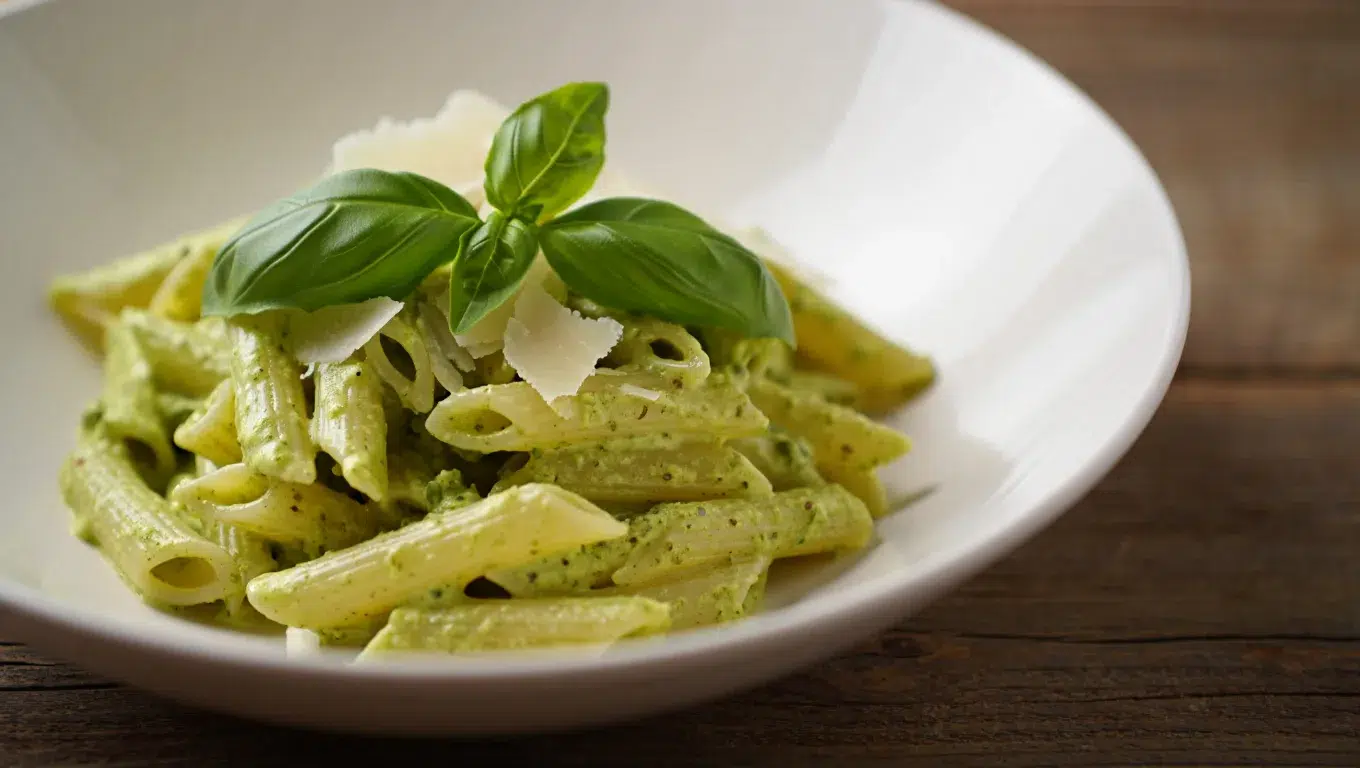
H1: Creamy Pesto Pasta That Actually Stays Creamy
Table of Contents
Introduction
I’ve made this pesto pasta probably thirty times now, and the first ten attempts were a mess. The sauce would separate into puddles of oil, the cheese clumped into rubbery bits, and sometimes I’d end up with what looked more like oily noodles than anything creamy. I kept thinking I was following the recipe, but something always went wrong. Turns out, creamy pesto pasta isn’t just about dumping cream and pesto together it’s about technique, timing, and understanding why ingredients behave the way they do. Once I figured out the actual mechanics (emulsification, heat control, pasta water magic), everything changed. Now I can make a silky, restaurant-style pesto cream sauce that coats every noodle without splitting.
Why This Recipe Works
- For anyone who’s had pesto pasta turn oily and separated this fixes that
- When you want a weeknight dinner in 20 minutes but still crave something indulgent
- Why it exists: Because most pesto pasta recipes skip the science of emulsification, leaving you with broken sauce
- What problem it solves: Gets you a stable, velvety cream sauce that doesn’t split when reheated
Ingredients (With Real Context)
“If you’re making your own basil pesto, the quality makes a huge difference in the final creaminess.”
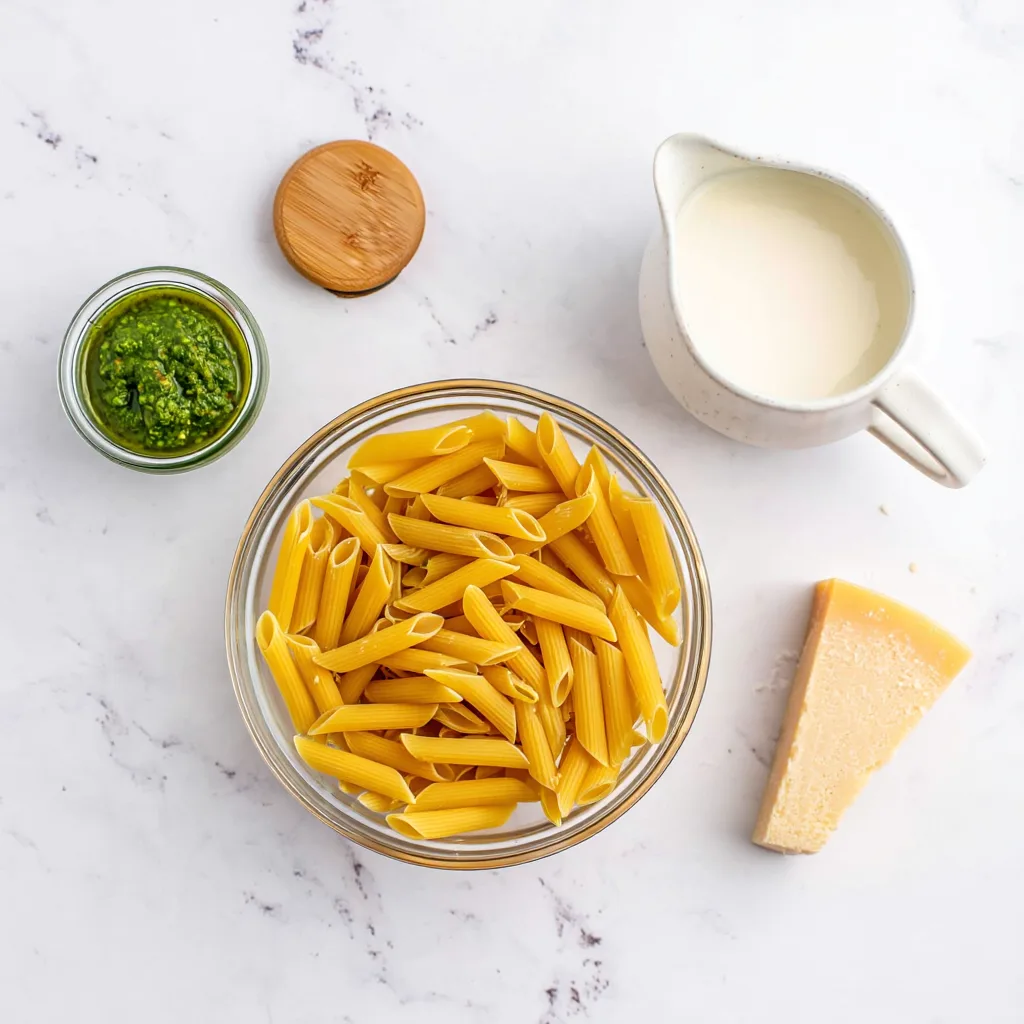
The Pasta (Foundation)
- 12 oz short pasta (penne, shells, or rigatoni)
Why it matters: Short pasta with ridges or curves holds onto cream sauce way better than smooth noodles. I learned this the hard way with spaghetti the sauce just slid right off.
Common mistake: Using long, smooth pasta like spaghetti. It doesn’t grab the sauce, and you end up with a pool of cream at the bottom of the bowl.
What worked for me: Penne rigate (the ridged kind). The grooves trap the sauce, and every bite has that creamy coating.
The Pesto (Flavor Base)
- ¾ cup basil pesto (homemade or store-bought)
Why it matters: This is your flavor backbone. The quality of your pesto directly impacts how the final dish tastes. Fresh, refrigerated pesto has brighter basil flavor than shelf-stable jars.
Tested substitutions:
- Homemade pesto: Best flavor, but takes extra time. If you’re making your own basil pesto, use it the same day for maximum freshness.
- Refrigerated store-bought: Second best. Brands like Buitoni or Trader Joe’s work well.
- Shelf-stable jarred pesto: Works in a pinch, but often tastes more preserved and less vibrant.
Common mistake: Using pesto straight from the fridge without letting it come to room temp. Cold pesto doesn’t emulsify as smoothly into warm cream.
Sensory note: Good pesto should smell intensely of fresh basil, with visible flecks of green leaves and pine nuts.
The Cream (Richness)
- 1 cup heavy cream (or half-and-half for lighter version)
Why it matters: Heavy cream has enough fat to emulsify with the oil in pesto without splitting. Lower-fat dairy (like milk) can work, but it’s trickier and more prone to separation.
Tested substitutions:
- Half-and-half: Lighter, but sauce won’t be as thick. You may need to simmer longer to reduce.
- Whole milk: Risky. I tried this once and it curdled when I added the pesto. Only use if you’re very careful with heat.
- Coconut cream (dairy-free): Surprisingly good! Adds a subtle sweetness that works with basil.
Common mistake: Adding cold cream to hot garlic/oil. This temperature shock can cause splitting. Always let cream warm slightly before mixing.
The Pasta Water (Secret Weapon)
- ½ cup reserved pasta cooking water
Why it matters: This is the emulsification magic. Pasta water contains starch that helps bind the oil from pesto with the cream, creating a smooth, cohesive sauce instead of separated puddles.
What I learned: Don’t skip this. I thought it was optional the first few times it’s not. The starch is what keeps everything together.
Sensory note: Pasta water should look slightly cloudy, not clear. That cloudiness is the starch you need.
The Parmesan (Salty, Umami Finish)
- ½ cup freshly grated Parmesan cheese
Why it matters: Adds salty depth and helps thicken the sauce. Freshly grated melts smoothly; pre-grated often contains anti-caking agents that make it clump.
Common mistake: Adding cheese while the sauce is boiling. High heat causes the proteins to seize and clump into rubbery bits.
What worked: Turn the heat to low, then stir in the cheese gradually. It melts into the sauce without clumping.
Supporting Cast
- 2 tablespoons butter (richness, helps emulsify)
- 3 garlic cloves, minced (aromatic depth)
- Salt and black pepper (to taste)
- Optional: pinch of red pepper flakes (gentle heat)
- Optional: fresh lemon juice (1 teaspoon) (brightens heavy cream)
Dietary Substitutions:
- Gluten-free: Use gluten-free pasta (chickpea or brown rice work well)
- Dairy-free: Swap heavy cream for coconut cream, use vegan pesto (no Parmesan), and skip the butter or use vegan butter
- Nut-free pesto: Use sunflower seeds instead of pine nuts in homemade pesto
- Lower-fat: Use half-and-half instead of heavy cream (sauce will be thinner)
Timing
- Prep Time: PT10M (10 minutes)
- Cook Time: PT15M (15 minutes)
- Total Time: PT25M (25 minutes)
Realistic comparison: About the same time it takes to order and pick up takeout, but way more satisfying.
Step-by-Step Instructions (Decision-Based)
1. Boil the pasta water and cook pasta
Bring a large pot of water to a rolling boil. Add 1 tablespoon of salt (the water should taste like the ocean). Add pasta and cook according to package directions until al dente usually 8-10 minutes.
Why it matters: Salting the water is your only chance to season the pasta itself. Undersalted pasta makes the whole dish taste flat, even with a flavorful sauce.
What to look for: Al dente means the pasta has a slight firmness when you bite into it. It should not be mushy or soft all the way through.
Pro tip: Set a timer for 2 minutes before the package says it’s done. Test a piece. If it’s almost there, it’s ready it’ll finish cooking in the sauce.
CRITICAL: Before draining, scoop out 1 cup of pasta water with a mug or ladle. Set it aside. You’ll need this for the sauce.
2. Warm the butter and garlic
While the pasta cooks, melt 2 tablespoons of butter in a large skillet over medium-low heat. Add the minced garlic and cook for 30-60 seconds, stirring constantly.
Why it matters: Garlic blooms its flavor in fat, but it burns easily. Burned garlic tastes bitter and will ruin the sauce.
What to look for: The garlic should smell fragrant and just barely start to turn golden at the edges. If it’s browning fast, pull the pan off the heat.
Common visual cue: Tiny bubbles forming around the garlic pieces = perfect. Dark brown edges = you’ve gone too far.
3. Add the heavy cream and bring to a gentle simmer
Pour in the heavy cream, stirring to combine with the butter and garlic. Increase heat slightly to medium and bring the mixture to a gentle simmer (small bubbles around the edges, not a rolling boil).
Why it matters: A gentle simmer thickens the cream slightly without scorching it. Boiling too hard can cause the cream to separate or scorch on the bottom of the pan.
What to look for: The cream should be steaming and have tiny bubbles breaking the surface, but it shouldn’t be violently bubbling.
Texture trick: Let it simmer for 3-4 minutes, stirring occasionally. The cream will reduce slightly and coat the back of a spoon.
4. Stir in the pesto (off the heat)
Remove the skillet from the burner. Add the pesto and stir until it’s fully incorporated into the cream.
Why it matters: Pesto contains oil, which can separate if heated too aggressively. Mixing it off the heat gives you more control over emulsification.
What to look for: The sauce should turn a uniform light green color. If you see oil pooling on the surface, add a splash of pasta water and whisk vigorously it’ll come together.
Pro tip: If your pesto was refrigerated, let it sit at room temp for 10 minutes before adding. Cold pesto is harder to mix smoothly.
5. Add pasta water to emulsify
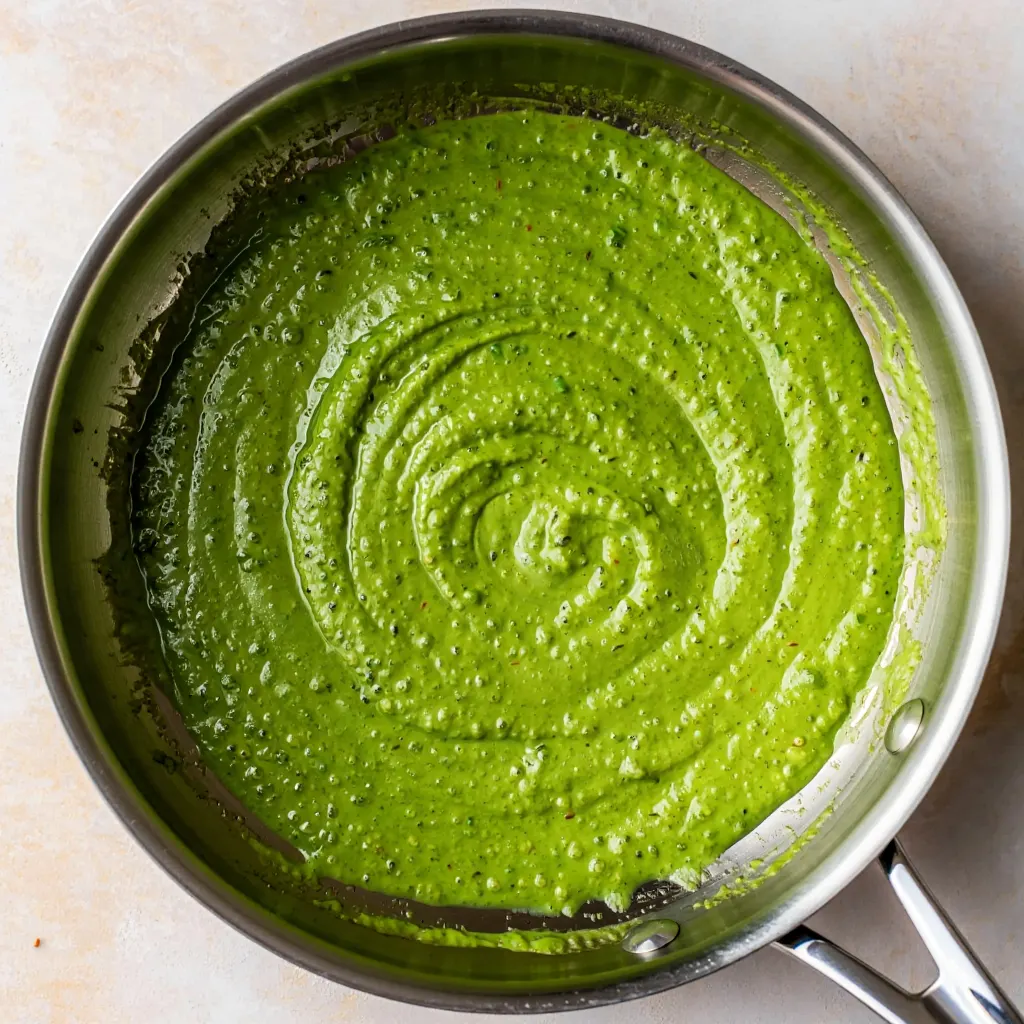
Return the skillet to low heat. Add ¼ cup of the reserved pasta water, stirring constantly.
Why it matters: The starch in pasta water acts like glue, binding the oil from the pesto with the cream. This is what makes the sauce silky instead of greasy.
What to look for: The sauce should become glossy and smooth. If it looks thin, simmer for another minute. If it looks too thick or oily, add more pasta water, 2 tablespoons at a time.
Flavor booster: This is when I add a tiny squeeze of fresh lemon juice (optional). It cuts through the richness and makes the basil taste brighter.
6. Stir in the Parmesan (low heat only)
Turn the heat to the lowest setting. Gradually add the grated Parmesan, stirring constantly until it melts into the sauce.
Why it matters: Cheese added over high heat clumps into rubbery bits. Low heat lets the proteins melt smoothly.
What to look for: The sauce should thicken slightly and become even creamier. You should not see chunks of cheese floating around.
Common mistake I made: I used to crank the heat to “speed things up.” The cheese seized into little lumps every time. Low and slow is the only way.
7. Toss the pasta in the sauce
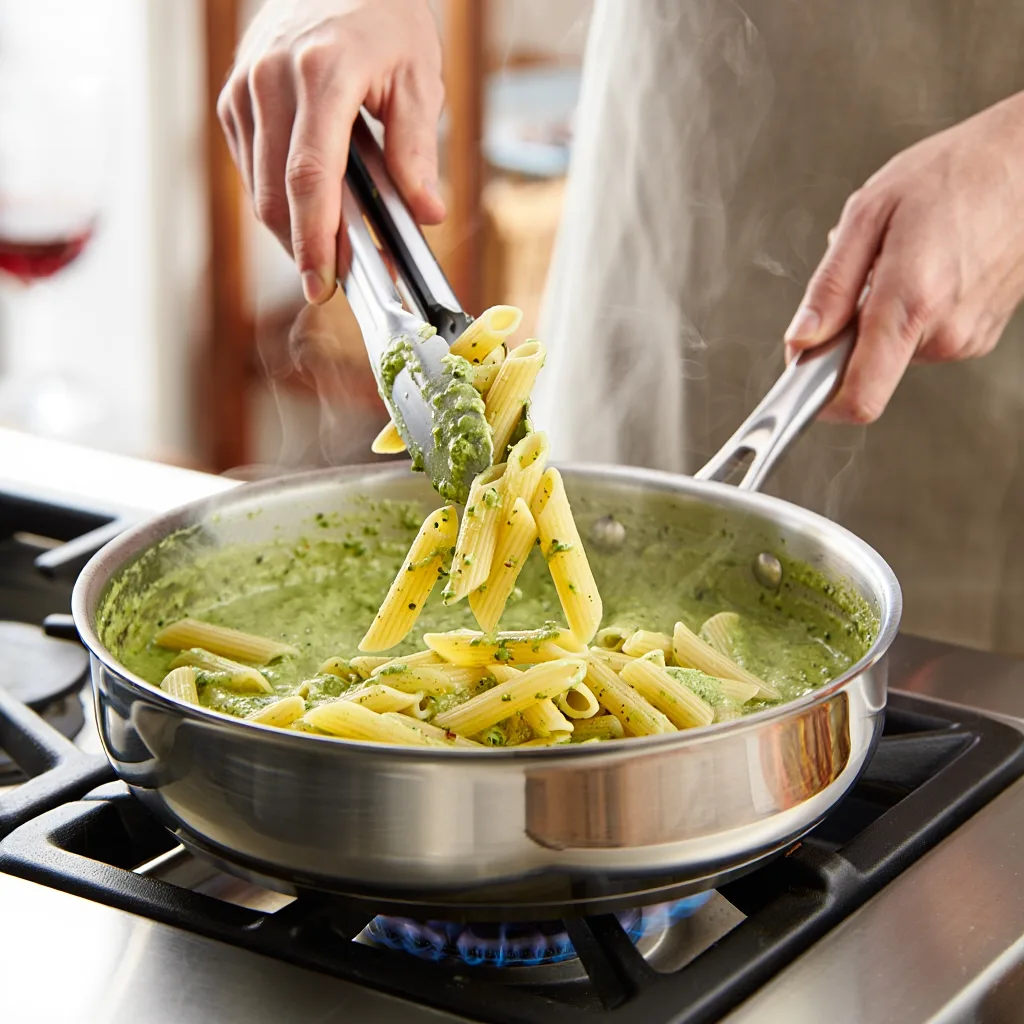
Drain the pasta (don’t rinse it you want that surface starch). Add the hot pasta directly to the skillet with the sauce. Use tongs to toss everything together, coating each piece of pasta.
Why it matters: Tossing the pasta in the pan (rather than pouring sauce over pasta in a bowl) ensures every noodle gets evenly coated.
What to look for: The pasta should be glossy and completely covered in sauce. If the sauce looks dry, add more pasta water, a tablespoon at a time, and toss again.
Texture trick: Let the pasta sit in the sauce for 1-2 minutes over low heat. It’ll absorb some of the cream and the flavors will meld.
8. Taste and adjust
Taste a piece of pasta. Does it need salt? Pepper? A pinch of red pepper flakes for heat?
Why it matters: Every pesto brand has different salt levels. Taste before serving so you can adjust.
What worked for me: I usually add a few cracks of black pepper and sometimes a tiny pinch of red pepper flakes for subtle warmth.
9. Serve immediately
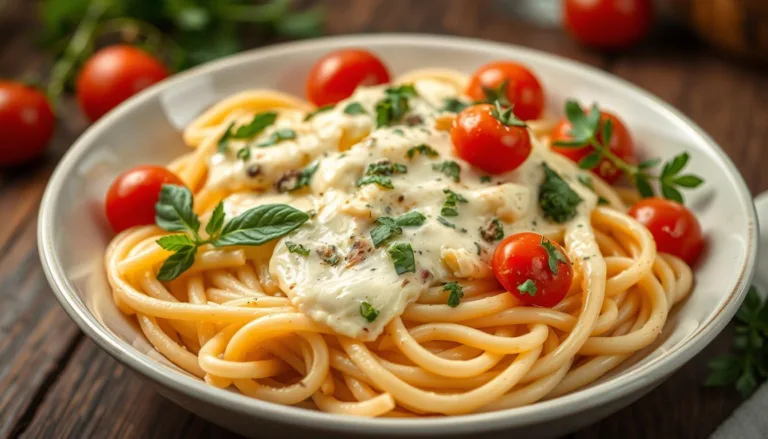
Transfer to bowls and serve right away. Garnish with extra Parmesan, fresh basil leaves, or toasted pine nuts if you’re feeling fancy.
Why it matters: Creamy pasta is best fresh. The sauce thickens as it cools, so it’s most luxurious when served hot.
Common Mistakes I Made & How I Fixed Them
Mistake #1: The sauce separated into oil and cream
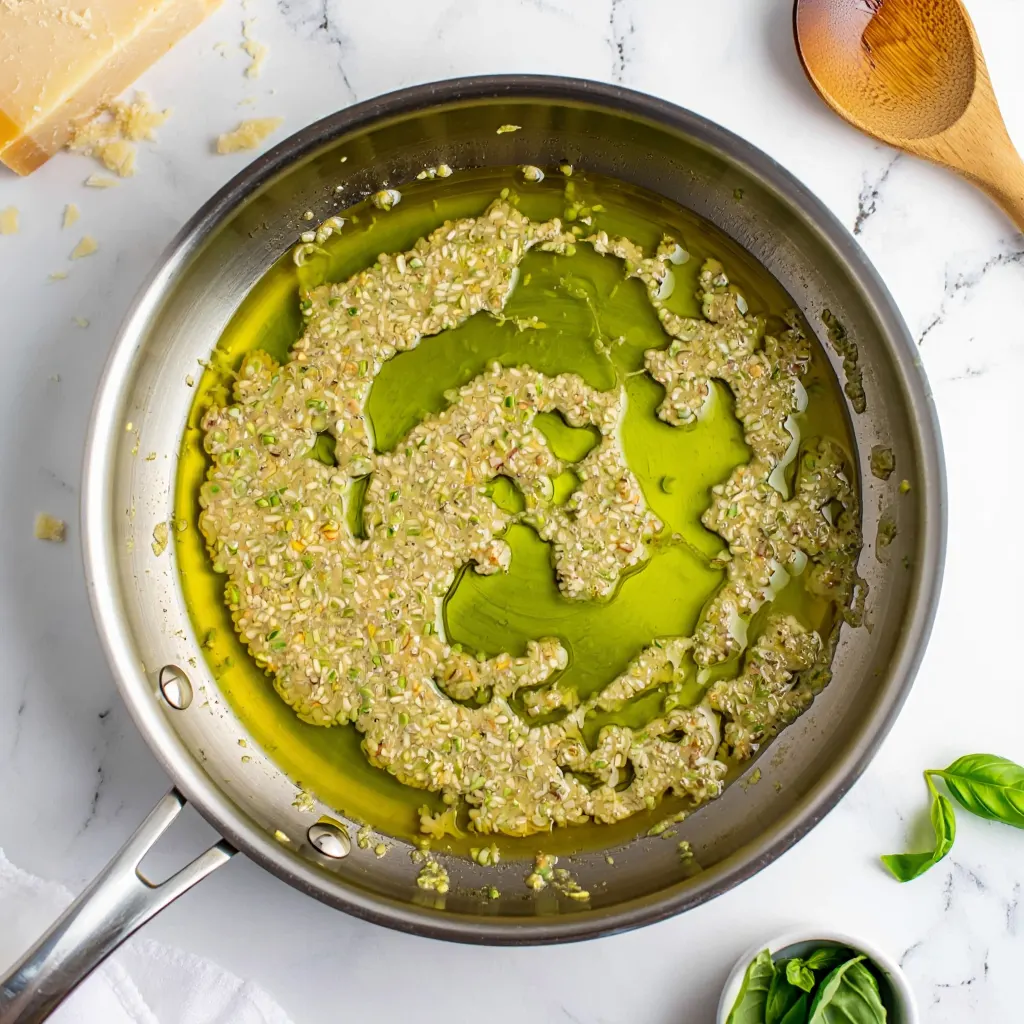
What went wrong: I added the pesto while the cream was at a rolling boil. The oil in the pesto couldn’t emulsify with the cream at that high temperature, so it separated into greasy puddles floating on top.
Why it happened: Emulsions (like cream + oil) are temperature-sensitive. Too much heat breaks the bond between fat molecules and liquid.
What I changed: I now remove the pan from heat before adding the pesto, then return it to low heat and add pasta water while whisking. The starch in the pasta water stabilizes the emulsion. It works every time now.
Visual cue: A properly emulsified sauce looks smooth and glossy. A broken sauce looks separated, with visible oil slicks on the surface.
Mistake #2: The Parmesan clumped into rubbery bits
What went wrong: I added the cheese while the sauce was simmering. The high heat caused the proteins in the cheese to seize up and form lumps.
Why it happened: Cheese melts best at low temperatures. High heat causes the proteins to coagulate instead of melting smoothly.
What I changed: Now I turn the heat to low (almost off) before adding cheese, and I stir constantly. The cheese melts into the sauce without any clumps.
Tip: If you do get clumps, add a splash of pasta water and whisk hard. Sometimes you can break them up, but prevention is easier.
Mistake #3: The pasta was bland even though the sauce tasted good
What went wrong: I didn’t salt the pasta water enough. I thought the salty pesto and Parmesan would be enough, but the pasta itself had no flavor.
Why it happened: Pasta only absorbs salt during cooking. You can’t fix bland pasta after it’s cooked.
What I changed: I now salt the pasta water generously 1 tablespoon of salt for a large pot. The water should taste salty, like seawater. This seasons the pasta from the inside out.
Mistake #4: The sauce was too thick and gloppy
What went wrong: I didn’t add enough pasta water. The sauce clung to the pasta, but it was so thick it was almost paste-like.
Why it happened: Cream reduces as it simmers, and cheese thickens the sauce further. Without pasta water to loosen it, the sauce can become too heavy.
What I changed: I now reserve a full cup of pasta water and add it gradually until the sauce coats the pasta but still has a silky, flowing consistency. Usually, I need about ¼ to ½ cup total.
Variations I Actually Tried
Variation #1: Added sautéed cherry tomatoes
What worked: The tomatoes burst in the pan and added little pops of sweet acidity that cut through the richness of the cream.
What didn’t work: If you add them too early, they break down into mush. Add them at the very end, just to warm through.
How texture/flavor changed: The dish felt lighter and more balanced. The acidity from the tomatoes made it less heavy.
When you’d use this: Summer, when cherry tomatoes are at their peak.
Variation #2: Stirred in fresh spinach
What worked: Spinach wilts into the sauce in about 30 seconds and adds color and nutrients without changing the flavor much.
What didn’t work: Adding too much spinach made the dish watery (spinach releases liquid as it cooks).
How texture/flavor changed: The sauce stayed creamy, but the spinach added a slight earthiness.
When you’d use this: When you want to sneak in some greens without making a separate side dish.
Variation #3: Used sun-dried tomatoes instead of fresh
What worked: Sun-dried tomatoes added an intense, concentrated tomato flavor and a chewy texture that contrasted with the creamy sauce.
What didn’t work: They can be very salty, so I had to cut back on the added salt.
How texture/flavor changed: The dish became more robust and savory.
When you’d use this: Winter, when fresh tomatoes aren’t great.
Variation #4: Added cooked chicken breast
What worked: Sliced grilled chicken turned this into a complete meal. The protein absorbed the sauce and made it more filling.
What didn’t work: Dry, overcooked chicken made the dish feel heavy instead of indulgent.
How texture/flavor changed: More substantial, less “light pasta dinner” and more “full meal.”
When you’d use this: When you need something that’ll actually fill you up for hours.
Nutritional Information
Sample values based on 1 serving (⅙ of recipe). These are estimates verify before publishing if you need exact data.
| Nutrient | Amount per Serving |
|---|---|
| Calories | ~520 |
| Total Fat | 32g |
| Saturated Fat | 16g |
| Carbohydrates | 44g |
| Fiber | 2g |
| Protein | 14g |
| Sodium | 380mg |
| Calcium | 220mg |
| Vitamin A | 15% DV |
Key vitamins/minerals: Good source of calcium from Parmesan, vitamin A from basil and cream.
Note: Nutritional content varies based on pesto brand, pasta type, and portion size. These values are approximate.
Healthier Alternatives
Use half-and-half instead of heavy cream
Tradeoff: The sauce will be noticeably thinner and less rich. It’ll coat the pasta, but it won’t have that luxurious, velvety mouthfeel. You may need to simmer it longer to thicken it up.
When it’s worth it: If you’re watching calories or just want a lighter version for a weeknight.
Use whole wheat or chickpea pasta
Tradeoff: Whole wheat pasta has a nuttier flavor and chewier texture. Chickpea pasta can taste slightly beany, and it doesn’t hold sauce as well as regular pasta. Both have more fiber and protein, though.
When it’s worth it: If you want more nutrients or need a gluten-free option (chickpea pasta is naturally gluten-free).
Reduce the Parmesan or use nutritional yeast
Tradeoff: Nutritional yeast adds a cheesy, umami flavor without the saturated fat, but it doesn’t melt and thicken the sauce the way real Parmesan does. The sauce will be thinner and less creamy.
When it’s worth it: Dairy-free diets or if you’re cutting back on saturated fat.
Use Greek yogurt in place of some of the cream
Tradeoff: Greek yogurt adds tanginess and protein, but it can curdle if you overheat it. You have to be very gentle with the heat. The flavor is also more tart, which changes the character of the dish.
When it’s worth it: If you want extra protein or a lighter sauce with a tangy twist.
Serving Suggestions
Plating ideas:
- Serve in shallow bowls so you can see the sauce coating the pasta
- Garnish with fresh basil leaves torn by hand (more rustic than chopped)
- Drizzle a tiny bit of good olive oil on top for sheen
Side pairings:
- Simple arugula salad with lemon vinaigrette (the peppery greens cut the richness)
- Garlic bread for soaking up extra sauce
- Roasted broccoli or asparagus for vegetables
Beverage matches:
- Crisp white wine like Pinot Grigio or Sauvignon Blanc
- Sparkling water with lemon
- Light Italian lager
Festive/seasonal variants:
- Spring: Add fresh peas and lemon zest
- Summer: Toss in halved cherry tomatoes and fresh mozzarella
- Fall: Stir in roasted butternut squash cubes and toasted walnuts (swap pine nuts in pesto for walnuts)
- Winter: Add sautéed mushrooms and thyme
Storage, Reheating & Real-Life Use
How it holds up over time: The sauce thickens considerably in the fridge. After a day or two, the pasta absorbs a lot of the liquid, so leftovers are drier and less creamy than when freshly made. The flavor is still good, but the texture changes.
Best storage method: Store in an airtight container in the fridge for up to 3 days. I don’t recommend freezing the cream sauce separates when thawed, and the texture is never the same.
Best reheating method:
- Stovetop (best): Heat in a skillet over low heat with 2-3 tablespoons of milk, cream, or pasta water. Stir constantly until warmed through and the sauce loosens up again.
- Microwave (quick but less ideal): Heat in 30-second intervals, stirring between each, and add a splash of liquid to bring the sauce back.
What changes after reheating: The sauce won’t be as silky as it was fresh. It’ll still taste good, but expect a slightly thicker, less glossy texture. The pasta also softens more, losing some of that al dente bite.
Realistic shelf life: 3 days in the fridge, max. After that, the basil in the pesto starts to oxidize and turn brown, and the pasta gets mushy.
Honest quality assessment: This is best eaten fresh. Leftovers are fine for lunch the next day, but if you’re serving this for guests, make it right before you eat.
Expert Tips & Tricks
Chef-style insight #1: Taste your pesto before you start Different pestos have wildly different salt levels. Taste it first so you know how much salt to add (or skip) later.
Science explanation: Why pasta water works Pasta water contains dissolved starch from the noodles. When you add it to a sauce, the starch molecules help bind fat (from pesto oil) and water (from cream) together. It’s a natural emulsifier, which is how pasta water starch helps bind sauces according to food scientists.
Tool that actually helps: Tongs Use tongs to toss the pasta in the sauce instead of a spoon. You’ll coat the pasta more evenly, and it’s way easier to serve.
Temperature control matters Keep the heat low once you add the pesto and cheese. High heat is the enemy of creamy sauces it causes separation and clumping.
Reserve more pasta water than you think you need I always scoop out at least 1 cup, even though I usually only use ½ cup. Better to have extra than to need it and not have it.
Who This Recipe Is / Is Not For
Ideal for:
- Skill level: Beginners who can boil pasta and melt butter. If you can make boxed mac and cheese, you can make this.
- Time availability: You need 25 minutes start to finish. No shortcuts.
- Equipment: A large pot, a skillet, and a ladle. That’s it.
- Taste preferences: People who love creamy, rich pasta with fresh basil flavor.
NOT a good fit if:
- You’re looking for a make-ahead freezer meal: This doesn’t freeze well. The cream sauce separates when thawed.
- You need a dairy-free option without substitutions: This is cream-heavy by design. You can make it dairy-free with coconut cream and vegan pesto, but it’s extra steps.
- You want an ultra-light, low-calorie dish: This is indulgent. There are lighter pasta recipes, but this isn’t one of them.
- You’re making it for a crowd of 10+: This recipe serves 4-6. Doubling it means managing a huge amount of sauce, which is harder to emulsify evenly.
Case Study / Reader Example
Last month, my friend Sarah texted me in a panic. She’d tried making creamy pesto pasta for a date night dinner, and the sauce had split into what she described as “a greasy mess with clumps of sad cheese floating in it.” She was ready to order takeout. I walked her through the pasta water trick over the phone she had saved some by chance and told her to take the pan off the heat, add 3 tablespoons of pasta water, and whisk like her life depended on it. Two minutes later, she texted back: “IT WORKED. The sauce is smooth. I can’t believe it.”
She served it with the sauce still glossy and hot, and her date asked for the recipe. The next week, she made it again and added cherry tomatoes like I suggested. She said it was even better the second time because she understood why each step mattered. That’s the thing about this recipe once you get the technique, it’s almost impossible to mess up. And when it works, it feels like magic.
Final Thoughts
I make this creamy pesto pasta probably once every two weeks now. It’s my go-to when I want something that feels special but doesn’t require much thought. The sauce comes together in the time it takes to boil pasta, and it always feels like I’m eating at a restaurant instead of standing in my kitchen in sweatpants.
Next time I make it, I might try stirring in some roasted red peppers for a sweet, smoky contrast. Or maybe I’ll finally test that sun-dried tomato pesto I’ve been eyeing at the store.
If you try this, let me know how it goes. Did your sauce emulsify on the first try? Did you add any variations? I’m always curious to hear what works (and what doesn’t) in other people’s kitchens.
Try it this weekend. You’ve got this.
FAQs (FAQ Schema Ready)
How do you make pesto pasta creamy without it separating?
The key is using reserved pasta water to emulsify the sauce. Pasta water contains starch that binds the oil from pesto with the cream, creating a smooth, stable sauce. Add the pasta water gradually while stirring over low heat. Also, don’t add pesto to boiling cream remove the pan from heat first, then return it to low heat after mixing. High heat breaks the emulsion and causes the sauce to split.
Why is my pesto pasta dry instead of creamy?
This usually happens because there isn’t enough sauce or the pasta absorbed too much liquid. Make sure you’re using enough cream (1 cup for 12 oz pasta) and add pasta water to loosen the sauce. Also, don’t overcook the pasta al dente pasta absorbs less sauce than mushy pasta. If your pasta is already cooked and dry, toss it in the pan with extra pasta water or a splash of cream over low heat.
Can you use milk instead of heavy cream in creamy pesto pasta?
You can, but it’s tricky. Milk has less fat than heavy cream, so it’s more prone to curdling and won’t create as thick or rich a sauce. If you use milk, keep the heat very low and stir constantly. Add the pesto off the heat to avoid curdling. The sauce will be thinner and lighter, but it can work if you’re okay with a less indulgent result. Half-and-half is a better middle-ground option.
What pasta shape works best with creamy pesto sauce?
Short pasta shapes with ridges or curves work best because they grab onto the sauce. Penne rigate, shells, rigatoni, and fusilli are all great choices. Long, smooth pasta like spaghetti doesn’t hold the sauce as well, so you end up with cream pooling at the bottom of the bowl. If you want a long pasta, use fettuccine or linguine they’re flat and wide enough to hold some sauce.
How do you keep pesto from being oily in pasta?
Oily pesto pasta happens when the oil in the pesto separates from the rest of the sauce. To prevent this, emulsify the sauce by adding starchy pasta water and stirring vigorously. The starch binds the oil with the cream. Also, don’t overheat the pesto add it to the sauce off the heat or over very low heat. If your pesto is already very oily (some store-bought brands are), drain off a tablespoon or two of the excess oil before adding it to the sauce.
Why does my Parmesan cheese clump in pesto pasta?
Cheese clumps when it’s added to a sauce that’s too hot. The high heat causes the proteins in the cheese to seize up instead of melting smoothly. To fix this, turn the heat to low (almost off) before adding the Parmesan, and stir constantly as it melts. Use freshly grated Parmesan, not pre-grated pre-grated cheese contains anti-caking agents that make it clump more easily.
Can I make creamy pesto pasta ahead of time?
You can cook the components ahead, but the sauce is best made fresh. The cream sauce thickens and the pasta absorbs liquid as it sits, so it won’t be as creamy if you make it hours in advance. If you need to prep ahead, cook the pasta and make the sauce separately, then combine them right before serving. Reheat the sauce gently with a splash of pasta water or cream to bring it back to a silky consistency.
Recipe Card Summary (Facts Only)
Creamy Pesto Pasta
- Prep Time: 10 minutes
- Cook Time: 15 minutes
- Total Time: 25 minutes
- Servings: 4-6
- Calories: ~520 per serving (estimate)
Ingredients:
- 12 oz short pasta (penne, shells, or rigatoni)
- ¾ cup basil pesto
- 1 cup heavy cream
- ½ cup reserved pasta water
- ½ cup freshly grated Parmesan cheese
- 2 tablespoons butter
- 3 garlic cloves, minced
- Salt and black pepper to taste
- Optional: red pepper flakes, fresh lemon juice
Instructions:
- Boil salted water and cook pasta to al dente. Reserve 1 cup pasta water before draining.
- Melt butter in a large skillet over medium-low heat. Add garlic and cook 30-60 seconds until fragrant.
- Add heavy cream, increase heat to medium, and bring to a gentle simmer for 3-4 minutes.
- Remove from heat and stir in pesto until fully combined.
- Return to low heat, add ¼ cup pasta water, and stir constantly to emulsify.
- Turn heat to lowest setting, gradually add Parmesan, stirring until melted.
- Add drained pasta to the skillet and toss to coat. Add more pasta water if needed.
- Serve immediately with extra Parmesan and fresh basil if desired.