Table of Contents
Introduction
The first cheesy meatloaf I ever made looked like it had survived an earthquake. I’d read three different recipes, had all the confidence in the world, and pulled a crumbling, weirdly gray brick out of the oven at 7 PM on a Tuesday. My husband ate it without complaint. That is both a testament to his patience and proof that I needed a better recipe.
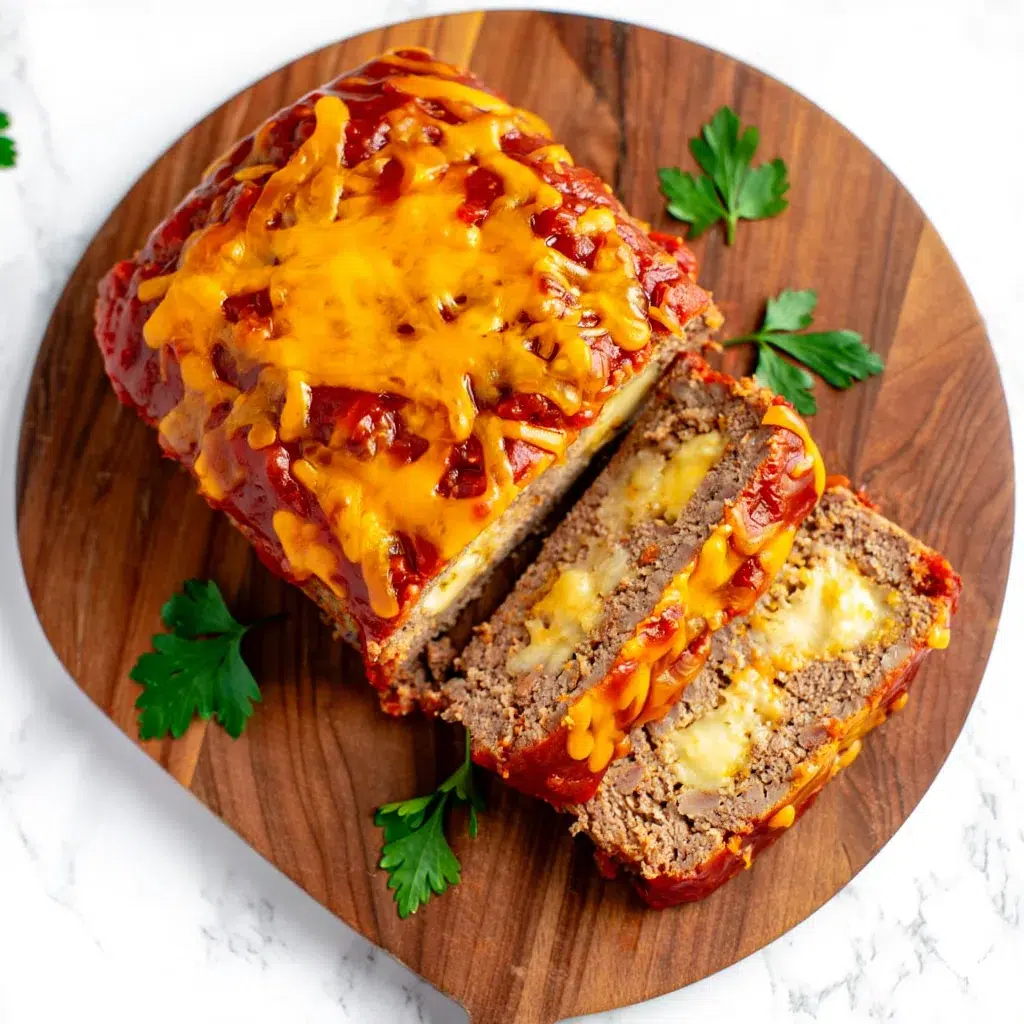
I’ve made this version probably forty times since then. Maybe more. The kitchen smells incredible while it bakes that warm, savory combination of beef, caramelized onion, and melting cheese that creeps into every corner of the house. When you finally slice into it and the cheese pools just slightly into the cut, you know you’ve done something right.
What makes this one work is a combination of things: the fat ratio in the beef, how long you let the aromatics cool before mixing, and the part most recipes skip resting the loaf a full ten minutes before you touch it with a knife. This recipe is built on failures, adjustments, and a lot of tasted-along-the-way moments. It rewards patience and pays off every single time.
Why This Cheesy Meatloaf Recipe Actually Works
Most dry meatloaf problems trace back to two things: lean meat and skipped resting time. This recipe uses 80/20 ground beef, which has enough fat to keep the interior moist through a full oven bake. Leaner blends while healthier on paper tend to tighten up under heat and squeeze out their moisture before you even get a fork in.
The eggs and breadcrumbs work together as a binding system. Eggs provide protein structure that holds the loaf’s shape, while the breadcrumbs absorb the milk and fat in the mix, acting like tiny sponges that release moisture evenly as the meatloaf cooks. Overmixing breaks that structure down which is why you’ll mix this just until combined, and not a moment longer.
The cheese is added in two ways here: shredded cheddar mixed directly into the meat, and a final layer melted over the top during the last 10 minutes of baking. The internal cheese becomes part of the texture you won’t find a pocket that slides out; instead, you get melted cheese woven through every slice. Worcestershire sauce adds savory umami depth that pulls the whole flavor profile together. It’s one of those ingredients that’s hard to identify but instantly missed when it’s gone.
Ingredients (With Micro-Tips)
Serves: 6-8 | Prep Time: 15 minutes | Cook Time: 55-65 minutes | Total: ~80 minutes
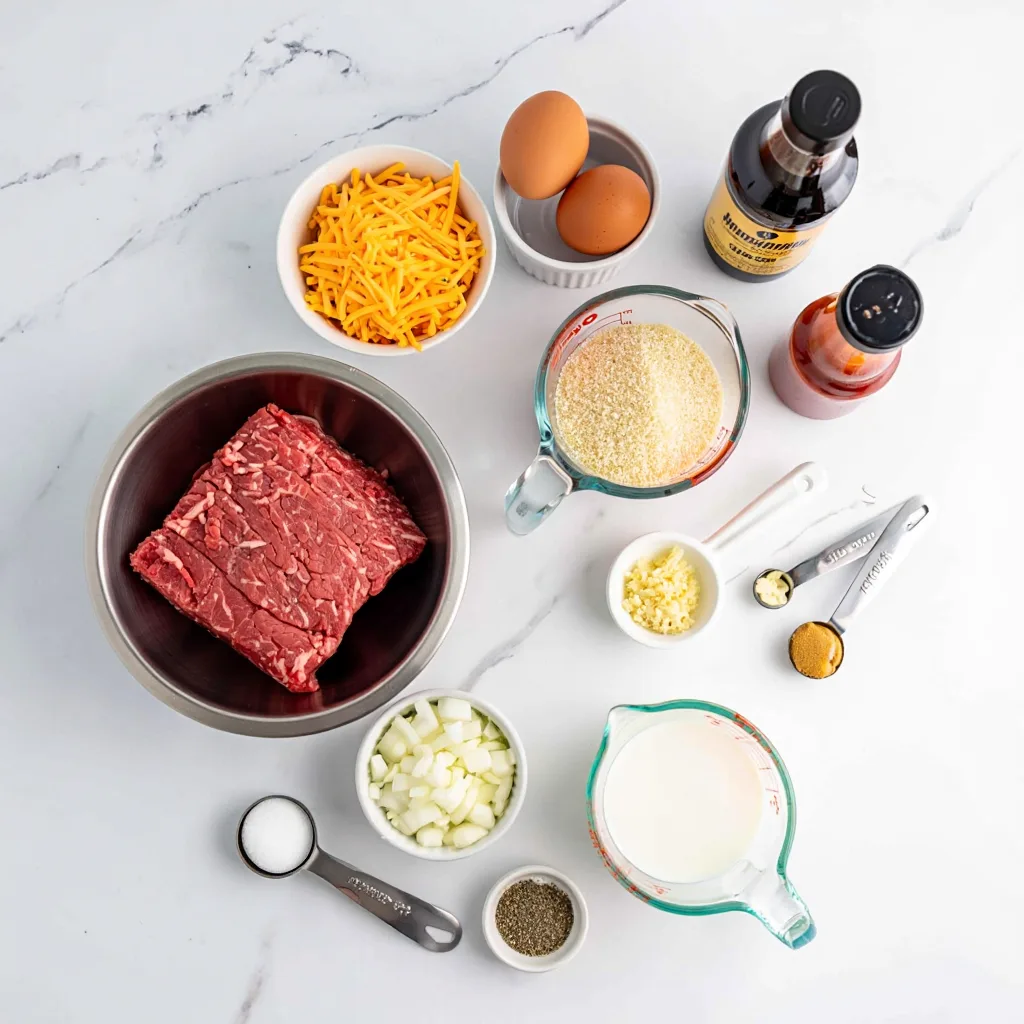
2 lbs 80/20 ground beef The fat content is not negotiable here. It’s what keeps every slice moist. 85/15 will work in a pinch, but results will be slightly firmer.
1.5 cups sharp cheddar cheese, shredded (divided) Freshly shredded from a block melts dramatically better than pre-packaged. Pre-shredded contains cellulose coating that resists melting. Substitute: Colby Jack for milder flavor, Pepper Jack for a hint of heat.
1/2 cup whole milk Creates tenderness in the crumb. Substitute: evaporated milk for slightly richer texture, oat milk for dairy-free.
3/4 cup plain breadcrumbs The binder. Panko will work but creates a slightly coarser texture. For gluten-free: almond flour or crushed GF crackers.
2 large eggs Provides structure and holds the loaf together when sliced. Don’t skip.
1 medium yellow onion, finely diced Sauteed first so it softens and sweetens. Raw onion adds harsh bite and uneven moisture.
3 cloves garlic, minced Added with the onion at the end of the saute to avoid burning.
2 tablespoons Worcestershire sauce Non-negotiable umami anchor. Coconut aminos work as a substitute if needed.
1.5 teaspoons kosher salt + 1/2 tsp black pepper Season the meat itself, not just the glaze.
1 teaspoon dried parsley (optional) Mild herbaceous note.
For the Glaze:
1/2 cup ketchup The classic. Adds sweet-tangy caramelization.
1 tablespoon brown sugar Deepens caramelization without making it taste like dessert.
1 teaspoon apple cider vinegar Cuts sweetness and adds brightness.
Step-by-Step Instructions
Step 1: Saute the Aromatics
Heat a tablespoon of olive oil in a skillet over medium heat. Add the diced onion and cook for 6-8 minutes, stirring occasionally, until it turns soft and translucent you want to see it go from sharp white to a slightly golden, almost jammy state. Add the minced garlic and stir for another 30 seconds until fragrant. Pull it off the heat and let it cool for at least 10 minutes before touching the meat mixture. Combining hot aromatics with raw beef starts cooking the egg prematurely, which affects texture.
Step 2: Mix the Glaze First
Whisk together the ketchup, brown sugar, and apple cider vinegar in a small bowl. Set aside. Having it ready before you touch the meat mixture means you won’t be handling raw beef and reaching into the pantry. Divide it mentally: you’ll use 2/3 on top before baking, 1/3 brushed on during the final 10 minutes.
Step 3: Combine the Meatloaf Mixture
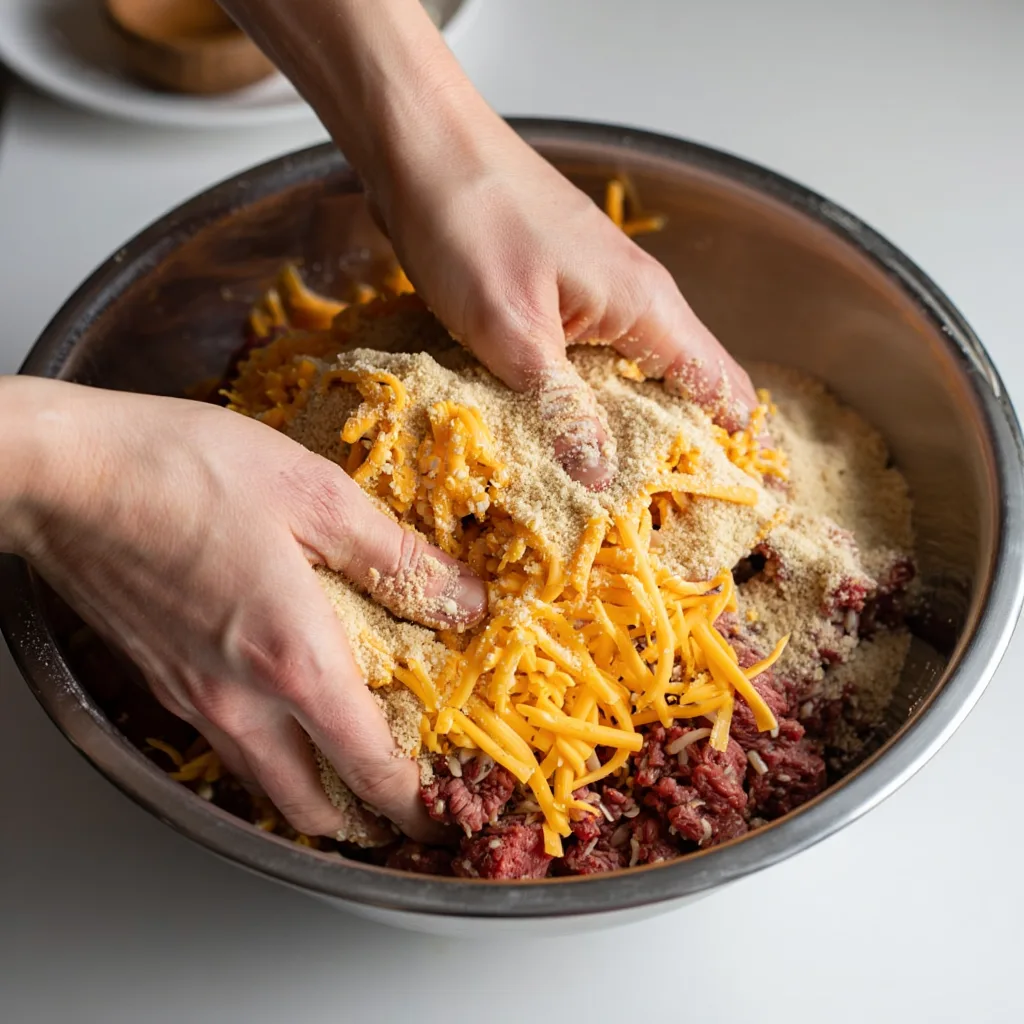
In a large bowl, add the ground beef, cooled onion and garlic mixture, milk, breadcrumbs, eggs, Worcestershire sauce, salt, pepper, parsley, and 1 cup of the shredded cheddar (reserve the remaining 1/2 cup for the top). Use your hands a spoon won’t cut it here. Mix until just combined. You’re looking for everything evenly distributed but not worked into a paste. Overworked meat becomes dense and rubbery after baking. Thirty seconds of thorough hand mixing is usually enough.
Step 4: Form and Glaze
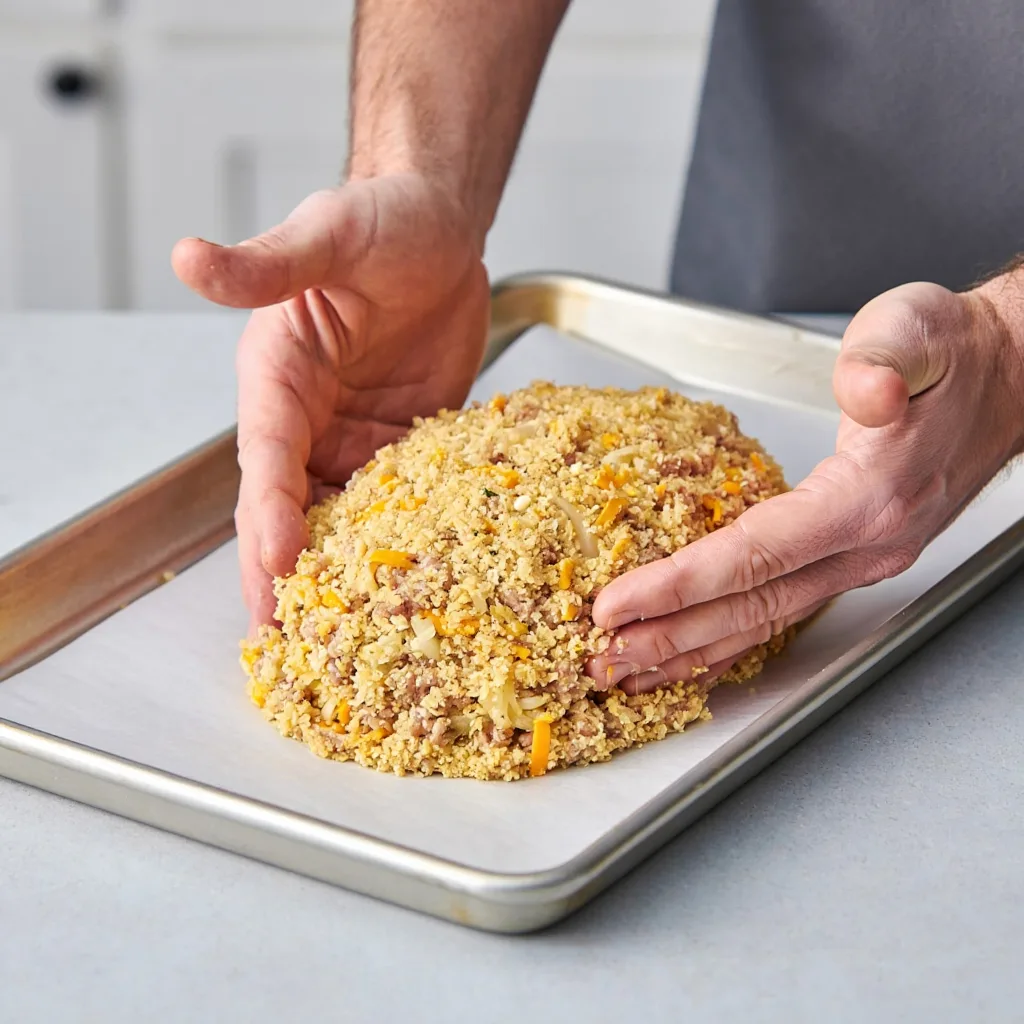
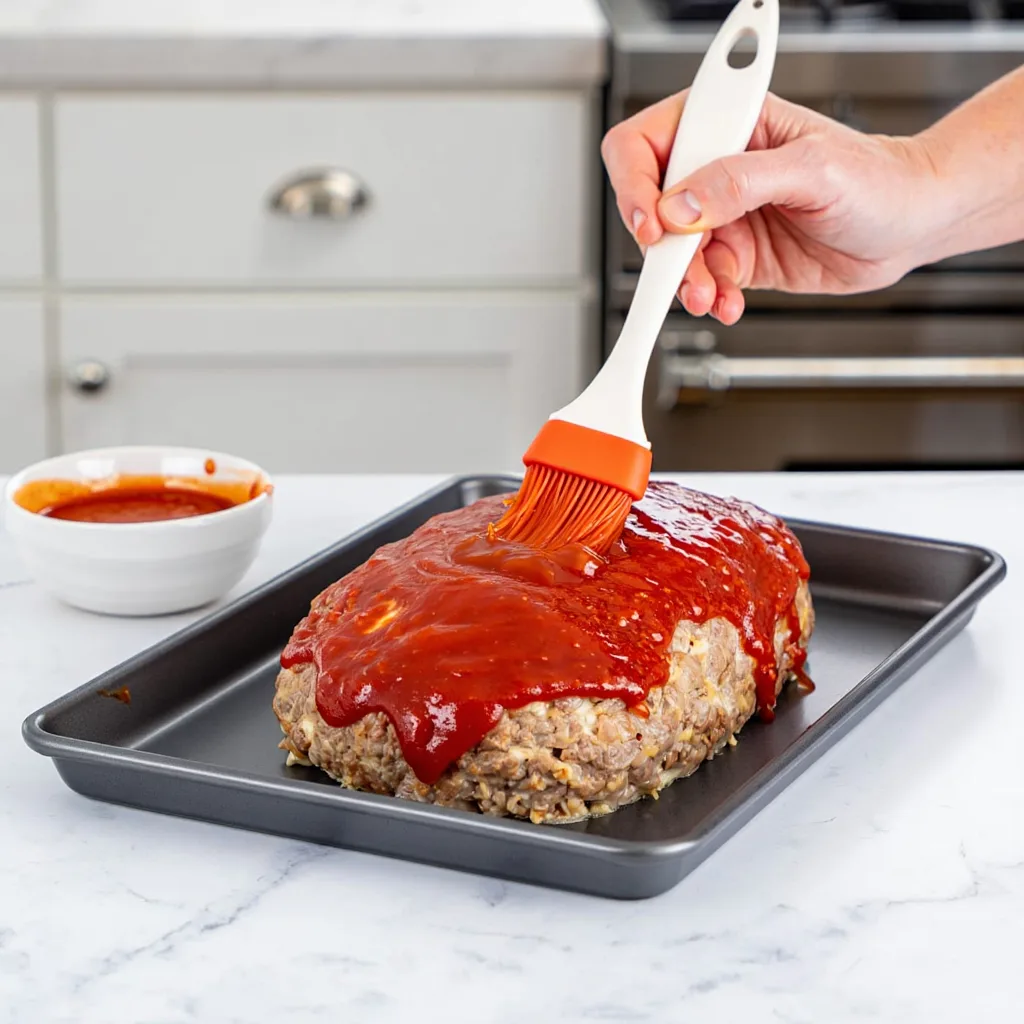
Preheat your oven to 350°F. Line a rimmed baking sheet with parchment paper or lightly grease a 9×5 loaf pan. If using a baking sheet, free-form your loaf into a shape roughly 10 inches long and 5 inches wide a slightly flattened oval. This increases the surface area for the glaze to caramelize. Press lightly to seal any cracks on the surface. Spread about 2/3 of the glaze over the top and sides using the back of a spoon.
Step 5: Bake (First Round)
Slide the meatloaf into the center rack and bake at 350°F for 45 minutes. At the 30-minute mark, peek at it the top should be developing a sticky, deep red glaze and the edges should be just starting to firm up. If it looks pale, your oven may run cool. Don’t pull it early.
Step 6: Add Remaining Glaze + Cheese Top
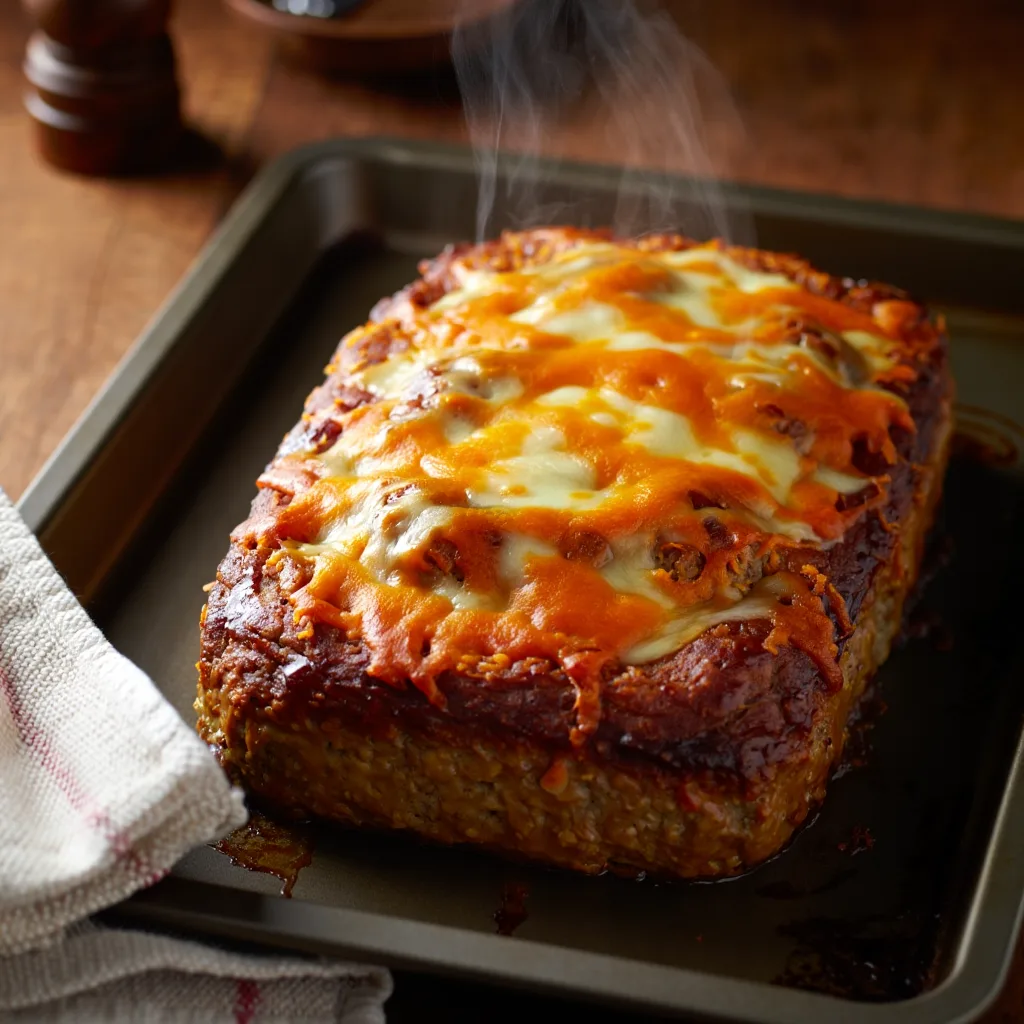
At the 45-minute mark, brush on the remaining glaze and scatter the reserved 1/2 cup of shredded cheddar evenly across the top. Return to the oven for 10-15 more minutes, until the cheese is fully melted and just starting to bubble at the edges and the internal temperature reads 160°F on a meat thermometer. The cheese on top should look glossy and slightly golden at the edges not browned, not raw-looking.
Step 7: Rest Before Slicing
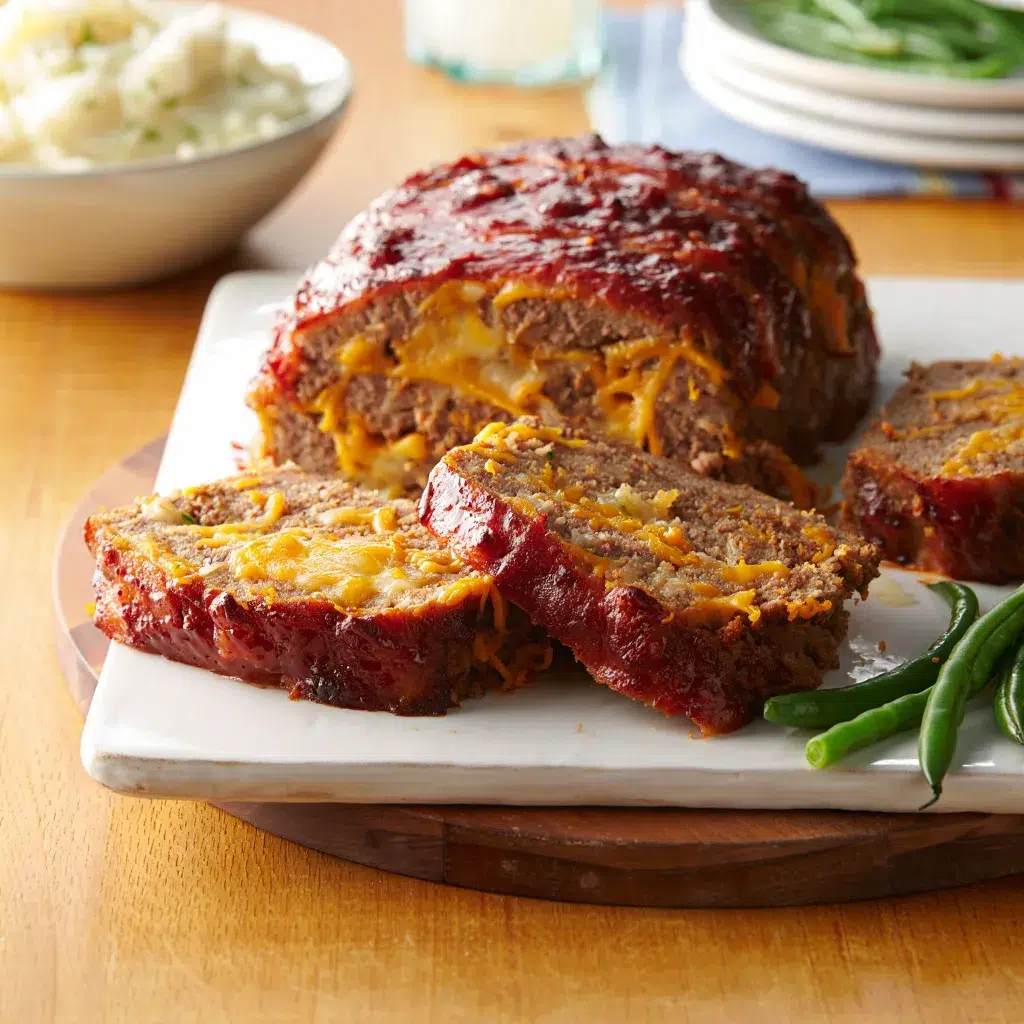
Pull the meatloaf from the oven and let it rest uncovered on the pan for 10 full minutes. This is not optional. The internal temperature will continue to rise slightly (carryover cooking), and the juices which are in full motion right out of the oven will redistribute back into the meat. Cut too soon and they run out onto the cutting board instead of into your mouth. Use a sharp serrated knife and cut in confident, deliberate downward strokes. You should see clean slices with melted cheese throughout.
Troubleshooting Your Cheesy Meatloaf
Why is my cheesy meatloaf dry even with cheese in it?
Dry meatloaf almost always comes from using meat that’s too lean (90/10 or 93/7) or overbaking without a thermometer. The fat in ground beef is what carries moisture and flavor without it, the meatloaf tightens and squeezes dry. Pull it at exactly 160°F internal and rest it 10 minutes before slicing.
If you’ve used 80/20 and it’s still dry, check whether you overmixed the meat. Overworking the proteins creates a dense, sausage-like texture that feels dry on the palate even if moisture is technically present. Next time, mix only until the ingredients are just combined.
Why did my meatloaf fall apart when I sliced it?
Usually this means not enough binding agent (eggs or breadcrumbs) or the loaf was cut too soon after baking. You need at least 2 eggs for a 2-pound loaf and 3/4 cup of breadcrumbs to hold the structure. Resting 10 minutes is critical the proteins need time to set firm enough to hold a clean slice.
Why is the cheese leaking out of the sides during baking?
If you’re adding shredded cheese to the meat mixture itself (not creating a separate pocket), some leakage around the base edges is normal that’s the excess fat and cheese rendering out. It won’t affect the interior texture. If you stuffed a pocket of cheese in the center and it’s all leaking, the loaf likely had a gap or crack that wasn’t sealed before baking.
My glaze burned. What happened?
The sugar in ketchup-based glazes burns easily above 375°F. This recipe bakes at 350°F intentionally. If you applied the entire glaze at the start instead of layering it, the prolonged exposure to heat will char the sugars. Apply the final glaze layer only in the last 10-15 minutes.
Cheesy Meatloaf Variations
The Quick Version (45-Minute Total)
Use a 1-pound loaf (halve all ingredients) baked in a 9×5 loaf pan at 375°F for 35-40 minutes. Skip the glaze layering apply all at once. This gets dinner on the table fast on a weeknight.
Cheese-Stuffed Center
Instead of mixing cheddar into the meat, create a stuffed version: press half the meat mixture into the bottom of a loaf pan, lay a column of cubed or sliced cheddar down the center, then press the remaining meat over it and seal the seams firmly. The result is a dramatic, molten cheese center when sliced.
Italian Spin
Swap the ketchup glaze for marinara sauce. Use shredded mozzarella in place of cheddar. Add 1 teaspoon Italian seasoning and a pinch of red pepper flakes to the meat mix. This version pairs beautifully with pasta instead of mashed potatoes.
BBQ Southern Style
Replace the ketchup glaze with your favorite smoky BBQ sauce. Add 1 tablespoon of smoked paprika to the meat mixture. Use a blend of beef and pork (1.5 lb beef + 0.5 lb pork) for a richer flavor. Top with sharp cheddar.
Keto / Low-Carb Version
Swap breadcrumbs for 1/3 cup almond flour. Use sugar-free ketchup and omit the brown sugar. Full-fat cheddar throughout. Follow the same technique the texture will be slightly softer but still sliceable. See our full Keto Meatloaf recipe for a dedicated version.
Meatloaf Muffins (Meal Prep)
Press the meat mixture into a greased muffin tin, filling each cup 3/4 full. Top with glaze and a pinch of cheddar. Bake at 375°F for 22-25 minutes. These freeze perfectly and reheat in the microwave in under 2 minutes.
Storage and Reheating
Refrigerator
Leftover cheesy meatloaf keeps in an airtight container in the refrigerator for up to 4 days. The flavor actually deepens overnight as the seasonings settle into the meat slices cold from the fridge in a sandwich are genuinely excellent.
Freezer
Baked cheesy meatloaf freezes beautifully for up to 3 months. Let it cool completely, wrap individual slices in plastic wrap, then place in a zip-top freezer bag with the air pressed out. Freeze flat. Thaw overnight in the refrigerator before reheating.
Reheating Without Drying It Out
The oven method is best: place slices in an oven-safe dish, add a tablespoon of water or beef broth, cover with foil, and heat at 325°F for 15-20 minutes. The foil traps steam and prevents the edges from tightening. Microwave reheating works but tends to make the cheese slightly rubbery use 60% power and cover with a damp paper towel.
Frequently Asked Questions
What’s the best cheese for cheesy meatloaf?
Sharp cheddar is the top choice it has enough fat to melt smoothly and enough flavor to hold its own against the beef. Havarti and Colby Jack are excellent mellower options. Avoid fresh mozzarella (too much water content) and parmesan alone (too sharp, doesn’t melt as well into the meat). For a bold twist, smoked gouda adds a complex, campfire-like depth.
Should I cover cheesy meatloaf while baking?
Bake uncovered. Covering the meatloaf traps steam, which prevents the glaze from caramelizing and keeps the exterior pale and soft. The uncovered method gives you a deeply flavored, slightly crusty exterior and a bubbly, golden cheese top that’s the goal.
What temperature is cheesy meatloaf done?
Pull it at 160°F internal temperature, measured with an instant-read thermometer inserted into the thickest center point. Carryover cooking will bring it to 165°F during the 10-minute rest. Don’t rely on color alone meatloaf can look done on the outside while the center is still underdone.
Can I make cheesy meatloaf ahead of time?
Yes. Assemble the full loaf (without the glaze), cover tightly with plastic wrap, and refrigerate for up to 24 hours. When ready to bake, add the glaze and bake from cold add 10-15 minutes to the total baking time. Alternatively, bake fully, cool, and refrigerate. Reheat as directed above.
What can I serve with cheesy meatloaf?
Cheesy baked potatoes are the natural pairing they take roughly the same amount of time in the oven and the flavors are made for each other. Mashed potatoes, roasted green beans, sauteed mushrooms, or a simple wedge salad all work well. For a lighter plate, serve over cauliflower mash.
Can I use a meatloaf mix instead of just ground beef?
A meatloaf mix (typically beef, pork, and veal) works great and adds even more flavor depth. Just keep the total weight at 2 pounds. The pork fat in particular adds tenderness. Reduce the cook time by about 5 minutes and check the thermometer early mixed blends sometimes cook slightly faster.
Final Thoughts
This recipe is genuinely one of those dishes that looks casual but earns real compliments. It works for a Tuesday night dinner when you need something hearty and unfussy. It works for a Sunday when someone’s visiting and you want to put something on the table that actually took some thought. And honestly, sliced cold from the fridge at 11 PM between two pieces of toast? That might be the best version of all.
If you’ve had bad meatloaf experiences dry, bland, structurally challenged ones I get it. This cheesy meatloaf is specifically built around those failure points. The two-stage glaze, the resting step, the fat ratio in the beef none of it is complicated, but all of it matters.
Give it a try this week. And if the cheese pools a little dramatically when you slice it, that’s not a problem. That’s exactly the goal.