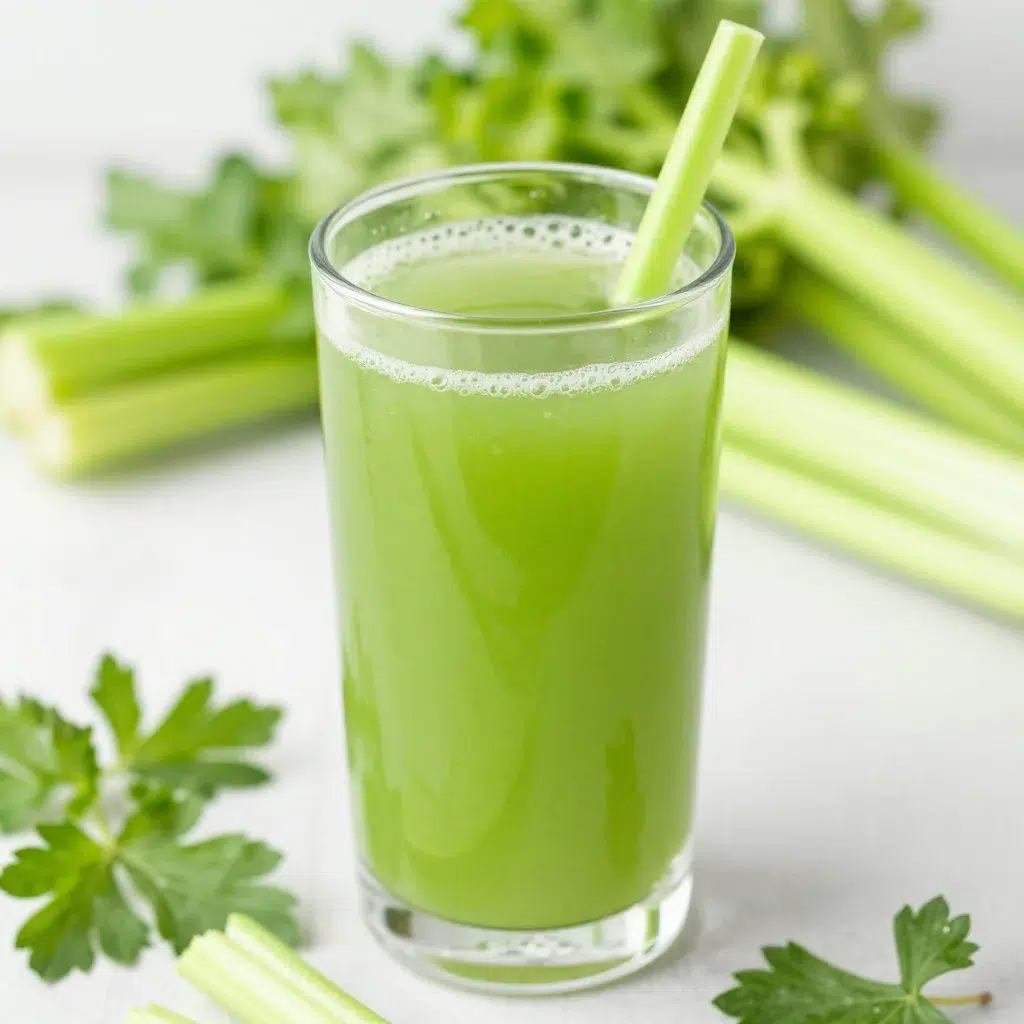
Table of Contents
Introduction
The first time I made celery juice, I used the wrong celery. I grabbed a bag of pre-cut celery sticks from the snack aisle the kind that comes with ranch dip and ran them through my blender. What came out was a pale, slightly bitter liquid that smelled vaguely like the inside of a refrigerator. I drank half of it standing over the sink, then quietly poured the rest down the drain.
That was three years ago. Now I make celery juice at least four mornings a week, and I actually look forward to it. The difference isn’t some elaborate wellness protocol. It’s just knowing which celery to buy, how to process it properly, and when a small addition a squeeze of lemon, a thumb of ginger makes the whole thing go down easier without undermining what you’re drinking it for.
This recipe works whether you have a masticating juicer, a centrifugal juicer, or just a regular high-speed blender and a fine mesh strainer. I’ve tested all three methods over the past year, and I’ll walk you through each one, including what the final glass looks, smells, and tastes like from each approach so you know exactly what to expect.
Why This Celery Juice Recipe Actually Works
Most celery juice recipes online tell you to “juice celery.” That’s it. No guidance on yield, no explanation of why your juice tastes bitter, no mention of the fact that celery quality varies enormously by season and source.
The reason this version works comes down to three things: variety of celery, processing method, and timing.
Celery variety and freshness matter more than you’d think. Pascal celery the standard green bunch you find at most grocery stores is what you want. It has the highest water content and the mildest flavor. Older celery that’s been sitting out loses its volatile organic compounds, which are responsible for celery’s characteristic aroma; what’s left tastes mostly of salt and plant fiber. Bright green, firm stalks with tightly packed leaves signal freshness and translate directly to a cleaner-tasting juice.
Cold processing preserves the chlorophyll and phytochemicals. Centrifugal juicers generate heat and introduce air, which is why celery juice made in them turns brown faster and tastes slightly more oxidized. Masticating juicers crush slowly and cold, extracting more juice per stalk and producing a brighter green color that holds for longer. Blender method lands in the middle excellent results, just requires the extra step of straining through a nut milk bag or cheesecloth.
Drinking it fresh matters. The phthalides and apigenin (plant compounds in celery that support circulatory and digestive function) begin to break down once juice is exposed to oxygen. Drink within 20–30 minutes of making it for the best flavor and nutrient retention. If you’re prepping ahead, store in an airtight glass jar with as little headspace as possible.
Ingredients With Micro-Tips
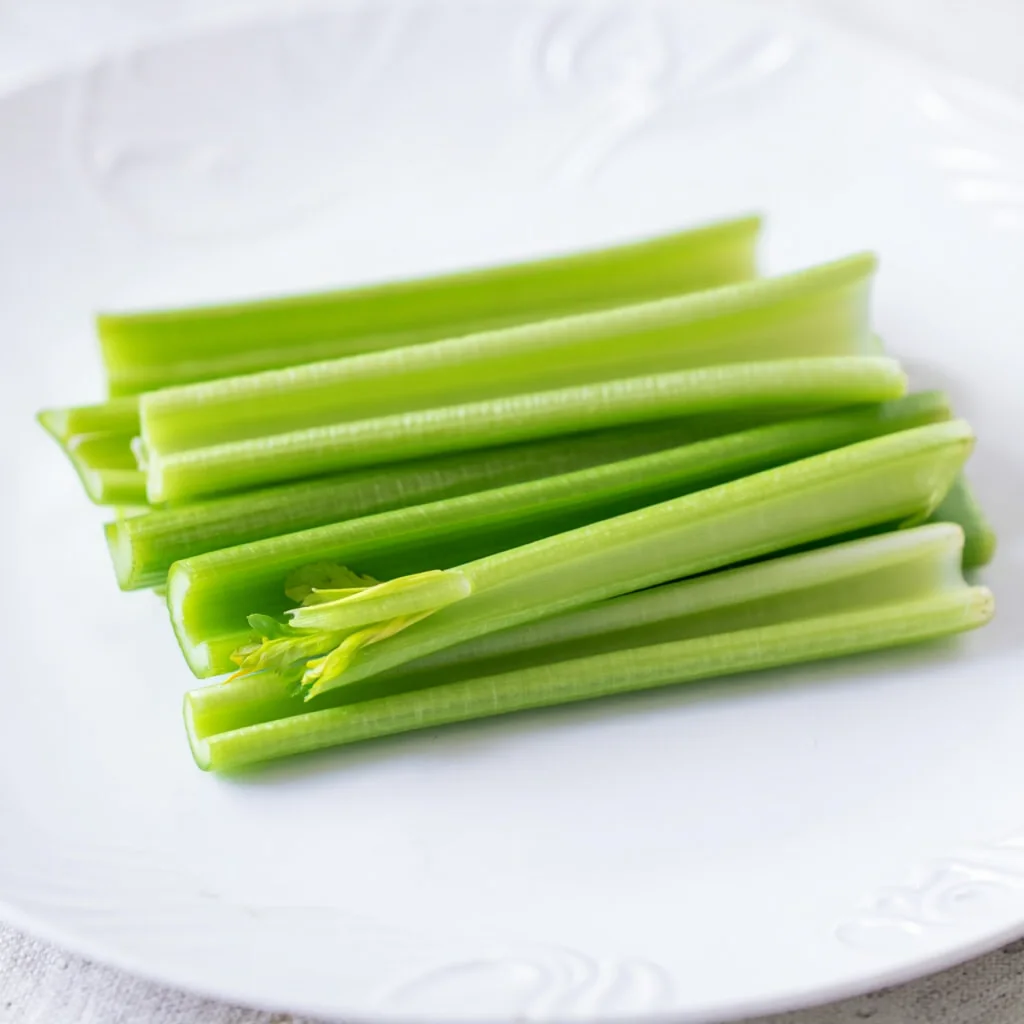
1 large bunch of celery (approximately 9–11 stalks) → yields about 12–16 oz of juice
This is your entire base. One bunch from the grocery store typically weighs around 1.5–2 lbs. Don’t buy pre-cut celery sticks the cut surfaces have already begun oxidizing, and you’ll lose both yield and flavor. Look for a bunch where the stalks are tightly packed and the leaves are still attached and green, not yellowed.
Substitution note: If you want a milder flavor, use more of the inner pale stalks (the heart) and fewer of the dark outer stalks. The inner stalks are slightly lower in natural sodium and have a cleaner, less bitter taste important if you’re sodium-sensitive.
Sustainability tip: Don’t discard the leaves. They’re edible, nutrient-dense, and can be juiced right along with the stalks. The pulp left over from straining can go into soup stock, veggie patties, or compost.
Optional add-ins (tested and recommended):
- ½ lemon, juiced Brightens the flavor and slows oxidation. If celery juice tastes too grassy to you right now, this is your best friend. The citric acid also preserves the bright green color slightly longer.
- ½-inch knob of fresh ginger Adds warmth and a mild spice that counterbalances celery’s earthiness. Start small. Ginger is assertive in juice form.
- ½ cucumber Increases yield, adds sweetness, and dilutes bitterness. Great for kids or celery juice beginners.
- 1 small green apple Adds natural sweetness without refined sugar. Raises the glycemic load slightly, so keep this in mind if you’re diabetic or doing a strict cleanse.
Step-by-Step Instructions
Step 1: Wash your celery properly
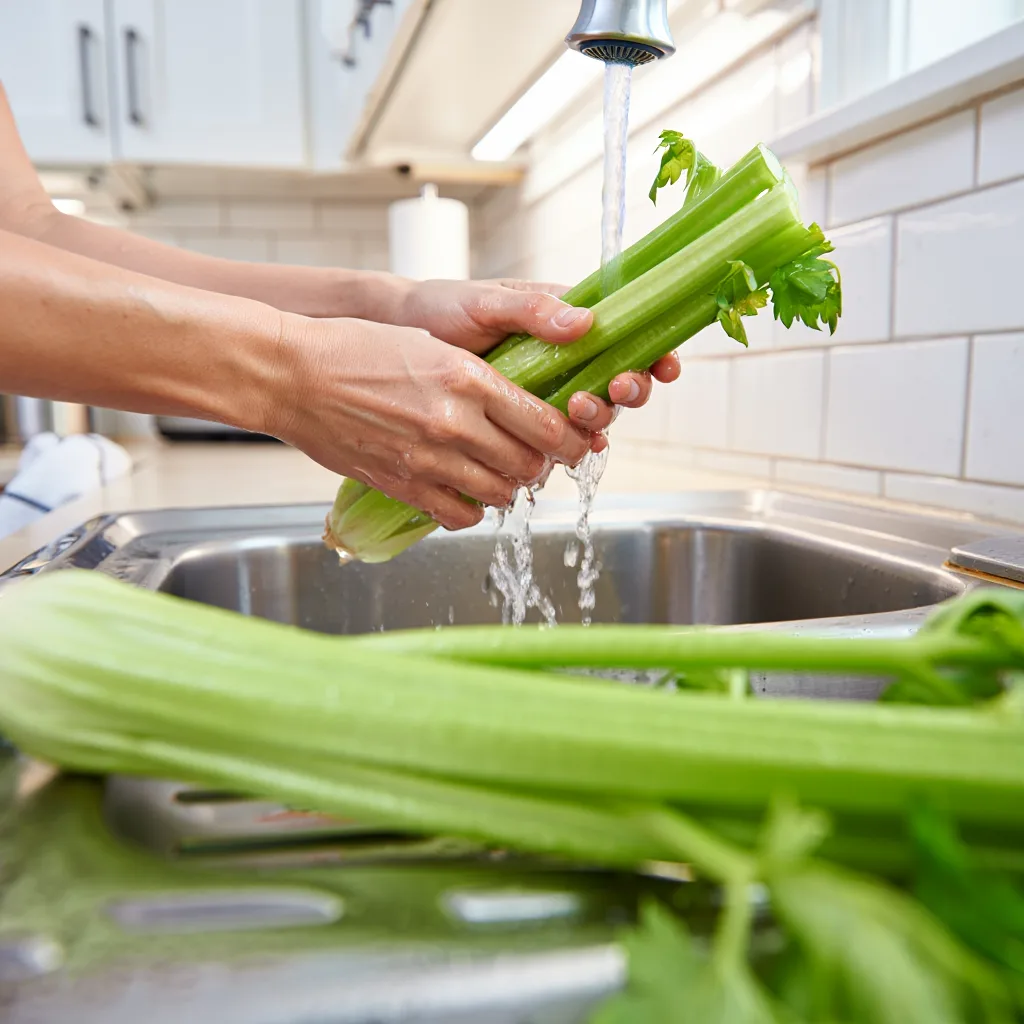
Run each stalk under cold water, rubbing off any visible dirt, especially near the base where soil collects. Celery is on the Environmental Working Group’s “Dirty Dozen” list if you bought conventional, wash it thoroughly. Organic is worth the extra dollar here. Pat dry with a clean towel. Wet celery dilutes your juice more than you’d expect and throws off the flavor balance.
Visual marker: Stalks should look bright, almost waxy green after washing. If they look dull or the leaves are wilting despite being fresh from the store, soak them in an ice bath for 10 minutes to revive them before juicing.
Step 2: Chop into manageable pieces
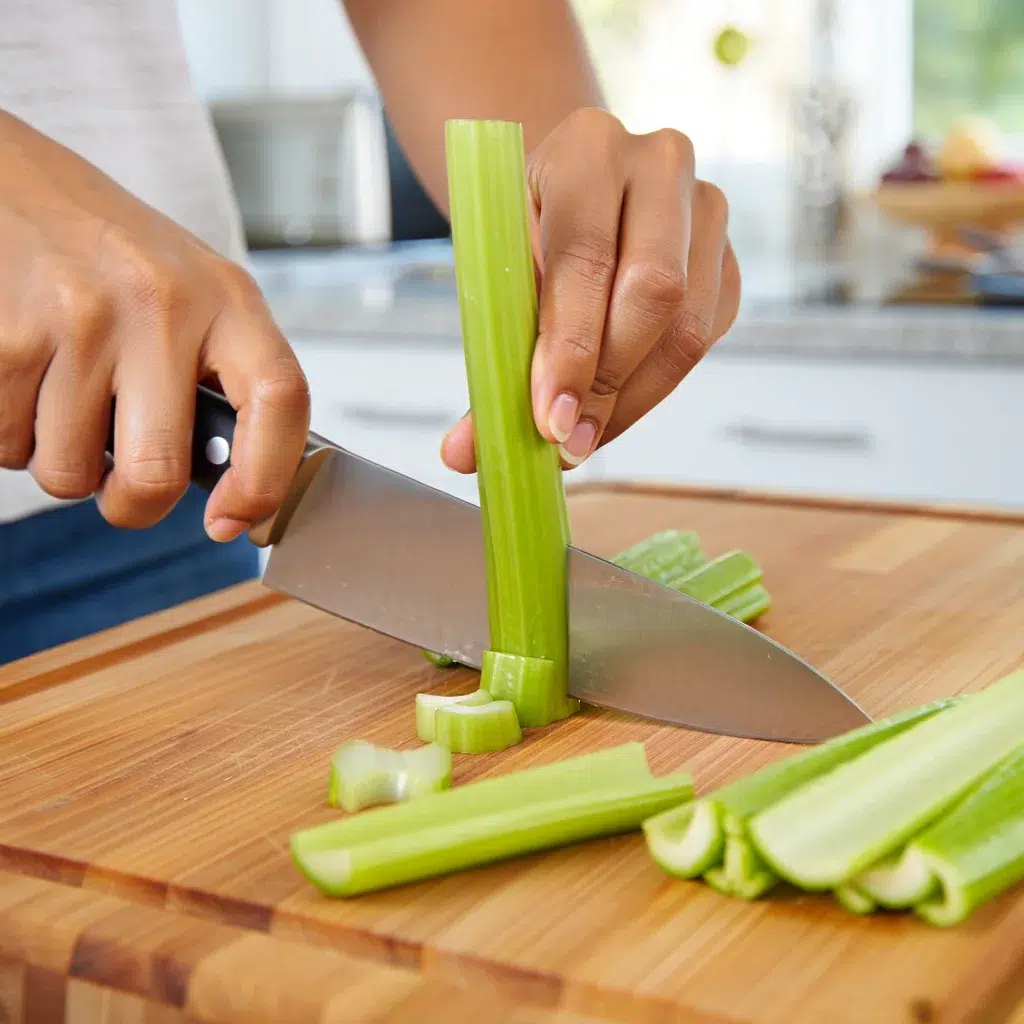
Cut the base off the bunch and discard, then chop stalks into 2–3 inch segments. This helps your equipment process them more evenly whether that’s a juicer chute or a blender pitcher and prevents the fibrous strings from wrapping around blender blades, which is the main source of the annoying tangled-fiber problem.
Step 3A: If using a juicer (masticating or centrifugal)
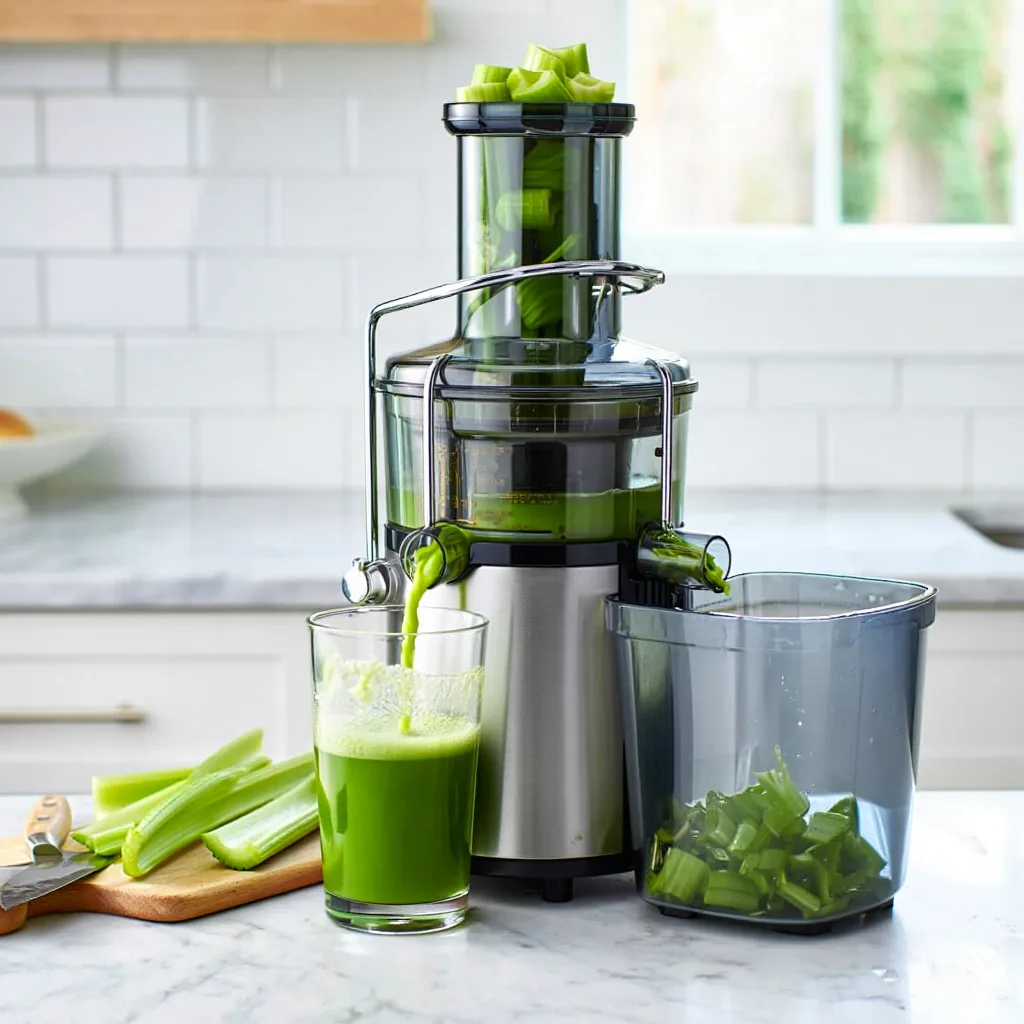
Feed stalks through the juicer chute one or two at a time. Don’t rush. With a masticating juicer, you’ll hear a low, consistent hum and see a rich, dark green juice flowing out. With a centrifugal juicer, it’s louder and faster. Pour juice into a glass immediately. If using a centrifugal juicer and you want to reduce pulp, pour through a fine mesh strainer once.
Timing: A full bunch takes about 3–4 minutes in a masticating juicer, 90 seconds in a centrifugal.
Step 3B: If using a blender
Add chopped celery to your blender along with ¼ cup of cold filtered water. This small amount of water helps the blades catch and process the stalks without the motor straining. Blend on high for 45–60 seconds until completely smooth. You’ll hear the pitch of the motor even out when everything has been fully broken down.
Pour the blended mixture through a nut milk bag, cheesecloth, or fine mesh strainer set over a large bowl. Squeeze or press firmly to extract all the liquid. This is the step most people skip don’t. The difference between strained and unstrained blender celery juice is significant in both texture and bitterness.
Yield note: Blender method typically yields slightly less than a masticating juicer (closer to 10–12 oz from one bunch vs. 14–16 oz).
Step 4: Taste, adjust, and drink
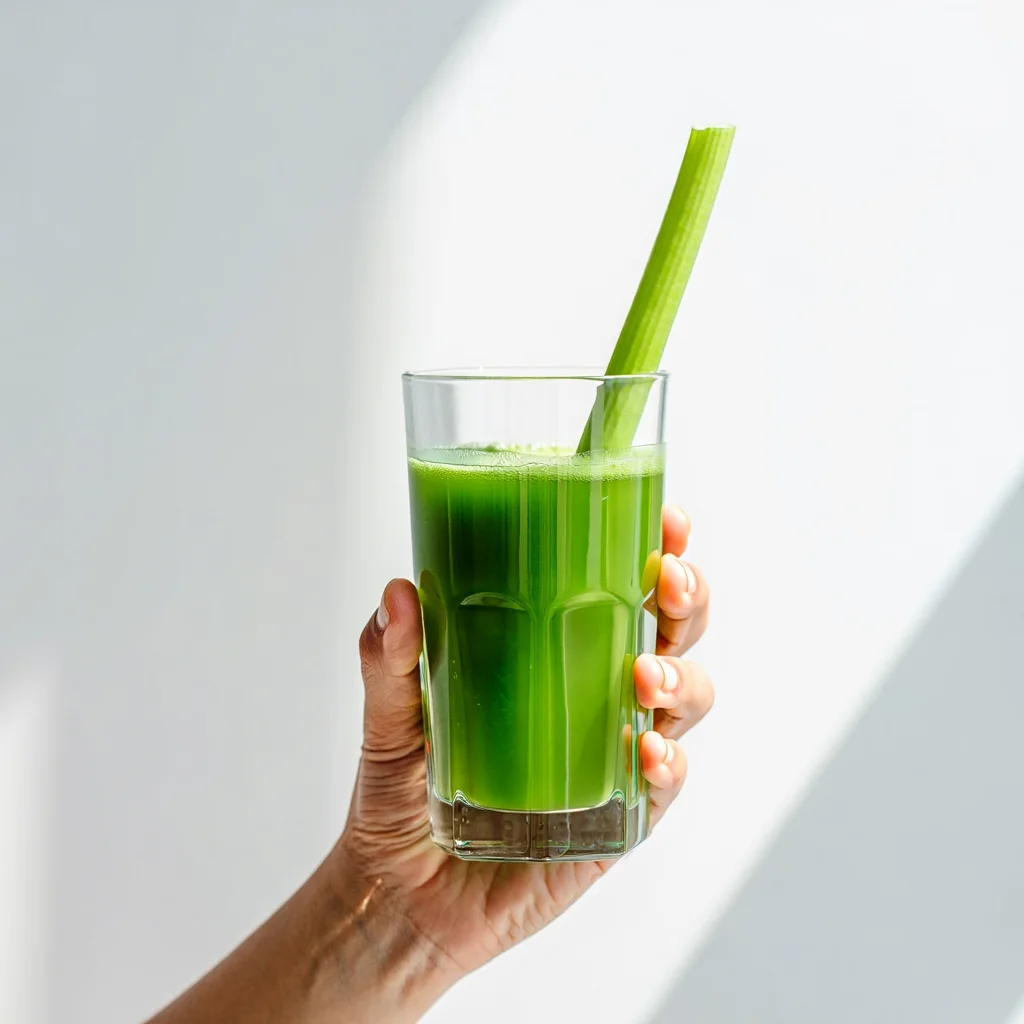
Pour into a glass over a small amount of ice if you prefer it cold. Take a small sip before adding anything. Fresh celery juice made from a good bunch should taste mildly salty, slightly vegetal, clean, and a bit grassy not overwhelmingly bitter. If it’s very bitter, your celery was older than ideal, or you used too many outer dark stalks.
Add lemon juice now if using, stir once, and drink within 20–30 minutes for best results.
Troubleshooting
Why does my celery juice taste bitter?
Bitterness in celery juice almost always comes from one of three things: old celery (the sugars have broken down), too many dark outer stalks (they’re higher in certain bitter compounds), or over-processing in a high-heat centrifugal juicer. Switch to inner stalks, buy fresher celery, or add a squeeze of lemon acid cuts perceived bitterness quickly.
Deeper explanation: Celery contains phthalides and polyacetylenes, which can taste bitter when celery ages or is exposed to light. Storing your celery tightly wrapped in foil (not plastic) in the coldest part of the fridge slows this degradation significantly.
Why is my celery juice turning brown?
Oxidation. Just like an apple browning after you cut it, celery juice reacts with oxygen the moment it’s exposed to air. The chlorophyll and polyphenols in the juice degrade quickly. To slow this: add lemon juice (the citric acid acts as an antioxidant), store in a completely full, sealed glass jar with no air gap, and drink within 24–48 hours maximum.
My blender celery juice tastes pulpy and thick. What went wrong?
You didn’t strain it long enough, or you used a mesh strainer instead of a nut milk bag. A fine mesh strainer alone leaves fine fiber particles in the juice that give it a murky, slightly gritty texture. A nut milk bag (available for under $10 online) removes essentially all the fiber for a clean, smooth result.
How much celery do I actually need for one serving?
A standard 16 oz serving the amount typically referenced in wellness protocols requires about 1 full large bunch, or roughly 9–11 stalks. Smaller stalks from an older or smaller bunch might require 12–14. When in doubt, buy two bunches and refrigerate the second one; you’ll use it.
Can I make celery juice the night before?
You can, but you’ll lose some nutritional potency and the juice will likely brown slightly. If you need to prep ahead, make it right before bed, add lemon juice, fill your jar all the way to the brim (to minimize air), seal tightly, and drink first thing in the morning. It won’t be as vibrant but it’s still nutritious and tastes fine.
Variations
Quick Version (under 5 minutes total): Use a centrifugal juicer. It’s louder, faster, and produces a slightly more oxidized juice, but if you’re making celery juice on a weekday morning before work, the speed is worth the trade-off. Drink it immediately.
Beginner-Friendly Version: Juice celery with ½ a cucumber and one small green apple. The cucumber adds volume and mild sweetness; the apple brings natural sugar that makes the whole drink much more approachable. Great starting point if straight celery juice feels like punishment.
Kid-Friendly Version: Blend celery with cucumber, apple, and a very small amount of fresh pineapple juice. The sweetness is assertive enough to mask the grassy notes. Strain well.
Ginger-Lemon Celery Juice: The combination of ½ lemon and a ½-inch ginger knob transforms celery juice into something that feels almost energizing rather than medicinal. This is my personal daily version.
Meal-Prep / Batch Version: If you want to juice for multiple days at once, make a double or triple batch and freeze in 16 oz mason jars (leave 1 inch of headspace for expansion). Thaw overnight in the fridge. The color will dull but the flavor holds well. This is genuinely the most underrated way to make celery juice a sustainable habit.
Storage & Reheating
Refrigerator: Fresh celery juice keeps for up to 48 hours in a tightly sealed glass jar. Fill the jar to the top to minimize oxygen exposure. Expect some browning give it a shake before drinking. The lemon version stays brighter and tastier on day two.
Freezer: Celery juice freezes well for up to 3 months. Use freezer-safe glass jars or silicone freezer trays for easy portioning. Thaw overnight in the fridge; don’t microwave it, as heat degrades the heat-sensitive compounds you made it for.
Texture note: After thawing, the juice may separate slightly shake or stir well before drinking. The texture changes very little; this is normal.
FAQ
What does celery juice taste like? Fresh celery juice tastes mildly salty, slightly vegetal, and clean a bit like biting into a celery stalk but amplified and without the crunch. It’s not sweet. Some people detect a faint bitterness, especially from outer stalks. Adding lemon makes it considerably more pleasant if you’re new to it.
Should I drink celery juice on an empty stomach? Many wellness approaches recommend drinking celery juice first thing in the morning on an empty stomach, waiting 15–20 minutes before eating. The rationale is that this allows the digestive enzymes and natural sodium in celery to work without being diluted by food. There’s limited clinical research on this specifically, but anecdotally and in my own experience it does seem to settle the stomach better on an empty stomach than after eating.
Can I make celery juice without a juicer? Yes and the blender method works very well. Blend chopped celery with a splash of cold water on high speed, then strain through a nut milk bag or fine cheesecloth. You’ll get a slightly lower yield than a juicer but the juice quality is excellent, especially if you strain it thoroughly.
How long does homemade celery juice last in the fridge? Up to 48 hours in a completely sealed glass jar filled to the brim. Adding lemon juice extends both the color and flavor. After 48 hours, it’s safe to drink but won’t taste as good and nutritional quality will have declined.
Can I freeze celery juice? Yes. Freeze in airtight glass jars or silicone molds for up to 3 months. Thaw in the refrigerator overnight and shake well before drinking. This is a great approach for batch-prepping your week or two of juice in one session.
Is celery juice safe for people watching their sodium intake? Celery is naturally high in sodium about 215mg per 16 oz serving of plain celery juice. This is not a concern for most people, but if you’re on a medically restricted sodium diet, talk with your doctor before making it a daily habit. You can also dilute with cucumber juice to reduce sodium per ounce.
What’s the best celery to buy for juicing? A fresh, firm bunch of Pascal celery the standard variety at any grocery store. Organic is preferable due to celery’s high pesticide-absorption rate. The stalks should be tightly packed, deep green, and the leaves attached and not yellowing.
Can I add other vegetables or fruit to celery juice? Absolutely. Lemon, ginger, cucumber, and green apple are the four best tested additions. Each changes the flavor profile without overwhelming the celery base. Avoid strong-flavored additions like beet or carrot in large amounts they’ll dominate.
Final Thoughts
Celery juice isn’t magic. But it is a genuinely easy, low-cost, low-sugar way to start your morning with something hydrating and nutrient-dense, and once you dial in your process, it takes under five minutes to make.
This recipe is best for people who want to add something intentional to their morning routine without a lot of fuss, for home cooks who are skeptical of wellness trends but curious enough to try once properly, and for anyone who has tried celery juice before, hated it, and is willing to give it one more shot with better technique.
My personal serving suggestion: make the ginger-lemon version, pour it into a tall glass over two or three ice cubes, and drink it while your coffee brews. The contrast of cold celery juice and hot coffee is oddly satisfying and it sets a noticeably different tone for the morning than coffee alone.
Start with three consecutive mornings and see how you feel. You might surprise yourself.