Table of Contents
Introduction
The first time I bit into authentic Korean fried chicken, I was sitting in a cramped restaurant booth in Seoul’s Gangnam district at 2 AM, and I swear time stopped. The shatter of that impossibly thin, crispy crust like breaking through spun sugar gave way to the juiciest, most flavorful chicken I’d ever tasted. The gochujang glaze clung to every crevice, delivering waves of sweet heat that had me reaching for another piece before I’d finished chewing.
That moment ruined regular fried chicken for me forever.
After returning home, I spent months trying to recreate that magic in my own kitchen. I burned through twenty pounds of chicken wings, tested five different starches, and nearly set off my smoke alarm more times than I’d like to admit. But I finally cracked the code to making Korean fried chicken recipes that rival anything you’d find on the streets of Seoul or at your favorite Korean restaurant.
This recipe delivers that signature paper-thin, ultra-crispy coating that stays crunchy for hours (yes, even the next day). The secret? A double-frying technique that drives out moisture while creating maximum crispiness, plus a sticky-sweet gochujang glaze that’s equal parts spicy, savory, and addictive.
Jump to Recipe ↓
Ingredients
For the Chicken:
- 2 lbs chicken wings (or boneless thighs, cut into 2-inch pieces) – Look for wings with intact skin; that’s where the magic happens
- 1 cup buttermilk – The acidity tenderizes while keeping the meat juicy
- 1 tsp kosher salt
- 1/2 tsp white pepper – Milder than black pepper, common in Korean cuisine
- 1 tsp garlic powder
For the Coating:
- 1 cup potato starch (or cornstarch) – Creates that signature glassy crunch
- 1/2 cup all-purpose flour – Helps the coating adhere
- 1 tsp baking powder – For extra lift and crispiness
- 1/2 tsp salt
- 1/2 tsp black pepper
For the Gochujang Glaze:
- 3 tbsp gochujang paste – Fermented Korean chili paste, available at most grocery stores
- 2 tbsp honey – Balances the heat with natural sweetness
- 2 tbsp soy sauce (low-sodium recommended)
- 2 tbsp rice vinegar – Adds tang and cuts through richness
- 1 tbsp brown sugar
- 3 cloves garlic, minced – Fresh is essential here
- 1 tsp fresh ginger, grated
- 1 tbsp sesame oil – Toasted sesame oil adds nutty depth
- 1 tsp sesame seeds (for garnish)
- 2 green onions, sliced (for garnish)
For Frying:
- Neutral oil (vegetable, canola, or peanut oil – about 2 quarts)
Substitutions:
- Gluten-free: Use 100% potato starch or cornstarch instead of flour, and tamari instead of soy sauce
- Dairy-free: Replace buttermilk with unsweetened plant-based milk + 1 tbsp lemon juice
- Lower heat: Reduce gochujang to 2 tbsp and add 1 tbsp ketchup for milder flavor
- No gochujang: Substitute with 2 tbsp sriracha + 1 tbsp tomato paste (won’t be authentic, but still delicious)
Cooking Timer
Timing
⏱️ Prep Time: 20 minutes (plus 30 min marinating)
⏱️ Cook Time: 40 minutes
⏱️ Total Time: 1 hour 30 minutes
⏱️ Servings: 4-6 people
Quick comparison: While traditional fried chicken takes about 45 minutes, Korean fried chicken requires an extra 15-20 minutes due to the double-frying technique but that extra time is what creates the unmatched crispiness.
Step-by-Step Instructions
Step 1: Marinate the Chicken (30 minutes)
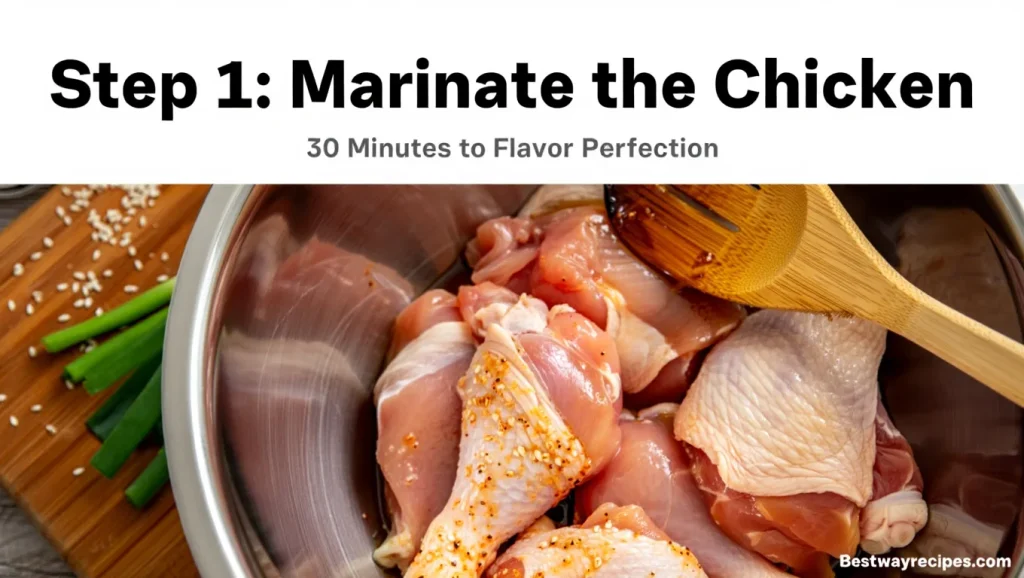
In a large bowl, combine buttermilk, salt, white pepper, and garlic powder. Add chicken pieces and toss until evenly coated. Cover and refrigerate for at least 30 minutes, or up to 4 hours for maximum tenderness.
Pro tip: The acid in buttermilk breaks down proteins, making the chicken incredibly tender. Don’t skip this step!
Step 2: Prepare Your Frying Station (5 minutes)
Set up three stations: (1) marinated chicken, (2) coating mixture in a shallow dish, (3) wire rack over a baking sheet. Fill a heavy-bottomed pot or Dutch oven with 2-3 inches of oil.
Pro tip: Use a thermometer! Proper oil temperature (340-350°F) is the difference between soggy and crispy.
Step 3: Make the Coating (2 minutes)
Whisk together potato starch, flour, baking powder, salt, and pepper in a shallow bowl. The baking powder creates tiny air pockets that puff up during frying.
Step 4: Coat the Chicken (5 minutes)
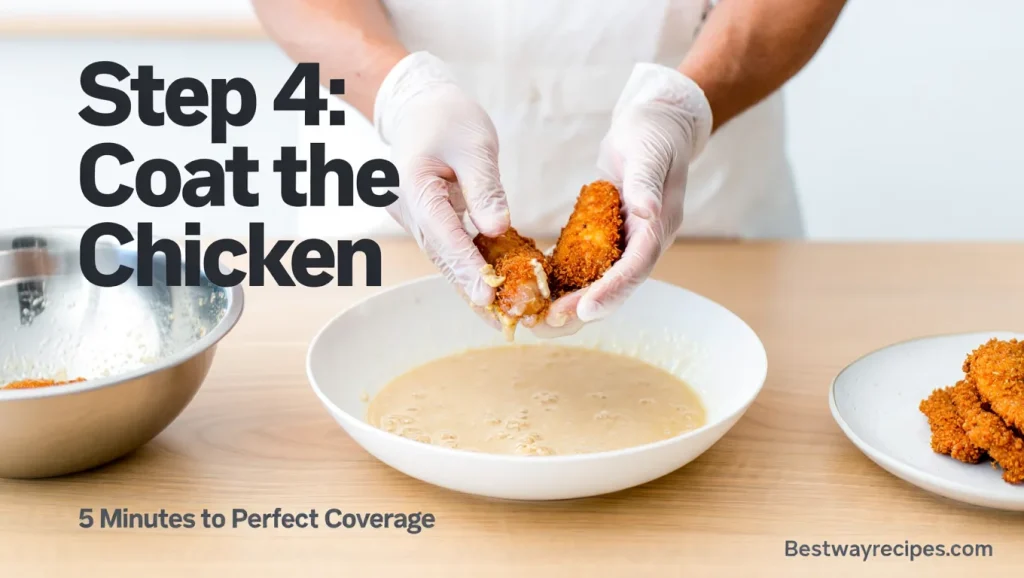
Remove chicken from buttermilk, letting excess drip off. Dredge each piece thoroughly in the starch mixture, pressing gently to adhere. Place on the wire rack and let rest for 10 minutes this helps the coating set.
Technique insight: Letting the coating rest creates a paste-like texture that fuses to the chicken during frying, preventing it from falling off.
Step 5: First Fry (12-15 minutes)
Heat oil to 340°F. Working in batches (don’t overcrowd!), carefully lower chicken into oil. Fry for 8-10 minutes until light golden and cooked through (internal temp 165°F). Remove to wire rack.
Flavor booster: Add a few slices of ginger or garlic cloves to the frying oil for subtle aromatic infusion.
Step 6: Rest & Reheat Oil (10 minutes)
Let chicken rest for at least 10 minutes while oil temperature increases to 375°F. This resting period allows moisture to redistribute, ensuring juicy meat with the second fry creating maximum crunch.
Step 7: Second Fry (3-5 minutes)
Increase oil temperature to 375°F. Fry chicken again for 3-5 minutes until deep golden brown and shatteringly crispy. The higher heat drives out remaining moisture and creates that signature glass-like coating.
Pro tip: Listen for the sound when the sizzling becomes less intense, your chicken is ready.
Step 8: Make the Glaze (5 minutes)
While chicken is resting after the second fry, combine all glaze ingredients in a small saucepan. Bring to a simmer over medium heat, stirring constantly. Cook for 3-4 minutes until slightly thickened and glossy. Remove from heat.
Chef’s secret: Add the sesame oil at the end, off heat, to preserve its aromatic properties.
Step 9: Toss & Serve (2 minutes)
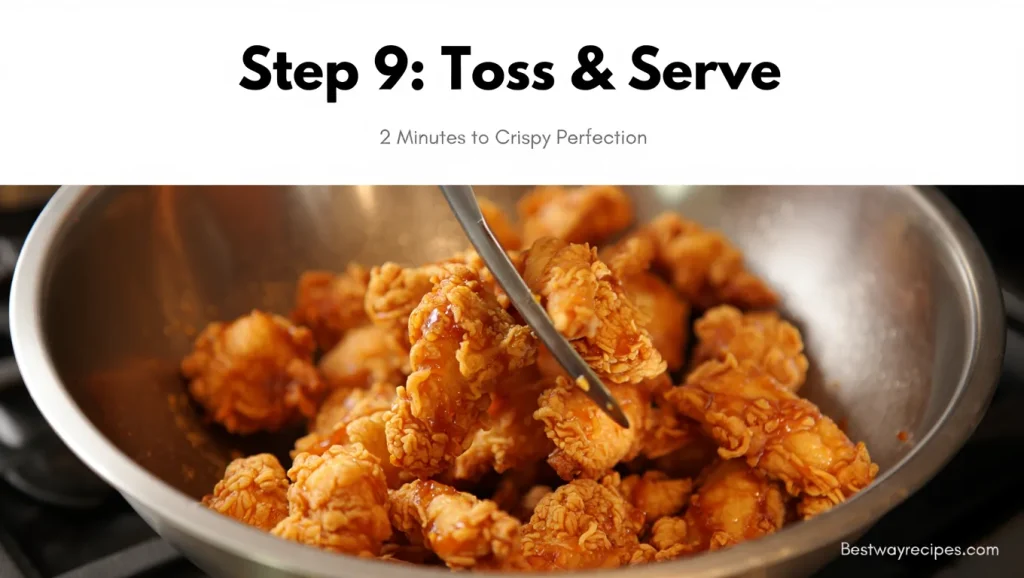
Place hot fried chicken in a large bowl. Pour warm glaze over top and toss gently until evenly coated. Transfer to serving platter and garnish with sesame seeds and sliced green onions.
Serving tip: Serve immediately for maximum crispiness, though this chicken stays remarkably crunchy even after an hour.
Nutritional Information
NutrientPer Serving (4 servings)Calories485Protein28gFat26gCarbohydrates35gFiber1gSugar12gSodium680mgVitamin A8% DVIron10% DVCalcium4% DV
Nutrition data estimated based on standard ingredients. For precise calculations, consult a registered dietitian.
Healthier Alternatives
While Korean fried chicken is an indulgent treat, here are ways to lighten it up without sacrificing too much flavor:
Air Fryer Method: Spray coated chicken lightly with oil and air fry at 375°F for 20 minutes, flipping halfway. While not identical to deep-fried, it reduces oil content by about 70%.
Baked Version: Bake coated chicken on a wire rack at 425°F for 35-40 minutes, flipping once. Spray with cooking oil every 15 minutes for browning.
Leaner Cuts: Use skinless chicken breast instead of thighs or wings. Reduce marinating time to 1-2 hours to prevent drying.
Reduced Sugar Glaze: Cut honey to 1 tablespoon and use a natural sweetener like monk fruit. Replace half the gochujang with unsweetened tomato paste.
Portion Control: Serve with abundant vegetables the traditional pickled radish cuts through richness and aids digestion.
Serving Suggestions
Korean fried chicken isn’t just a recipe it’s an experience. Here’s how to serve it like they do in Seoul:
Traditional Style: Serve with crunchy pickled radish (chicken-mu) and ice-cold beer. The Korean term “chimaek” (치맥) literally means chicken and beer they’re inseparable.
Modern Fusion: Tuck chicken pieces into soft steamed bao buns with kimchi slaw and sriracha mayo for an incredible sandwich.
Korean-Style Sharing Platter: Serve half the batch with glaze, leave half naked (just crispy) with various dipping sauces gochujang mayo, soy-garlic sauce, or honey mustard.
With Rice: Serve over steaming jasmine rice with stir-fried vegetables and a fried egg on top for a complete meal.
Party Platter: Offer with multiple sauces in small bowls, pickled vegetables, and lots of napkins. This is finger food at its finest.
Beverage Pairings: Beyond beer, try Korean rice wine (makgeolli), ginger ale, or a crisp Riesling to balance the spice.
Common Mistakes to Avoid
After making this recipe dozens of times (and teaching it to friends), here are the pitfalls to watch out for:
1. Overcrowding the fryer: Dropping too many pieces at once lowers oil temperature dramatically, resulting in greasy, soggy coating. Fry in small batches, even if it takes longer.
2. Skipping the double-fry: I know it seems redundant, but this is THE secret to Korean fried chicken’s texture. The first fry cooks the meat, the second fry creates the crunch.
3. Wrong oil temperature: Too hot (above 380°F) burns the coating before cooking the meat. Too cool (below 325°F) makes it absorb oil like a sponge. Invest in a thermometer.
4. Coating too thick: A thin, even coating is key. Thick clumps of batter will stay doughy and fall off.
5. Rushing the rest period: Those 10 minutes between fries aren’t optional they let steam escape and allow the coating to set properly.
6. Adding sauce too early: Toss chicken in glaze only after the second fry, right before serving. If you sauce it too soon, you’ll lose that precious crispiness.
7. Using regular soy sauce with added salt: Korean fried chicken already has salt in the coating. Use low-sodium soy sauce in the glaze to prevent oversalting.
Storage Tips
Short-term (1-2 days): Store unglazed fried chicken in an airtight container lined with paper towels. Keep sauce separately in the refrigerator. To reheat, place chicken on a wire rack in a 375°F oven for 8-10 minutes, then toss with rewarmed sauce.
Longer storage (up to 3 months): Freeze unglazed chicken in a single layer on a baking sheet, then transfer to freezer bags. Reheat from frozen in a 400°F oven for 20-25 minutes.
Pro preservation trick: The coating holds up remarkably well. I’ve eaten leftovers cold the next day and the crunch was still there though reheating in the oven brings it back to life.
Sauce storage: Gochujang glaze keeps in the refrigerator for up to 2 weeks. Make a double batch and use it on grilled chicken, roasted vegetables, or as a dipping sauce.
Expert Tips & Tricks
The Science of Double-Frying: When you fry chicken the first time, the exterior cooks and steam escapes through the coating. During the rest period, that moisture redistributes back toward the surface. The second fry at higher temperature flash-evaporates that moisture, creating an incredibly dry, crispy shell. This technique is why Korean fried chicken stays crunchy far longer than Western-style fried chicken.
Starch selection matters: Potato starch creates the crispiest, most delicate coating. Cornstarch works well too but creates a slightly denser texture. Tapioca starch makes an even glassier coating but can be harder to find.
Temperature zones: Professional Korean fried chicken shops maintain two fryers at different temperatures. You can replicate this at home by using two pots or adjusting temperature between batches.
Glaze consistency: The sauce should coat the back of a spoon but still drip off. Too thick and it becomes gloppy; too thin and it slides right off the chicken.
Make-ahead option: Coat chicken in the starch mixture up to 4 hours ahead and refrigerate uncovered. The coating dries out slightly, which actually helps create an even crispier result.
Reader Anecdote: Sarah’s Game Day Victory
Last year, my friend Sarah made this recipe for her husband’s Super Bowl party a crowd that typically orders from the same buffalo wing place every year. She was nervous, I’ll admit. Korean fried chicken isn’t exactly traditional game day food in middle America.
She texted me halfway through the party: “They’ve gone silent. Good silent. Someone just asked if I’m opening a restaurant.”
By the fourth quarter, she’d fried up an emergency second batch. Her husband’s best friend a guy who once declared he’d “never trust chicken that isn’t covered in Frank’s RedHot” asked for the recipe.
Now it’s their new tradition. Sometimes the best recipes aren’t the ones you grew up with, but the ones that make you wonder why you waited so long to try them.
Conclusion
Korean fried chicken recipes represent the perfect marriage of technique and flavor a dish that respects its roots while inviting experimentation. Whether you stick to the traditional spicy gochujang glaze or create your own variations, the double-frying method is your ticket to the crispiest, most satisfying fried chicken you’ll ever make at home.
The beauty of this recipe is that once you master the technique, you can adapt it endlessly. Try different sauces, experiment with cuts of chicken, or make it your own signature dish.
Ready to get frying? Grab your ingredients, heat that oil, and prepare for the most satisfying crunch of your life. And when your family asks you to make it again next week (they will), you’ll know you’ve created something special.
Have you made this recipe? Drop a comment below with your results! I’d love to hear about your variations, successes, and even your kitchen disasters. We’re all learning together.
FAQs
Q: Can I use chicken breast instead of wings or thighs?
A: Yes, but boneless thighs stay juicier due to higher fat content. If using breast, pound to even thickness and reduce first frying time by 2-3 minutes to prevent drying out.
Q: What if I don’t have potato starch?
A: Cornstarch works excellently as a substitute it creates a similar crispy texture. You can also use a 50/50 blend of cornstarch and all-purpose flour.
Q: How do I know when the oil is hot enough without a thermometer?
A: Drop a small piece of bread into the oil. At 340°F, it should sizzle immediately and brown within 60 seconds. For 375°F, it will brown in about 30-40 seconds.
Q: Can I make this ahead for a party?
A: Yes! Complete both frying steps up to 2 hours before serving. Keep chicken uncovered at room temperature, then reheat in a 375°F oven for 5-8 minutes before tossing with warm glaze.
Q: Why is my coating falling off during frying?
A: This usually happens from (1) not letting the coated chicken rest before frying, (2) oil temperature too low, or (3) overcrowding the pot. Ensure oil is 340-350°F and fry in small batches.
Q: Is there a way to reduce the spice level?
A: Absolutely! Cut gochujang to 2 tablespoons and add 1 tablespoon of ketchup to the glaze. You can also serve the sauce on the side as a dipping option rather than tossing all the chicken in it.
Q: Can I freeze the glaze?
A: Yes, the gochujang glaze freezes beautifully for up to 3 months. Thaw overnight in the refrigerator and reheat gently in a saucepan, stirring frequently.
📸 Made This Recipe?
We LOVE seeing your creations! Share your Korean Fried Chicken photos:
Tag us @bestwayrecipes or use #BestWayKFC
📌 Pin this recipe for later!
📷 Tag me @bestwayrecipes with your Korean fried chicken creations!
⭐ Rate this recipe below if you loved it!
Author´sTop Recipes Piks
- My Mom’s 5-Ingredient Meatloaf Is My Favorite
- Easy Crustless Quiche Recipe With Cottage Cheese
- 5-Step Rich Dense Chocolate Cake Recipe
- Costa Rican Tea Recipe: How To Make This Best Comfort Drink
- Easy Lavash Bread Recipe: Homemade Armenian Flatbread
- The Ultimate Bourbon Cream Recipe: A Smooth and Luxurious Delight
- Krusteaz Pancake Mix Recipe: Easy Morning Favorite