
Table of Contents
Introduction
There’s a secret weapon hiding in the kitchens of top chefs and the backyards of grilling enthusiasts, and it’s not a fancy new gadget it’s a simple, ancient slab of pink rock. I’m talking about Himalayan Salt Blocks . The first time I saw one, I was skeptical. Cook on a block of salt? Wouldn’t that make the food inedible? But the moment I tasted that perfectly seared ribeye, kissed with a clean, mineral-rich saltiness, I was hooked. This isn’t just cooking; it’s an experience.
This guide will show you exactly how to use a Himalayan salt block to grill, sear, and serve like a seasoned pro. We’re going to focus on the king of the grill: a thick-cut, bone-in Ribeye steak. The process is surprisingly simple, but it requires patience and respect for the block. Trust me, the restaurant-quality crust and bold flavor you get from cooking directly on this 250-million-year-old mineral slab is worth every minute of the slow pre-heating process.
Ingredients
The beauty of cooking on a Himalayan salt block is the minimal ingredients required. The block itself does most of the heavy lifting when it comes to seasoning.
- Two 1.5-inch thick, bone-in Ribeye Steaks (about 1.5 lbs each)
- 1 Tbsp high-heat cooking oil (like avocado or grapeseed)
- 1 tsp freshly cracked black pepper
- A few sprigs of fresh rosemary (optional, for aroma)
Substitutions:
- Gluten-Free/Low-Carb: This recipe is naturally gluten-free and low-carb.
- Vegan/Vegetarian: The same searing technique works beautifully for thick slices of portobello mushroom or firm tofu.
Timing
The key to salt block cooking is the slow, patient pre-heating, which is why the total time looks long. The actual cooking is lightning fast!
Prep Time: PT10M
Cook Time: PT10M
Total Time: PT1H30M (Includes 70 minutes of slow pre-heating)
One-line comparison: This steak is ready in 10 minutes of active cooking faster than most pan-seared methods, and with a flavor that can’t be beat.
Step-by-Step Instructions
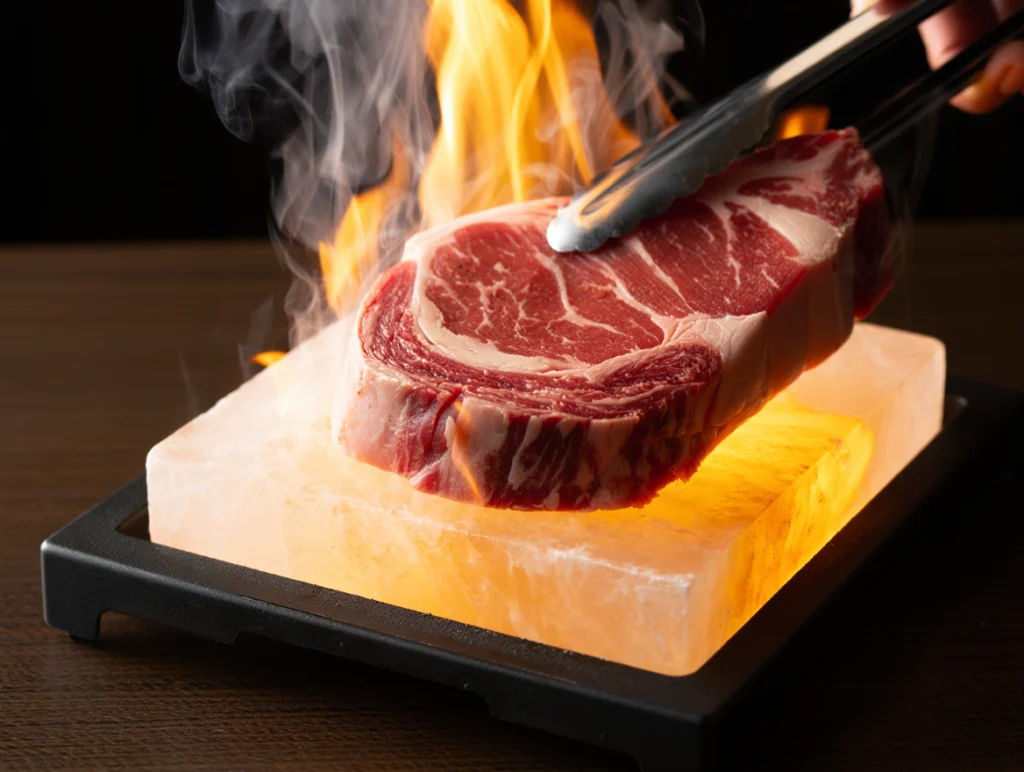
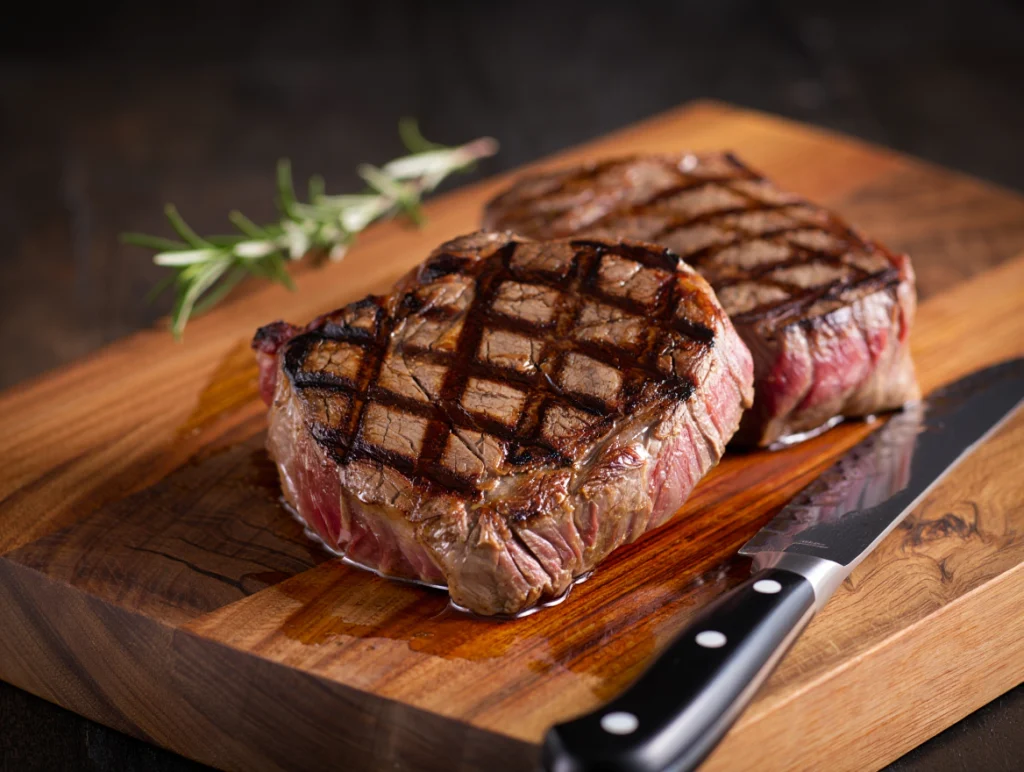
- Temper the Block (The Crucial Step): Place your dry **Himalayan Salt Block** on a cold grill grate (gas or charcoal). Turn the heat to low. After 15 minutes, increase to medium-low. After another 15 minutes, increase to medium. Finally, after another 15 minutes, increase to medium-high or high heat. The block should be around 500°F (260°C). This slow process is essential to slowly temper your salt block and prevent it from cracking.
- Test the Heat: Sprinkle a few drops of water on the block. If they sizzle and evaporate instantly, you’re ready. If they just sit there, keep heating.
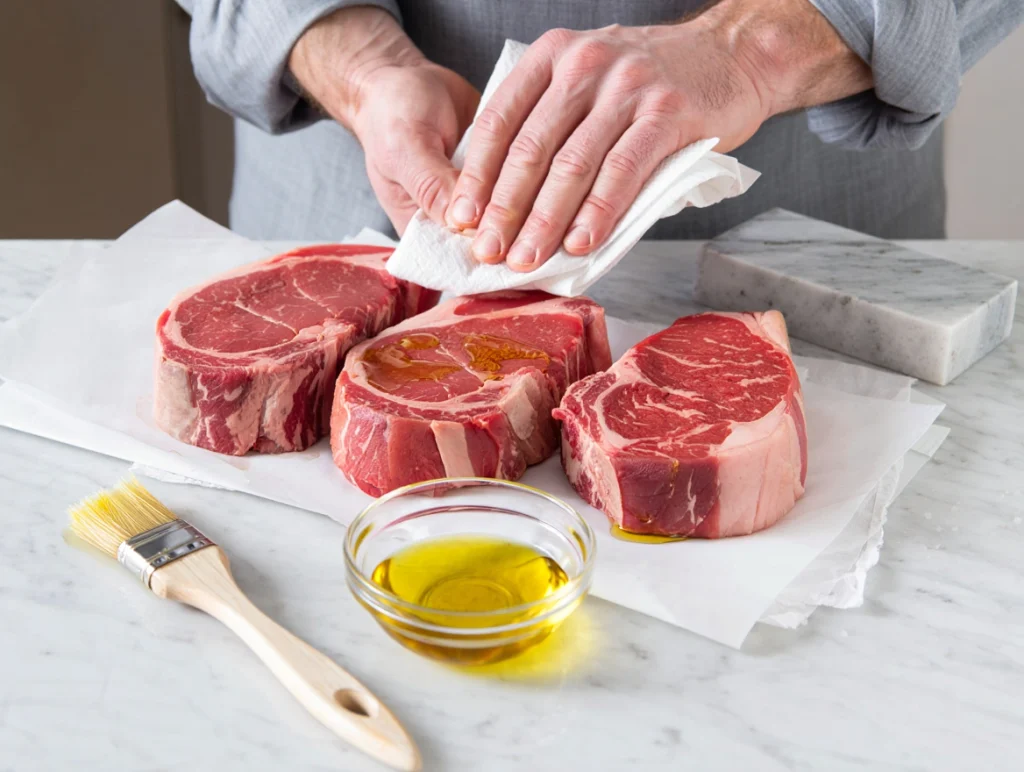
- Prep the Steaks: Pat your ribeyes completely dry with paper towels. This is vital for a good crust. Lightly brush them with the high-heat oil and season with black pepper only. Do not add any extra salt!
- Sear the First Side: Carefully place the steaks directly onto the hot salt block. You should hear a satisfying, immediate sizzle. Sear for 2 to 3 minutes, depending on your desired doneness.
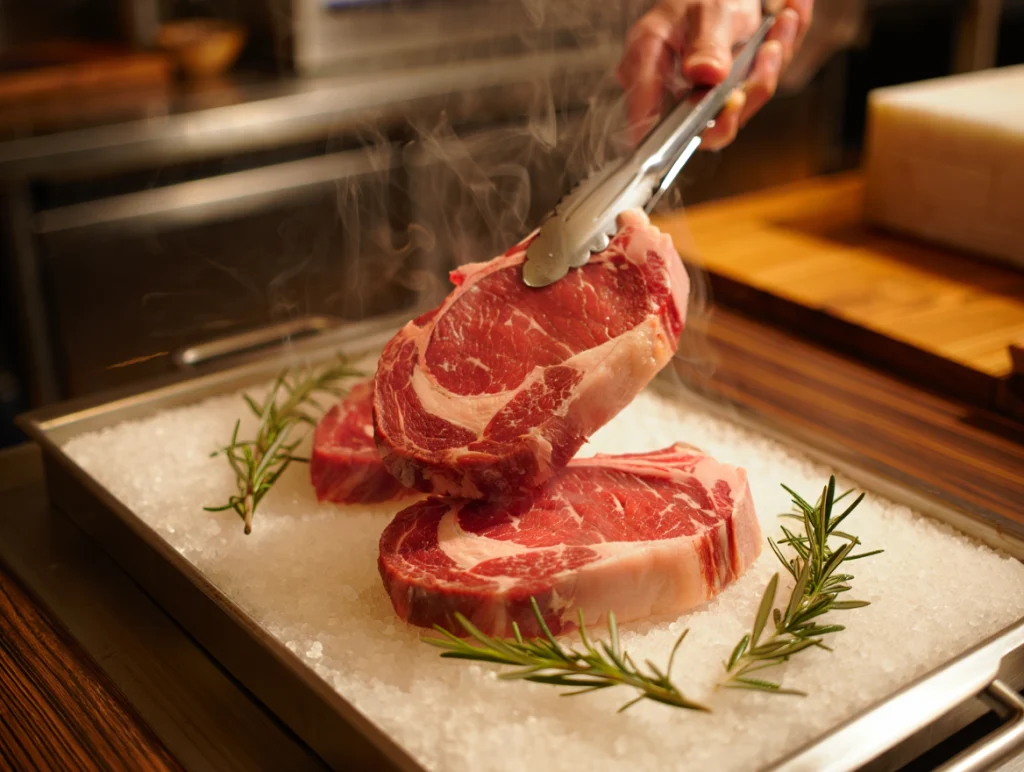
- Flip and Finish: Flip the steaks and move them to a new, unused spot on the block. This ensures maximum heat transfer. Sear for another 2 to 3 minutes. If you’re using rosemary, toss the sprigs onto the block next to the steaks for an incredible aroma.
- Rest: Remove the steaks immediately and let them rest on a cutting board for 5 to 10 minutes. This allows the juices to redistribute, ensuring a tender, juicy result.
Pro Tip: Always use a metal spatula to move food on the block. Never use plastic, and never slide the block itself while it’s hot.
Nutritional Information
The nutritional content of the steak remains the same, but the salt block imparts a small amount of sodium and trace minerals. The mineral-rich composition of Himalayan salt includes small amounts of iron, calcium, and potassium.
| Nutrient | Amount (per serving, estimated) |
|---|---|
| Calories | 450-550 kcal |
| Protein | 40-50g |
| Fat | 30-40g |
| Carbohydrates | 0g |
| Sodium | Varies (Salt block adds minimal, clean saltiness) |
Healthier Alternatives
While a ribeye is a treat, you can use the salt block for leaner cuts or vegetables with fantastic results. The searing process locks in moisture and flavor.
- Swap the Cut: Use a leaner cut like flank steak or chicken breast. Be sure to cut them thinly for quick cooking.
- Go Veggie: Asparagus, zucchini, and bell peppers are incredible on the block. They get a beautiful char and a perfect, light seasoning.
Serving Suggestions
Plating is half the fun! You can serve the steak directly on the cooled salt block for a stunning presentation. The block will keep the food warm for a surprising amount of time.
- Sides: Our **Mexican Grilled Corn** recipe is the perfect smoky, tangy accompaniment.
- Beverage Pairing: A bold Cabernet Sauvignon or a crisp, hoppy IPA.
- Festive Variant: For a holiday gathering, sear scallops or shrimp on the block right at the table for a dramatic, interactive appetizer.
Common Mistakes to Avoid
I once burned the first batch of scallops I ever tried on a salt block because I didn’t pre-heat it slowly enough. Learn from my mistakes!
- Heating Too Fast: This is the number one killer of salt blocks. Always start on low heat and increase gradually over an hour. If you hear loud popping or cracking, reduce the heat immediately.
- Cooking Wet Food: Moisture is the enemy. Always pat your protein or vegetables completely dry before placing them on the block. Excess moisture will dissolve the salt too quickly and can cause the block to degrade faster.
- Adding Extra Salt: Resist the urge! The block is seasoning your food as it cooks. Adding more salt will result in an over-salted dish.
- Not Moving the Food: Move your food to a new spot on the block when you flip it. The area you just cooked on will be slightly cooler, and a fresh spot ensures a better sear.
Storage Tips
Caring for your block is simple, thanks to the salt’s natural antimicrobial properties.
- Cleaning: Wait until the block is completely cool. Scrape off any stuck-on food bits with a metal spatula. Wipe the block with a clean, damp sponge or cloth. **Never** use soap, and **never** run it under water or submerge it.
- Shelf Life: The block itself lasts for dozens of uses if cared for properly. When it gets too small for cooking, you can break it up and use the pieces for a detoxifying salt bath.
Expert Tips & Tricks
The magic of the salt block is in the trace minerals. The **science behind salt block heating** is that the dense crystal structure holds heat incredibly well, providing a consistent, high-heat sear that is difficult to replicate in a pan. This consistency is what gives you that perfect crust.
Chef-Style Insight: For a quick lunch, you can’t beat a classic Tuna Melt Quesadilla. You can use the salt block as a cold serving platter for the tuna salad before assembling the melt, giving it a subtle, clean seasoning.
Case Study / Example
I was recently at a friend’s BBQ, and he was struggling with his chicken. It was dry and unevenly cooked. I suggested he try his salt block. He was hesitant, but after a quick sear on the block, his chicken breasts came off the grill perfectly moist and seasoned. He later told me, “I’ve had that block for two years and only used it as a coaster. Now it’s my favorite way to cook chicken. I even used the leftover steak to make a delicious juicy steak burrito the next day.” That’s the kind of transformation I love to see!
Conclusion
The Himalayan salt block is more than a novelty; it’s a versatile, natural cooking tool that elevates simple ingredients. From searing a perfect ribeye to serving chilled appetizers, it brings a clean, mineral-rich flavor and a stunning presentation to your table. Try it this weekend and prepare to be amazed by the results. And if you’re looking for more ways to use your grill, don’t forget to check out our BBQ Chicken Pizza recipe!
FAQs
Q: Can a Himalayan salt block break?
A: Yes, they can. The most common reason is heating or cooling the block too quickly. Always temper the block by increasing the heat gradually over an hour. Cracks and fissures are normal over time, but a sudden temperature change can cause it to split.
Q: How do I know when my salt block is hot enough?
A: The easiest way is the water test. Sprinkle a few drops of water on the block. If they sizzle and evaporate instantly (within a few seconds), the block is ready for searing. If they bead up and take a while to evaporate, it needs more time.
Q: Do I need to season the food before cooking on the salt block?
A: No, you should not add any extra salt. The block itself will season the food as it cooks. You can, however, add pepper, herbs, or a light brush of oil to the food before placing it on the block.
Q: How do I clean a salt block?
A: Wait until it is completely cool. Scrape off any food residue. Wipe it with a clean, damp cloth or sponge. Do not use soap or detergent, and never submerge it in water. Let it air dry for at least 24 hours before its next use.
Q: Can I use a salt block in the oven?
A: Yes, but it’s best to heat it slowly on the stovetop or grill first, then transfer it to the oven for baking or roasting. Placing a cold block directly into a hot oven can increase the risk of cracking.
Q: How long does a salt block last?
A: With proper care, a salt block can last for dozens of uses, sometimes even over a hundred. It will gradually get smaller with each use and cleaning. When it becomes too small for cooking, you can use the pieces to grate over food or dissolve them in a bath.
Q: What is the best food to cook on a salt block?
A: Thinly sliced, quick-cooking foods work best. This includes steak, shrimp, scallops, chicken breast, and firm vegetables like asparagus. The goal is to cook the food before it absorbs too much salt.
Author´sTop Recipes Piks
- My Mom’s 5-Ingredient Meatloaf Is My Favorite
- Easy Crustless Quiche Recipe With Cottage Cheese
- 5-Step Rich Dense Chocolate Cake Recipe
- Costa Rican Tea Recipe: How To Make This Best Comfort Drink
- Easy Lavash Bread Recipe: Homemade Armenian Flatbread
- The Ultimate Bourbon Cream Recipe: A Smooth and Luxurious Delight
- Krusteaz Pancake Mix Recipe: Easy Morning Favorite